

High-Temperature Materials
Precise Material Characterization for Extreme Temperatures in the Energy, Aerospace, and Industrial Sectors

High-temperature materials are used wherever materials must withstand extreme thermal and mechanical stresses over the long term. Typical applications include gas turbines, power plants, aerospace, and metallurgy , as well as in high-temperature furnaces and chemical processing plants.
Selecting suitable materials requires a detailed understanding of their thermophysical properties across the entire operating temperature range. Thermal conductivity, thermal conductivity, thermal expansion, oxidation resistance and phase stability are key factors in determining the performance and service life of high-temperature-resistant materials.
LINSEIS analytical instruments enable the comprehensive characterization of high-temperature materials, from material development through material qualification to quality control.
Relevant Questions
- How does thermal conductivity change at high temperatures?
- What is the thermal conductivity of the material?
- How does the material behave under cyclic temperature loading?
- What is the alloy’s resistance to oxidation?
- How does thermal expansion change across the temperature range?
- Which materials are suitable for turbines, heat exchangers, or high-temperature furnaces?
- How stable does the structure remain under long-term thermal stress?
- Which alloys offer the longest service life under extreme conditions?
Relevant Material and Process Parameters
| Parameter | Meaning |
|---|---|
| Thermal Conductivity | Heat Dissipation and Thermal Management at High Temperatures |
| Thermal Conductivity | Rate at which heat propagates through a material |
| Coefficient of Thermal Expansion (CTE) | Dimensional Stability Under Thermal Stress |
| Heat Capacity | Thermal storage capacity of the material |
| Oxidation Resistance | Resistance to high temperatures and oxidizing atmospheres |
| Thermal Stability | Long-term performance at high operating temperatures |
| Phase Transitions | Microstructural Evolution During Thermal Stress |
| High-Temperature Resistance | Mechanical Performance Under Extreme Operating Conditions |
Measurement Methods for Alloys & Phase Diagrams


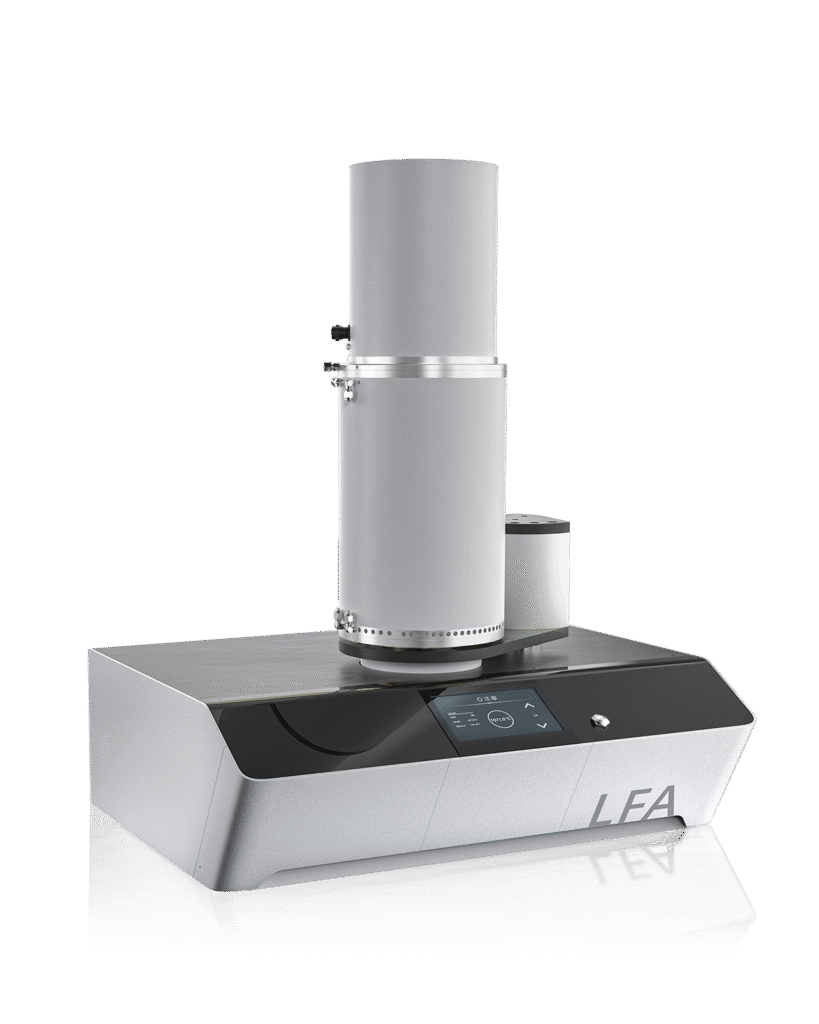
Laser Flash Analysis (LFA)
Determination of the thermal conductivity and temperature conductivity of high-temperature-resistant materials over a wide temperature range.
Analysis of
- Thermal conductivity
- Thermal Conductivity
- Heat diffusion
- Temperature-Dependent Properties
- Thermal Management
Typical Applications
- Nickel-based alloys
- High-Temperature Steels
- Superalloys
- Heat Exchanger
- Turbine Materials

Dilatometry (DIL)
Determination of thermal expansion and investigation of phase transitions at high temperatures.
Analysis of
- Thermal expansion
- Phase Transitions
- Sintering behavior
- Changes in Dimensions
- Thermal Stresses
Typical Applications
- High-Temperature Alloys
- Ceramics
- Refractory Materials
- Powder Metallurgy
- Material Development
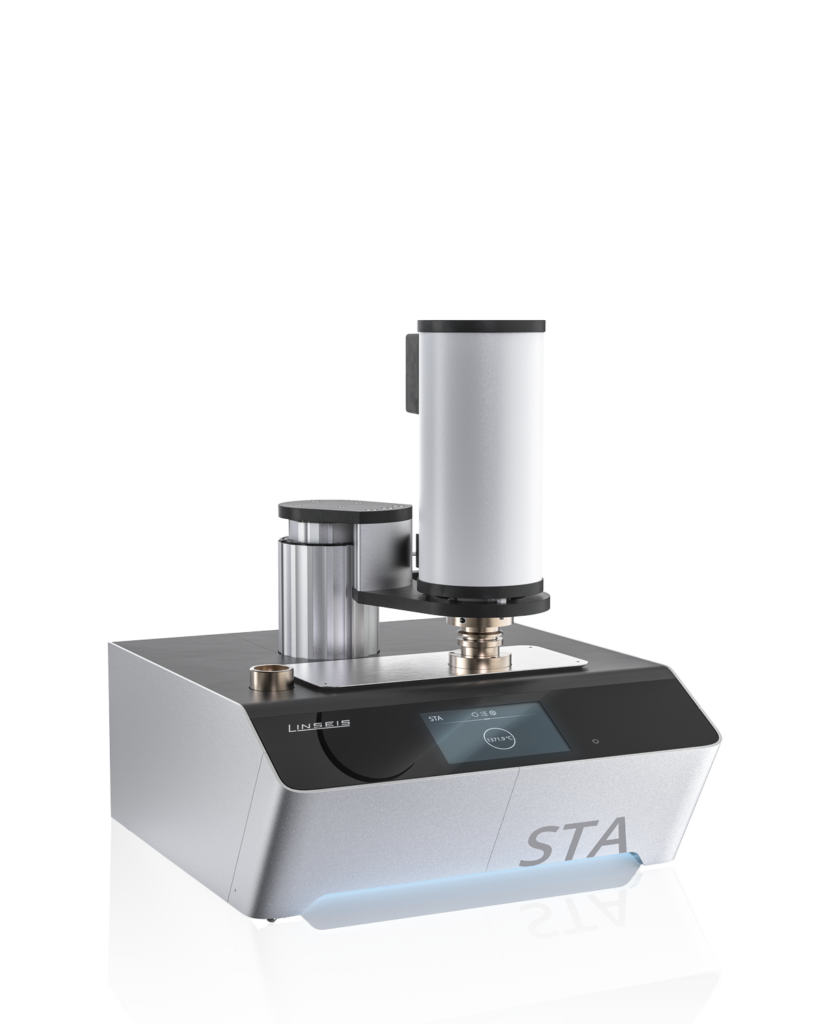
Simultaneous Thermal Analysis (STA)
Simultaneous analysis of thermal effects and changes in mass to evaluate thermal stability and high-temperature reactions.
Analysis of
- Thermal stability
- Oxidation behavior
- High-temperature reactions
- Bulk Changes
- Changes in Materials
Typical Applications
- Superalloys
- Intermetallic Materials
- Powder Materials
- High-Temperature Materials
- Research & Development
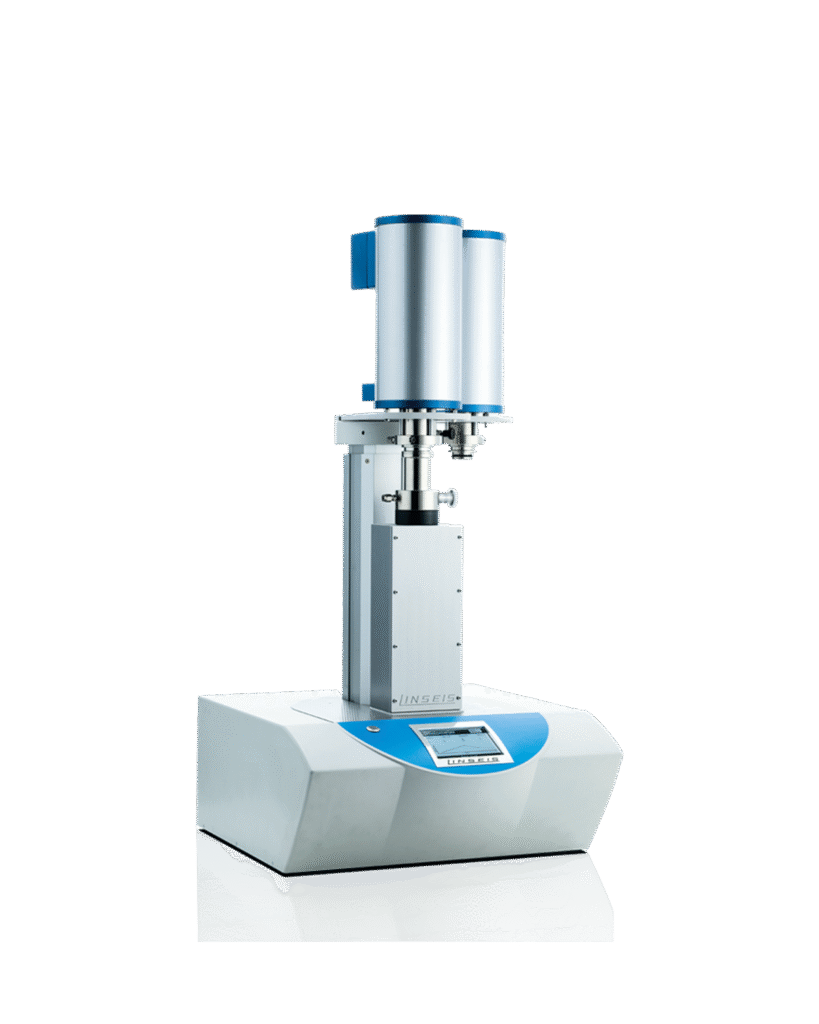
Thermogravimetry (TGA)
Analysis of oxidation, corrosion, and changes in mass under various atmospheric conditions.
Analysis of
- Oxidation
- Corrosion
- Mass change
- Decomposition
- Temperature Resistance
Typical Applications
- High-Temperature Steels
- Nickel Alloys
- Protective Coatings
- Coatings
- Material Qualification
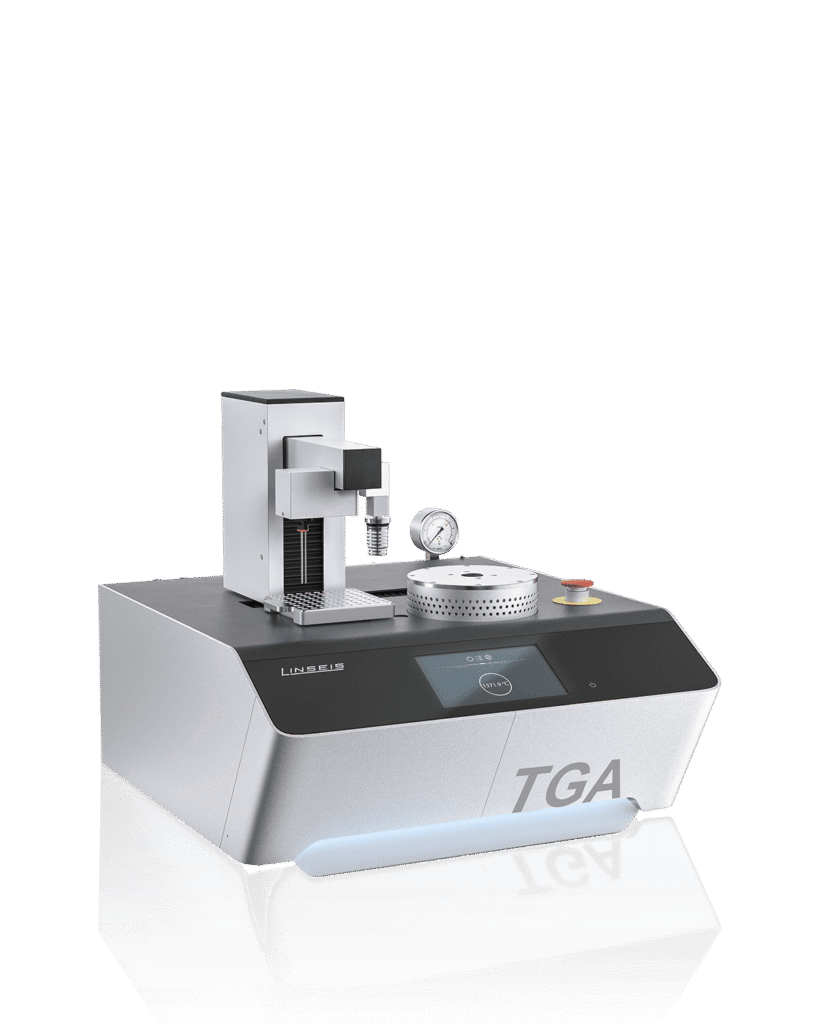
Recommended Measuring Instruments for High-Temperature Materials

Case Study: Thermal Diffusivity of High-Temperature Steels
Characterization of Heat Transfer in Power Plant Materials
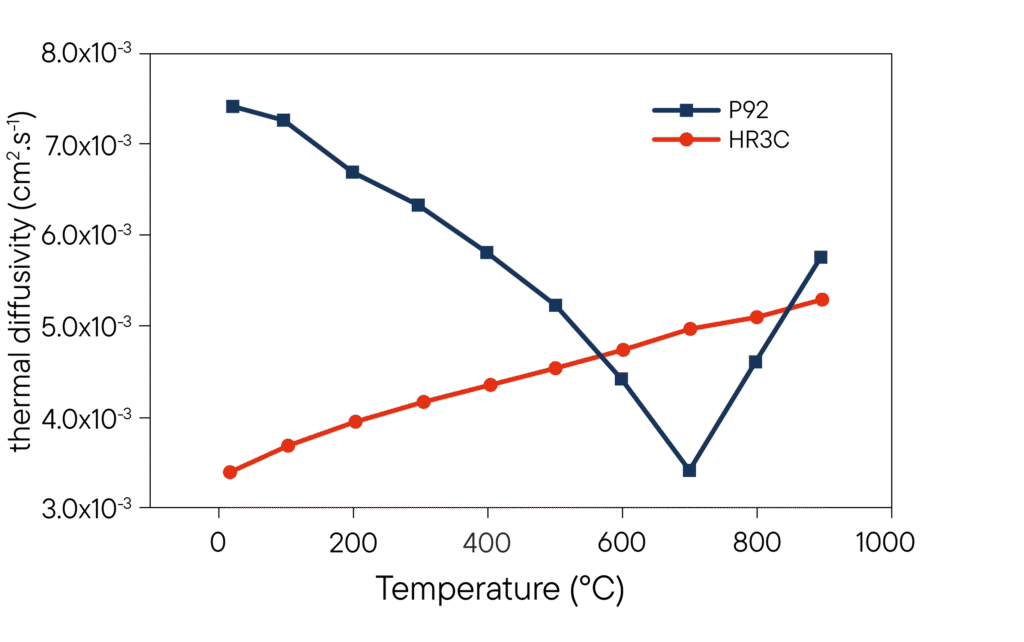
Thermal diffusivity is a critical material parameter for high-temperature components such as heat exchangers, steam turbines, and power plant equipment. With the LINSEIS LFA L52 was used to investigate the temperature-dependent thermal conductivity of the high-temperature steels HR3C and P92 up to 1000 °C. The measurement results show significant differences in heat transport between the two materials and provide valuable insights for material selection, the design of thermally stressed components, and the development of modern high-temperature materials.
Why Material Characterization of High-Temperature Materials Is Critical
Materials for high-temperature applications must reliably maintain their mechanical and thermal properties even under extreme thermal stresses. Modern analytical methods enable a comprehensive evaluation of material behavior and provide a crucial foundation for the development of high-performance, durable materials.
The combination of modern analytical methods makes it possible to:
- Determination of Thermal Conductivity and Temperature Conductivity
- Analysis of Thermal Expansion
- Investigation of Oxidation and Corrosion Behavior
- Assessment of Thermal Stability
- Optimization of New High-Temperature Alloys
- Material Qualification for Energy and Industrial Applications
Applications – Metals and Alloys
FAQ – High-Temperature Materials
Why is thermal conductivity so important in high-temperature materials?
Thermal conductivity determines how efficiently heat is transported within a material. It influences the temperature distribution in components and is critical to the service life of components such as turbine blades, heat exchangers, and furnace linings.
What measurement methods are suitable for high-temperature materials?
LFA, DIL, STA, and TGA are the primary methods used for characterization. LFA determines thermal conductivity and temperature conductivity; dilatometry analyzes thermal expansion and phase transitions; while STA and TGA provide information on thermal stability, oxidation, and changes in mass.
Why is thermal diffusivity studied?
Thermal diffusivity describes how quickly heat spreads within a material. It is an important parameter for the design of components subjected to high thermal loads and influences their efficiency and service life.
What materials can be analyzed using LINSEIS systems?
The systems are suitable for high-temperature steels, nickel-based alloys, titanium alloys, cobalt alloys, intermetallic materials, superalloys, ceramics, and other high-performance metallic and ceramic materials.
Which industries benefit from materials characterization?
Typical applications include power generation, aerospace, metallurgy, the chemical industry, the automotive industry, as well as research institutions and the development of new high-temperature materials.
Why is it beneficial to combine different measurement methods?
Only the combination of LFA, DIL, STA, and TGA enables a comprehensive evaluation of thermophysical and thermoanalytical properties. This allows for significantly more efficient and reliable material development, material selection, and quality control.