Linseis > Materials Analysis for Metals & Metallurgy
Metals and alloys form the basis of numerous key industrial technologies—from the automotive and aerospace industries to mechanical engineering, energy, electronics, and materials science. Their performance is largely determined by their thermal, thermophysical, and mechanical properties.
With over 69 years of experience, LINSEIS offers high-performance measurement systems for characterizing metallic materials—from basic research and product development to industrial quality control.
Typical Applications in Metallurgy
Select your specific application and gain detailed insights into material characterization, measurement methods, and innovative solutions for metallic materials.
Alloys & Phase Diagrams
Analysis of melting and solidification processes, phase transitions, and the thermodynamic properties of modern metal alloys.
Real-world measurements demonstrate how modern analytical methods are used in the development, optimization, and quality assurance of metallic materials.
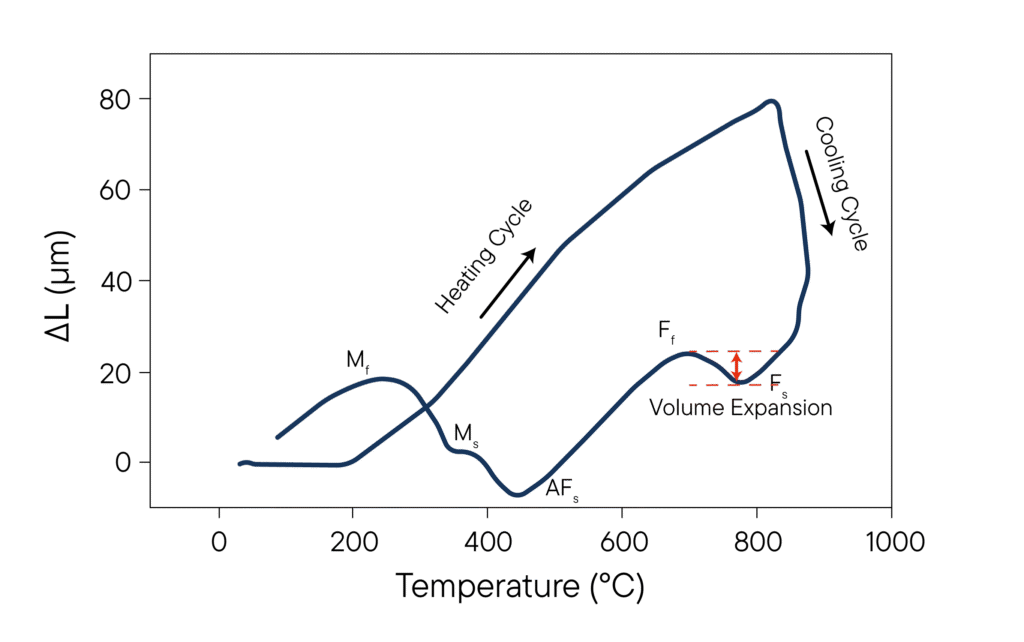
Phase Transformations in Martensitic Stainless Steel
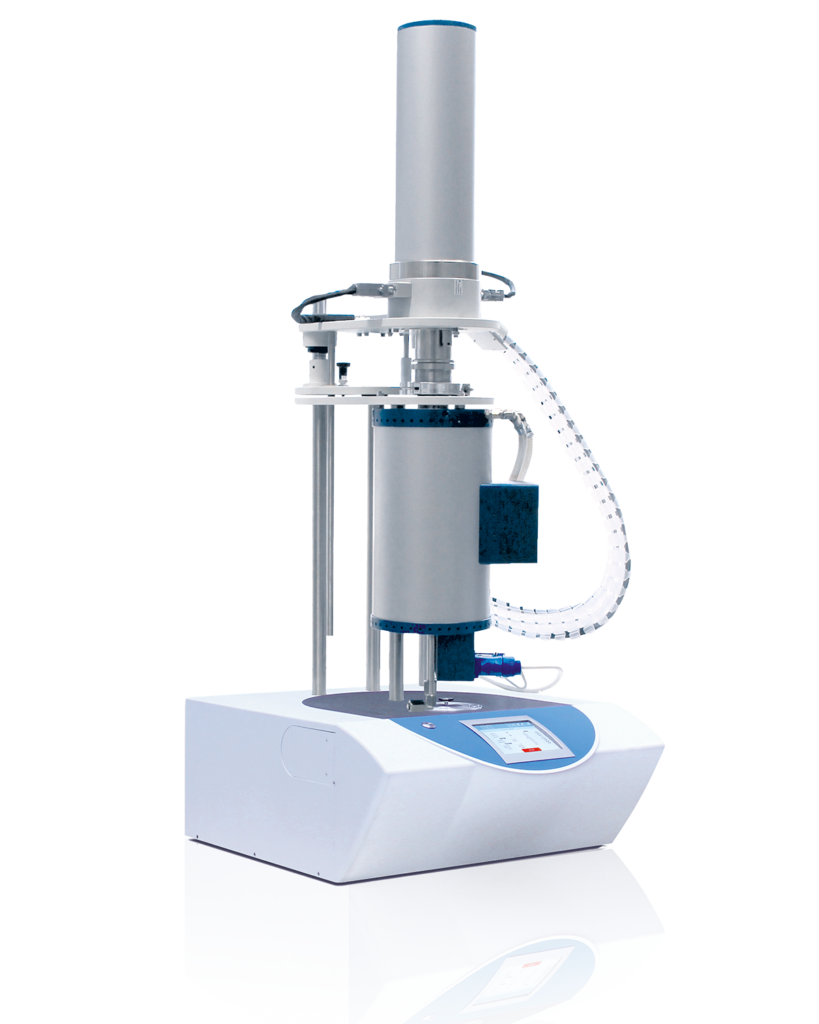
The LINSEIS DIL L75 Vertical was used to investigate the transformation behavior of a martensitic 12Cr–1Mo stainless steel during a simulated stress-relief annealing process. Dilatometry measurements enable the precise determination of phase transformations and dimensional changes during the heat treatment process and provide valuable insights for optimizing welding and heat treatment processes in metallurgy.
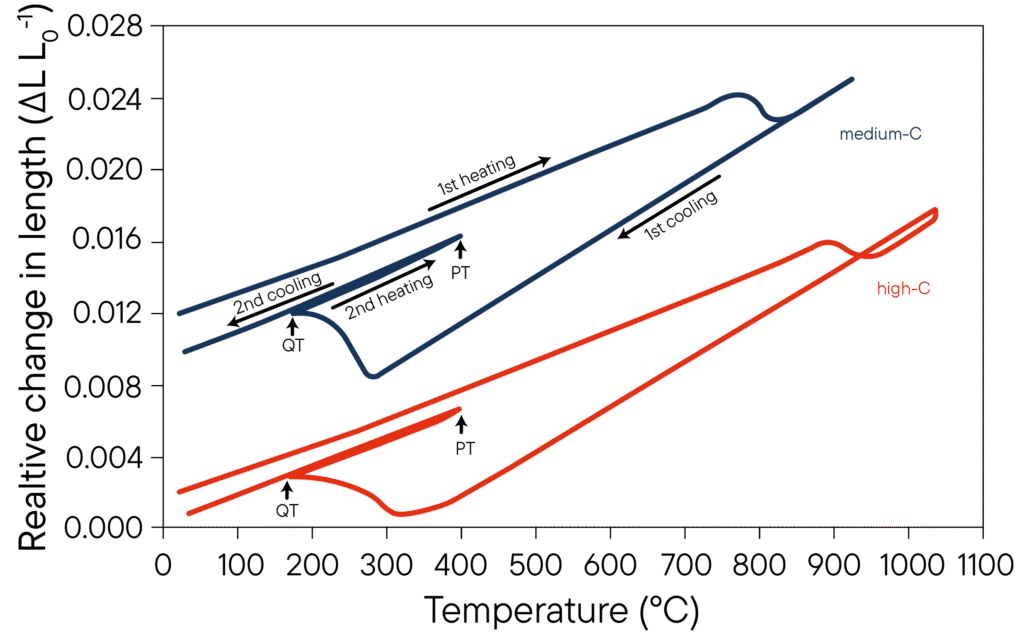
Optimizing Quenching and Partitioning Heat Treatments
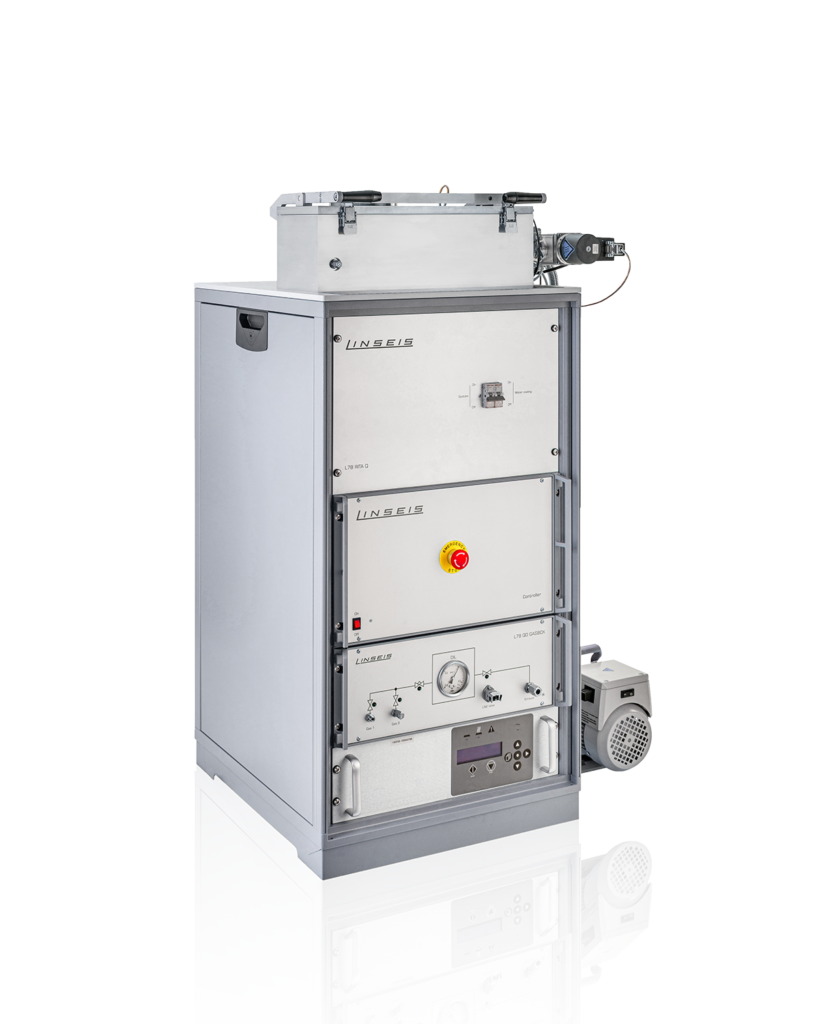
The LINSEIS DIL L78 RITA was used to investigate the transformation behavior of medium- and high-carbon steels during a quenching-and-partitioning process. Dilatometry measurements enable the precise analysis of phase transformations and dimensional changes during complex heat treatments and provide valuable insights for the development of high-strength and wear-resistant steels.