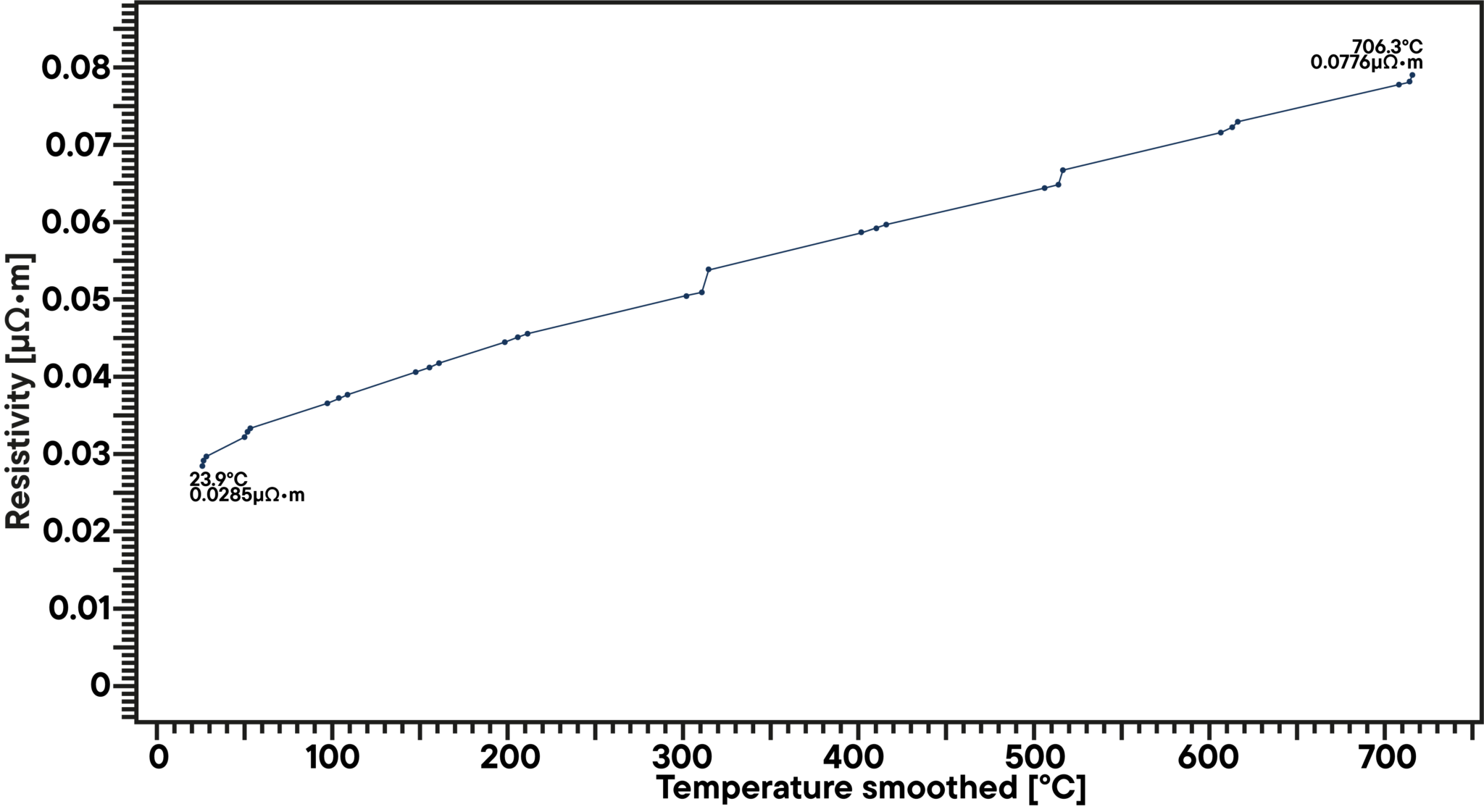
Copper has very high electrical conductivity and is therefore used in cables because it is less expensive than alternative materials with higher conductivity (silver/Ag).
Copper’s high electrical conductivity can make it significantly more difficult to measure the material’s specific electrical resistance.
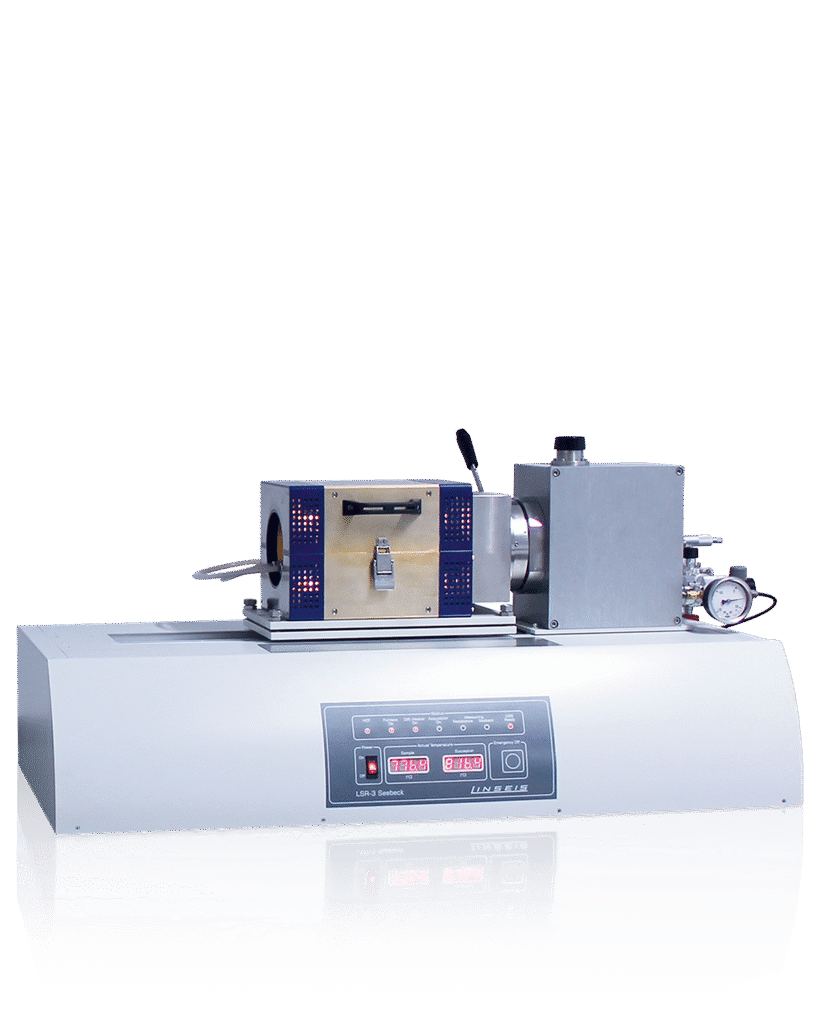
However, thanks to the flexible measurement configuration—including adjustable probe spacing and sample geometry—as well as the high-performance LINSEIS measurement electronics with a maximum measurement current of 160 mA, it was possible to measure even this challenging sample.