Materials for high-temperature applications must reliably maintain their properties even under extreme thermal and mechanical stresses. Whether in turbines, exhaust systems, heat exchangers, combustion chambers, or components for the automotive, aerospace, and aviation industries—their performance determines efficiency, safety, and service life.
LINSEIS offers a wide range of modern measurement techniques for the comprehensive characterization of high-temperature materials. From thermal and thermophysical properties to dimensional changes, reaction processes, and aging processes, our systems support research, development, quality assurance, and process optimization.
Relevant Questions
Which materials retain their properties even at extreme temperatures?
How do the material’s structure and properties change during operation?
What thermal conductivity is required for optimal component design?
How does thermal expansion behave under real-world operating conditions?
What phase transitions or material transformations occur?
How do temperature cycles affect the service life of a material?
When do oxidation, aging, or decomposition processes begin?
How can heat treatment and manufacturing processes be optimized?
Which materials are suitable for the most extreme thermal and mechanical stresses?
How can material failure and thermal stresses be prevented?
Relevant Material and Process Parameters
Parameter
Meaning
Thermal Conductivity
Efficient Thermal Management and Component Design
Thermal Diffusivity
Rate of heat propagation
Thermal Expansion
Preventing Stress and Warping
Heat Capacity
Thermal Storage and Response Behavior
Phase Transitions
Characterization of Material and Microstructural Changes
Thermal Stability
Behavior under long-term stress
Oxidation Behavior
Evaluation of High-Temperature Resistance
Degradation Behavior
Analysis of Material Limits and Degradation
Dimensional Stability
Reliability under thermal stress
Aging Behavior
Evaluation of Long-Term Performance
Test Methods for Materials Used in High-Temperature Applications
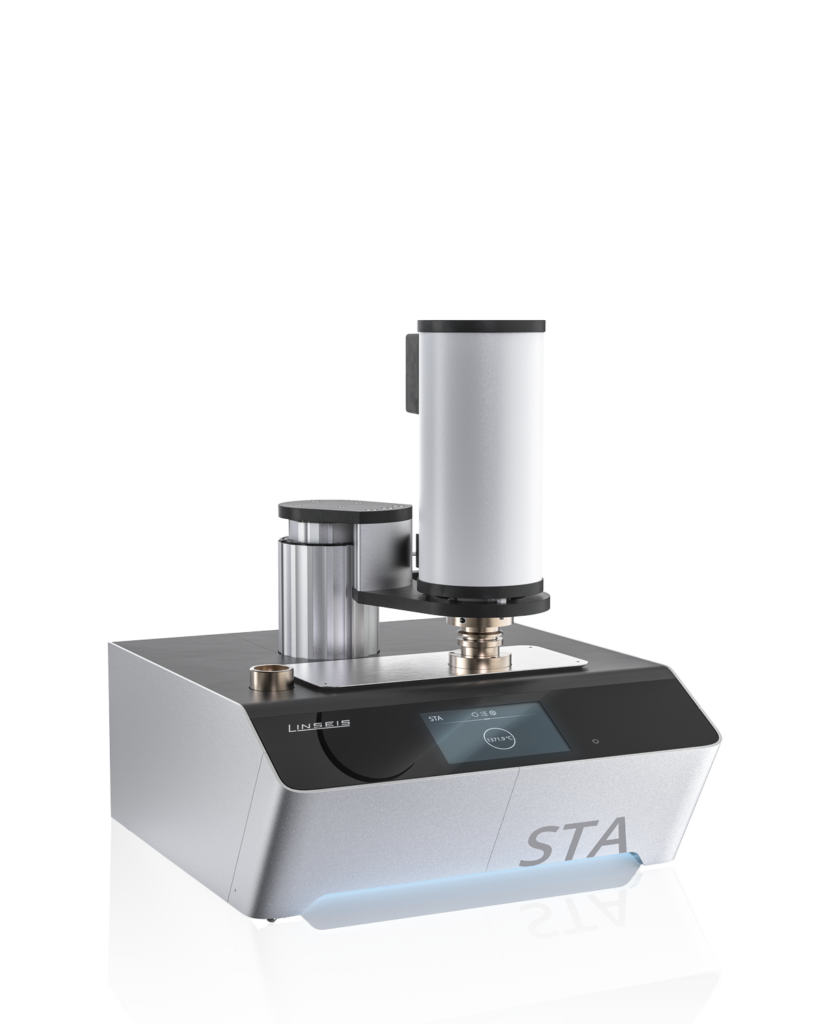
Simultaneous Thermal Analysis (STA)
STA enables the simultaneous investigation of thermal effects and changes in mass for the comprehensive characterization of high-temperature materials.
The precise determination of thermal conductivity and thermal diffusivity supports the development of efficient high-temperature components and thermal management systems.
Case Study: Analysis of a High-Temperature Material
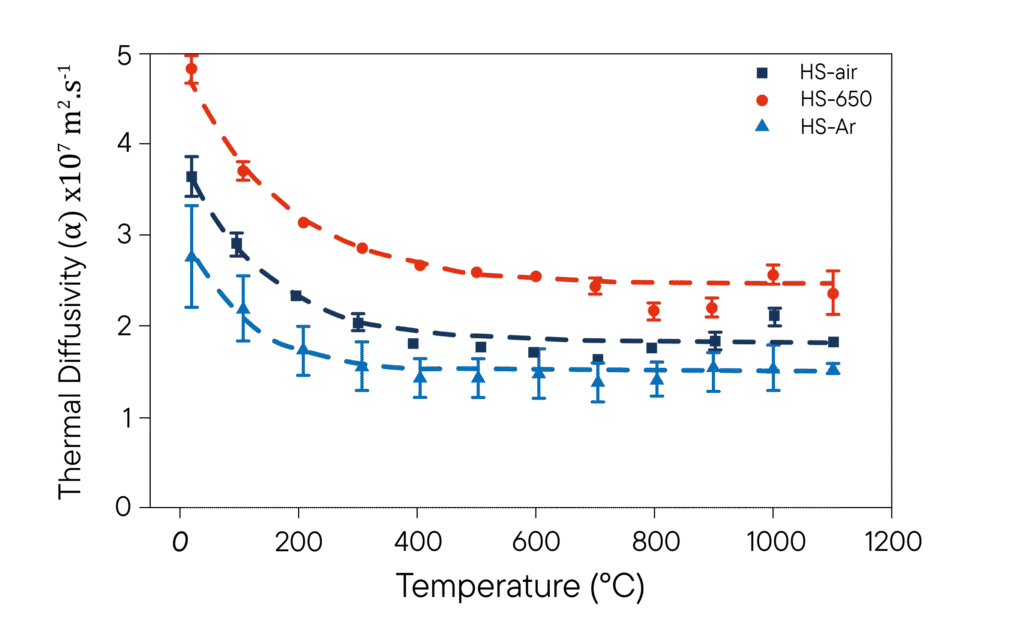
Heat diffusion coefficient of thermal barrier coatings made of hollow alumina
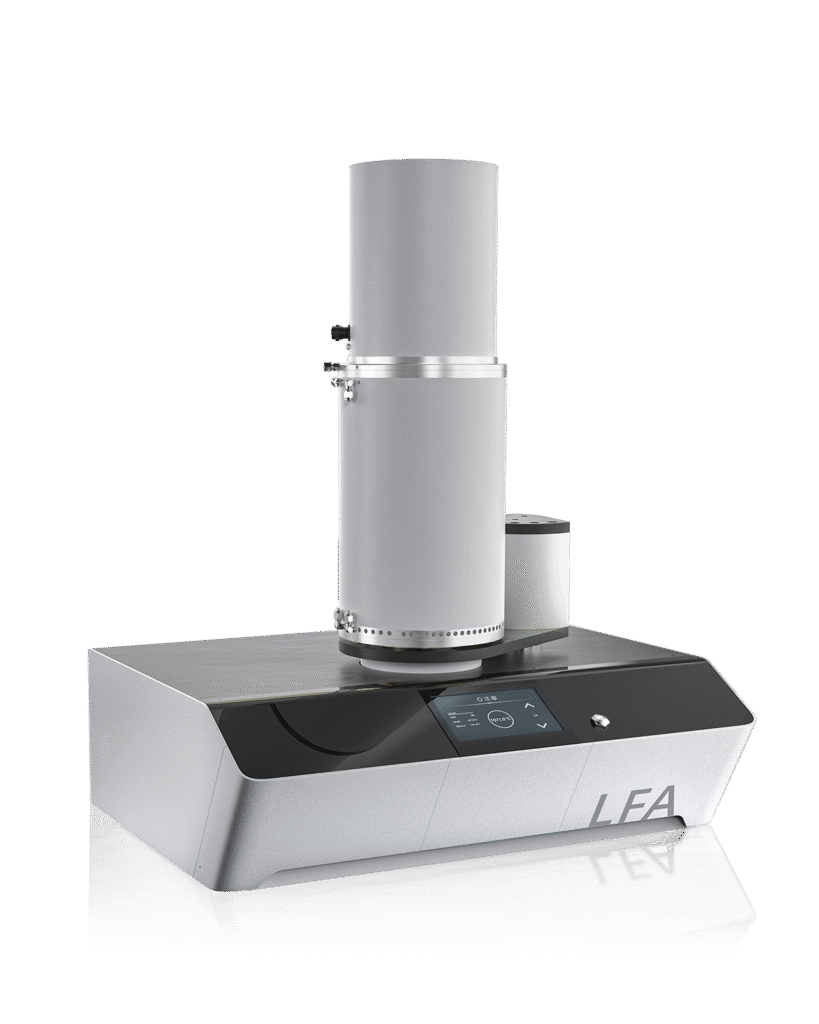
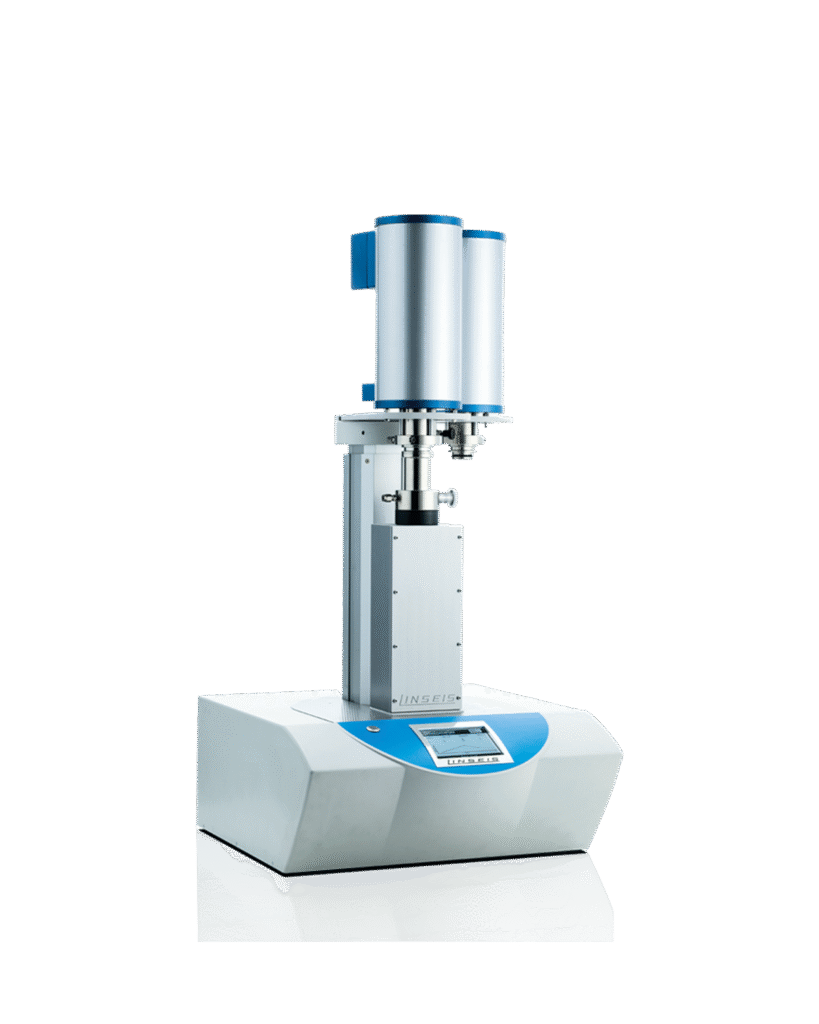
Laser flash analysis (LFA) enables the precise determination of thermal diffusivity over a wide temperature range. In this application example, hollow alumina thermal insulation coatings are examined using the Linseis LFA L52 (formerly known as the LFA 1600). The measurements provide valuable insights into heat transfer behavior and support the development of high-performance thermal insulation systems for high-temperature applications.
Why Material Characterization Is Critical for High-Temperature Applications
The development of modern high-temperature materials requires a comprehensive understanding of their thermal, physical, and structural properties. Even the slightest changes in the material can significantly affect the performance and reliability of complex systems.
The combination of modern measurement methods makes it possible to:
Characterization of Thermal and Thermophysical Material Properties
Analysis of Thermal Conductivity and Heat Transfer
Study of Thermal Expansion and Dimensional Changes
Evaluation of Oxidation, Aging, and Degradation Processes
Analysis of Phase Transitions and Material Reactions
Optimization of Materials, Manufacturing Processes, and Heat Treatments
Applications – Automotive, Aerospace
TIM Tester (TIM L58) – Metal Plates with Adhesive Coating – Thermal Conductivity and Thermal Impedance
Why is material characterization important for materials used in high-temperature applications?
It provides comprehensive information on thermal, physical, and structural properties and supports the development of safe, efficient, and durable high-temperature materials.
What materials are typically studied for high-temperature applications?
Among other things, the research focuses on superalloys, heat-resistant steels, ceramics, metal powders, composite materials, and high-temperature coatings for demanding industrial applications.
What testing methods are suitable for materials used in high-temperature applications?
Depending on the research question, Simultaneous Thermal Analysis (STA), Thermogravimetry (TGA), Dilatometry (DIL), thermal conductivity measurements, and other thermophysical analysis methods are used.
What material properties can be determined for materials used in high-temperature applications?
The properties determined include, among others, thermal conductivity, thermal diffusivity, thermal expansion, heat capacity, phase transitions, oxidation behavior, decomposition behavior, and thermal stability.
In which industries are materials for high-temperature applications used?
They are used in a variety of fields, including the automotive industry, aerospace, energy technology, turbine development, industrial furnaces, high-temperature processes, and materials research.
How does LINSEIS support the development of materials for high-temperature applications?
With a broad portfolio of measurement systems for material characterization and thermophysical analysis, LINSEIS supports research, development, quality assurance, and the optimization of modern high-temperature materials and manufacturing processes.