Rubbers have good dynamic properties, high strength, elasticity, and tensile strength. Adding various polymers results in rubber compounds that exhibit superior properties, such as good chemical resistance, flame resistance, and oil resistance.
Rubber compounds therefore have a wide range of applications, such as in the automotive sector, the food industry, the chemical industry, and mechanical engineering.
Examples of applications include engine mounts, O-rings, tires, shoe soles, cable sleeves, flooring, and seals for windows and doors. Some of these require knowledge of thermal properties such as thermal conductivity.
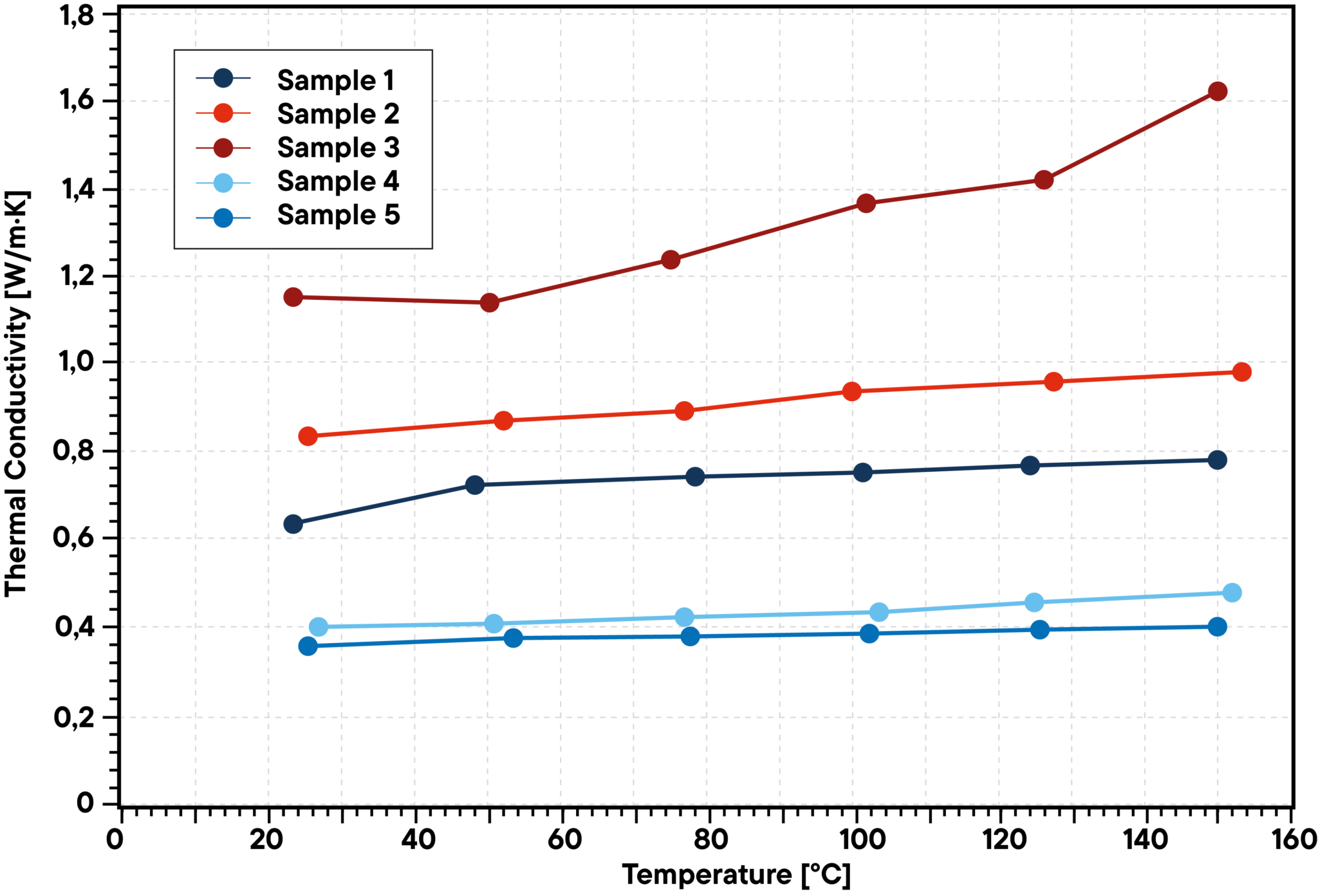
The graph shows a measurement of the thermal conductivity of various rubber compounds using the THB Ultimate (new model THB L56 Basic, Advanced, Ultimate).
To do this, the sensor was placed between two test specimens, and the specimens were pressed together to ensure good contact with the sensor. This setup was placed in an oven, where measurements were taken from room temperature up to 150 °C.
The graph shows that the various compounds have different or quite similar thermal conductivities. As expected, the thermal conductivity increases for all samples within the measured temperature range.