Lightweight materials and innovative alloys are key technologies for energy-efficient vehicles, modern aviation, and sustainable mobility concepts. Aluminum, magnesium, and titanium alloys, as well as advanced composite materials, enable significant weight savings while maintaining high strength and reliability.
Thermal analysis provides crucial information on thermal conductivity, thermal expansion, phase transitions, and material stability, and supports research, development, and quality assurance throughout the entire product life cycle.
With over 69 years of experience, LINSEIS offers precise measurement solutions for the development of innovative materials and manufacturing processes.
Relevant Questions
How does the thermal expansion of an alloy change across the temperature range?
Which materials offer the best balance of weight, strength, and thermal stability?
How do heat treatments affect material properties and microstructure?
What thermal conductivity is required for optimal component cooling?
How do composite materials behave under thermal stress?
What phase transitions occur during processing or operation?
How do temperature cycles affect long-term stability and service life?
What materials are suitable for high-stress lightweight applications in the automotive and aerospace industries?
How can thermal stresses and distortion in complex components be minimized?
Which alloys offer the optimal combination of performance, weight, and reliability?
Relevant Material and Process Parameters
Parameter
Meaning
Thermal Expansion
Preventing Thermal Stresses and Warping
Thermal Conductivity
Optimization of Thermal Management
Thermal Diffusivity
Evaluation of Heat Transfer in the Component
Heat Capacity
Analysis of Thermal Storage Capacity
Phase Transitions
Characterization of Microstructural Changes
Thermal Stability
Behavior under real-world operating conditions
Sintering and Curing Behavior
Optimization of Manufacturing Processes
Oxidation Behavior
Evaluation of Material Resistance
Aging Behavior
Prediction of Long-Term Performance
Dimensional Stability
Ensuring precise component properties
Measurement Methods for Alloys and Lightweight Construction
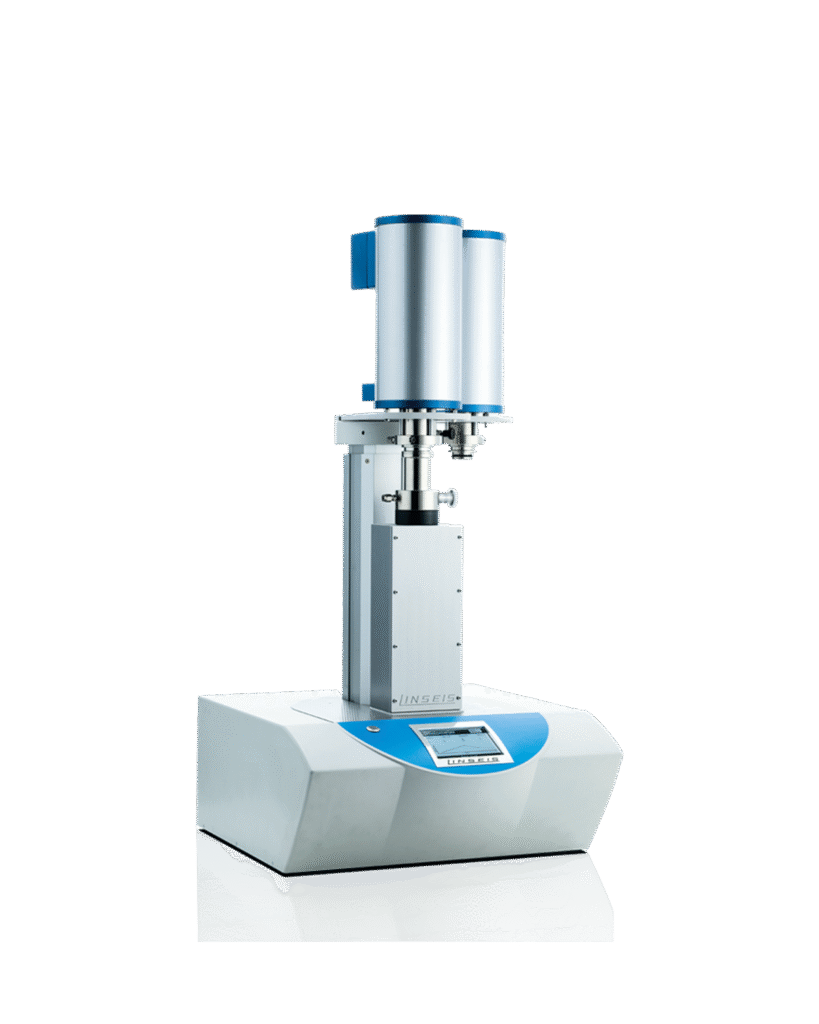
Dilatometry (DIL)
Dilatometry is used to study thermal expansion and dimensional changes in metals and composite materials.
Thermal Stability of Composite Materials for Lightweight Construction
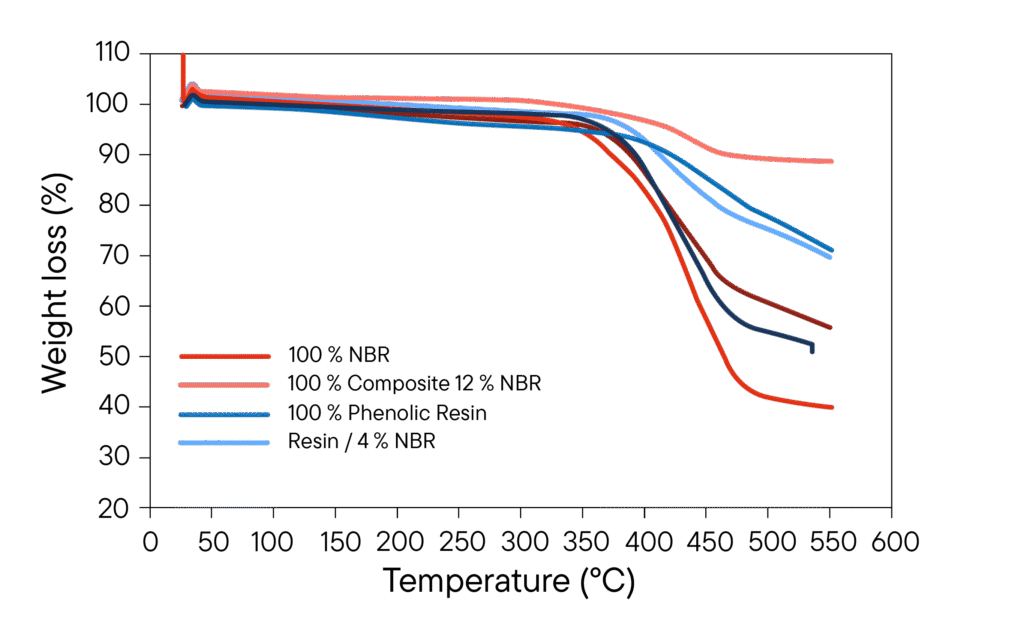
Thermogravimetry (TGA) thermogravimetry (TGA) enables the precise investigation of the thermal stability and decomposition behavior of modern lightweight materials. In this application example, NBR-modified composite materials are analyzed for their mass loss and high-temperature resistance. The results provide valuable insights for the development of high-performance composite materials in the automotive, aerospace, and other demanding high-temperature applications.
Why Material Analysis Is Crucial for Alloys and Lightweight Construction
Innovative alloys and lightweight materials form the basis of modern mobility and aviation concepts. To ensure maximum safety, efficiency, and reliability, their thermal and structural properties must be precisely understood.
The combination of modern analytical methods makes it possible to:
Development of High-Performance Aluminum, Magnesium, and Titanium Alloys
Optimization of Composite Materials and Structural Components
Study of Thermal Expansion and Material Stresses
Analysis of Thermal Conductivity and Thermal Management
Characterization of Phase Transitions and Heat Treatment Processes
Ensuring Long-Term Stability and Component Reliability
Applications – Automotive, Aerospace
TIM Tester (TIM L58) – Metal Plates with Adhesive Coating – Thermal Conductivity and Thermal Impedance
Why is thermal analysis so important for alloys and lightweight construction?
Thermal analysis provides important information about thermal conductivity, thermal expansion, phase transitions, and material stability. It supports the development of high-performance lightweight materials and ensures greater safety, efficiency, and reliability in demanding applications.
What materials are typically studied in the field of alloys and lightweight construction?
The materials used include aluminum, magnesium, and titanium alloys; high-strength steels; as well as fiber-reinforced composites, metal-matrix composites, and other modern lightweight materials for the automotive, aerospace, and aviation industries.
What measurement methods are suitable for analyzing alloys and lightweight construction?
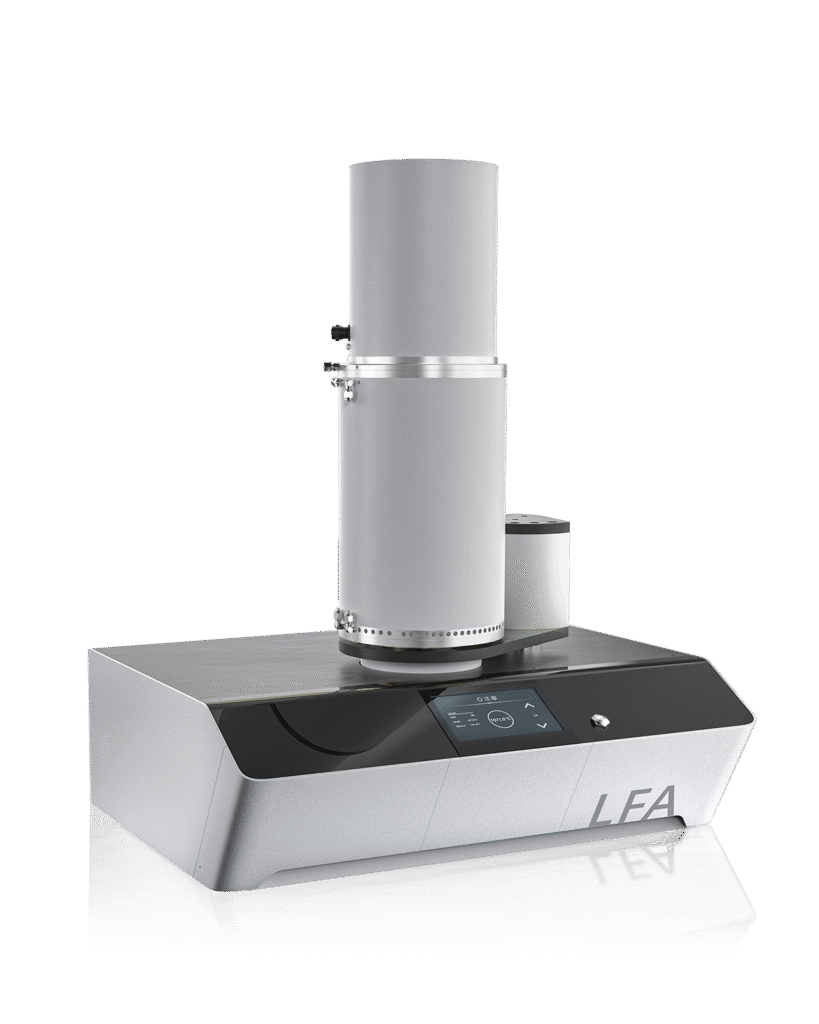
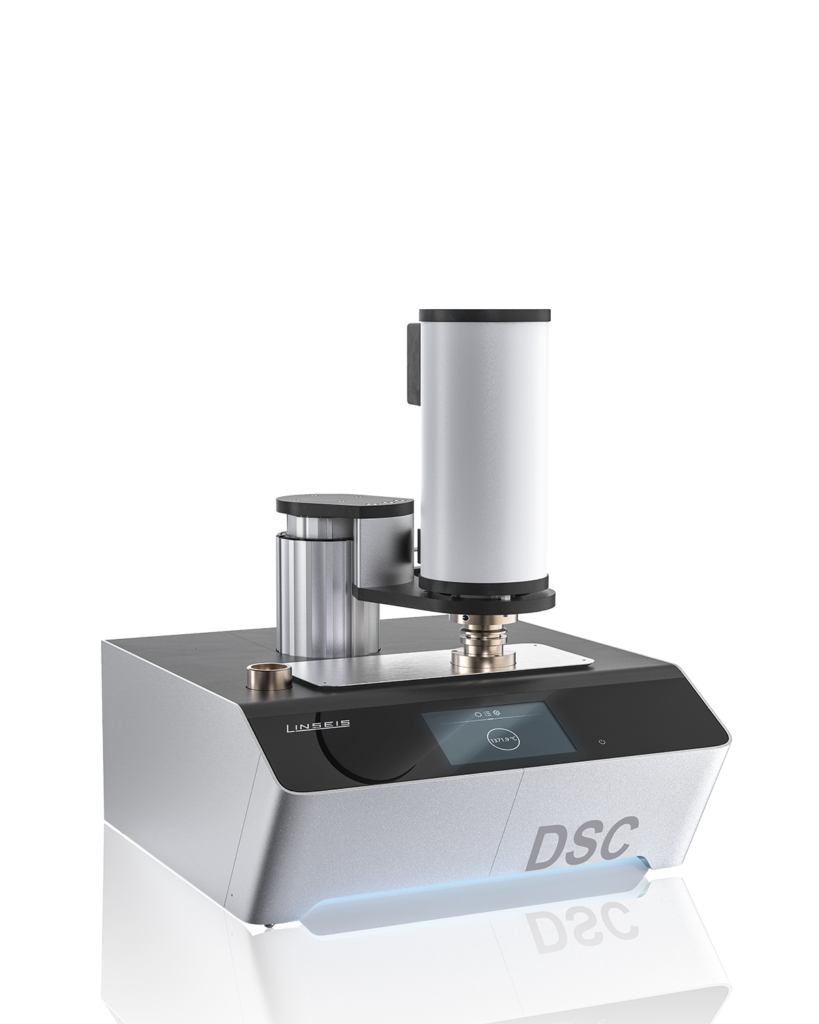
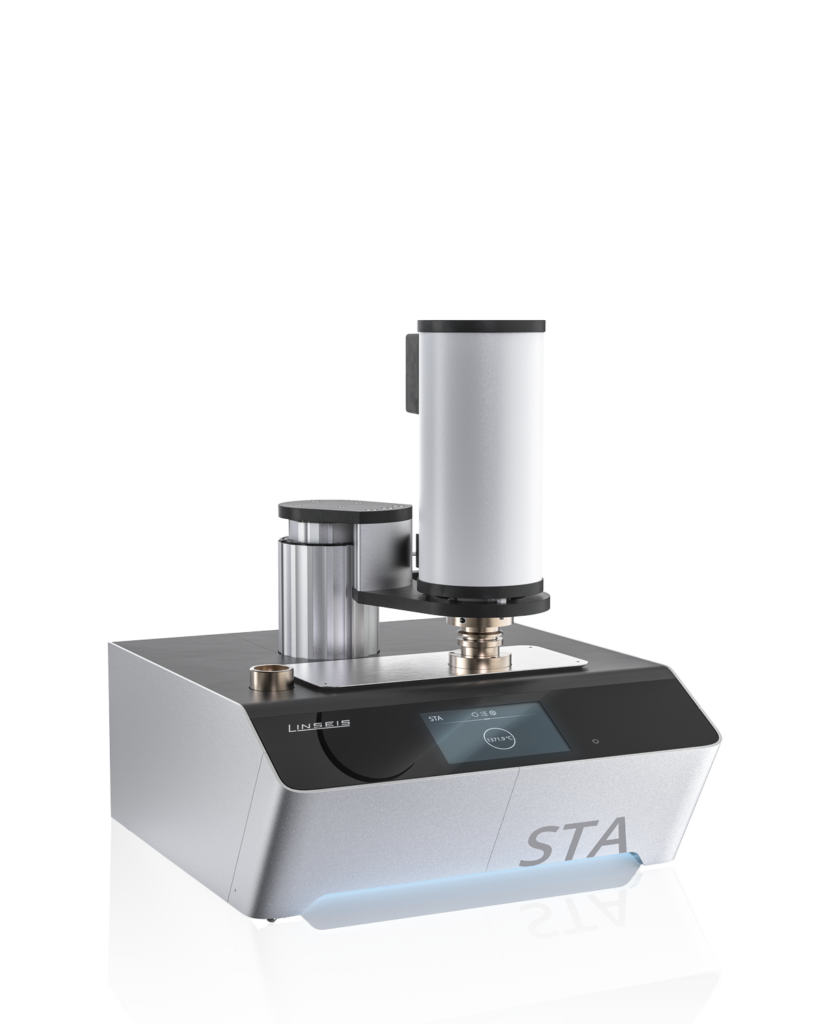
Depending on the research question, methods such as dilatometry (DIL), differential scanning calorimetry (DSC), simultaneous thermal analysis (STA), thermogravimetry (TGA), and thermal conductivity measurements using LFA or THB are employed.
What advantages does thermal analysis offer in the development of alloys and lightweight materials?
It enables the optimization of materials and manufacturing processes, the evaluation of thermal stability and thermal conductivity, and the analysis of phase transitions and material behavior under real-world operating conditions.
What role does thermal conductivity play in alloys and lightweight construction?
Thermal conductivity plays a key role in the thermal management of modern components. Precise characterization helps optimize cooling designs, prevent hot spots, and increase the performance and service life of components.
In which industries are alloys and lightweight construction with thermoanalytical characterization used?
Thermoanalytical methods are used in particular in the automotive industry, aerospace, electromobility, materials development, as well as in research and industrial quality assurance. They support the development of innovative lightweight construction concepts and high-performance materials.