TIM Tester (TIM L58) – Metal Plates with an Adhesive Layer – Thermal Conductivity and Thermal Impedance
The sample under examination consists of layered metal plates with an insulating adhesive layer in between.
This test setup is used in the field of automotive electrical systems. The purpose of the measurement was to investigate the effect of contact pressure on the results.
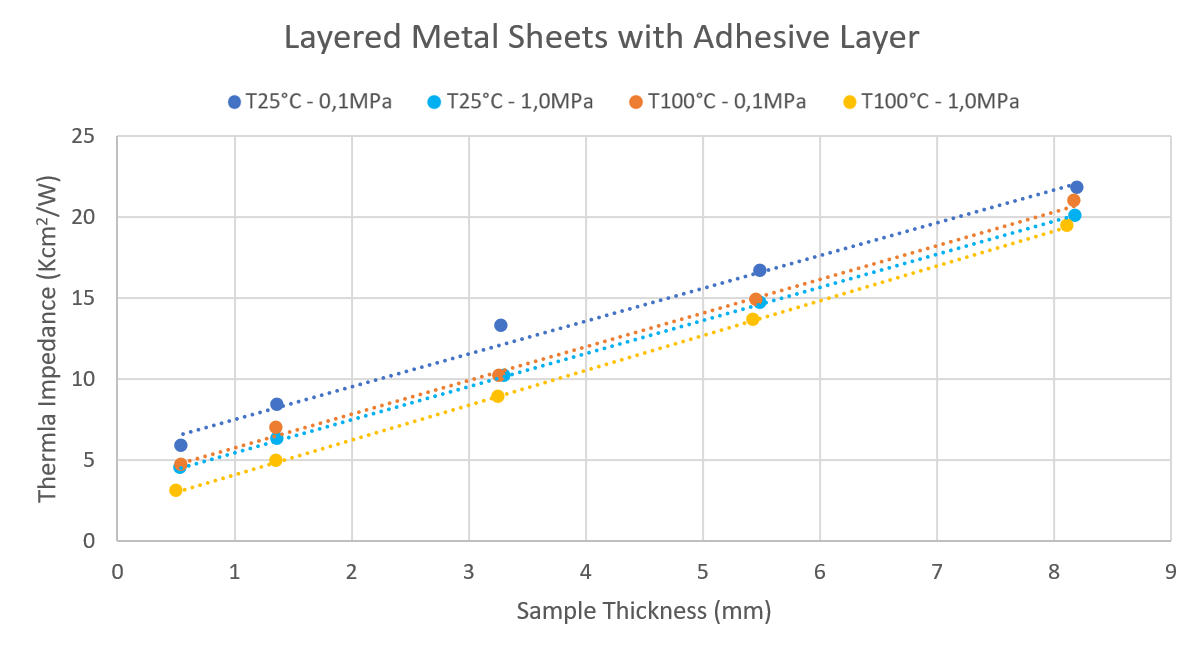
The graph shows the thermal impedance as a function of the thickness of the various stacked sheets.
The measurement was performed at room temperature and 100 °C, with contact pressures of 0.1 MPa and 1 MPa, respectively, applied to the sample.
As usual, the thermal conductivity is equal to the reciprocal of the slope of the linear fit, and the contact resistance is equal to the y-intercept.
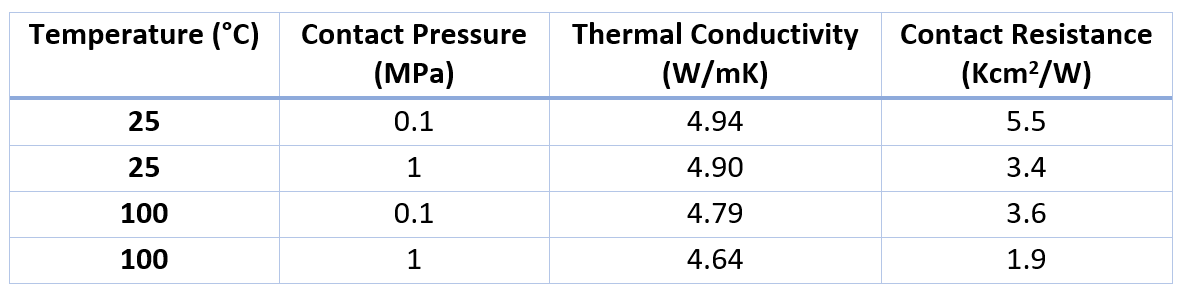
The results for thermal conductivity and contact resistance are as follows:
The thermal conductivity of the laminated sheets with an adhesive layer in between decreases from room temperature to 100 °C.
The results also show that lower contact pressure leads to higher thermal impedances, as well as higher thermal conductivity and contact resistance.
This means that, depending on the applied contact pressure—and thus depending on the application—the thermal conductivity of the sample may vary. This variation may be related to the deformable adhesive layer between the metal sheets.
Suitable measuring device
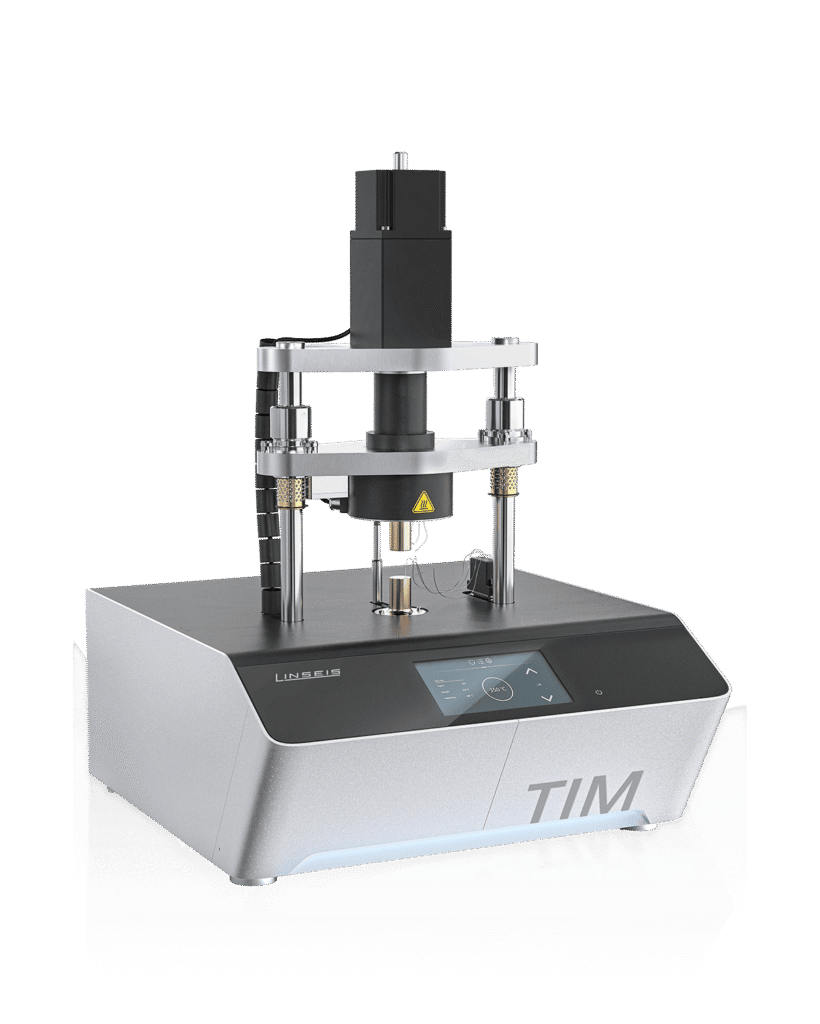
TIM L58
Measuring device for thermally conductive materials for extended TIM analysis