Steel alloys are highly sensitive to their material composition, which leads to significant changes in their mechanical and thermal properties.
The goal is to improve these properties so that the alloys can be used in highly demanding applications where pure steel fails.
Examples include nuclear reactors, railroads, and turbine blades for jet engines. In general, steel alloys have a wide range of applications, including pipes, the automotive industry, energy, and machinery.
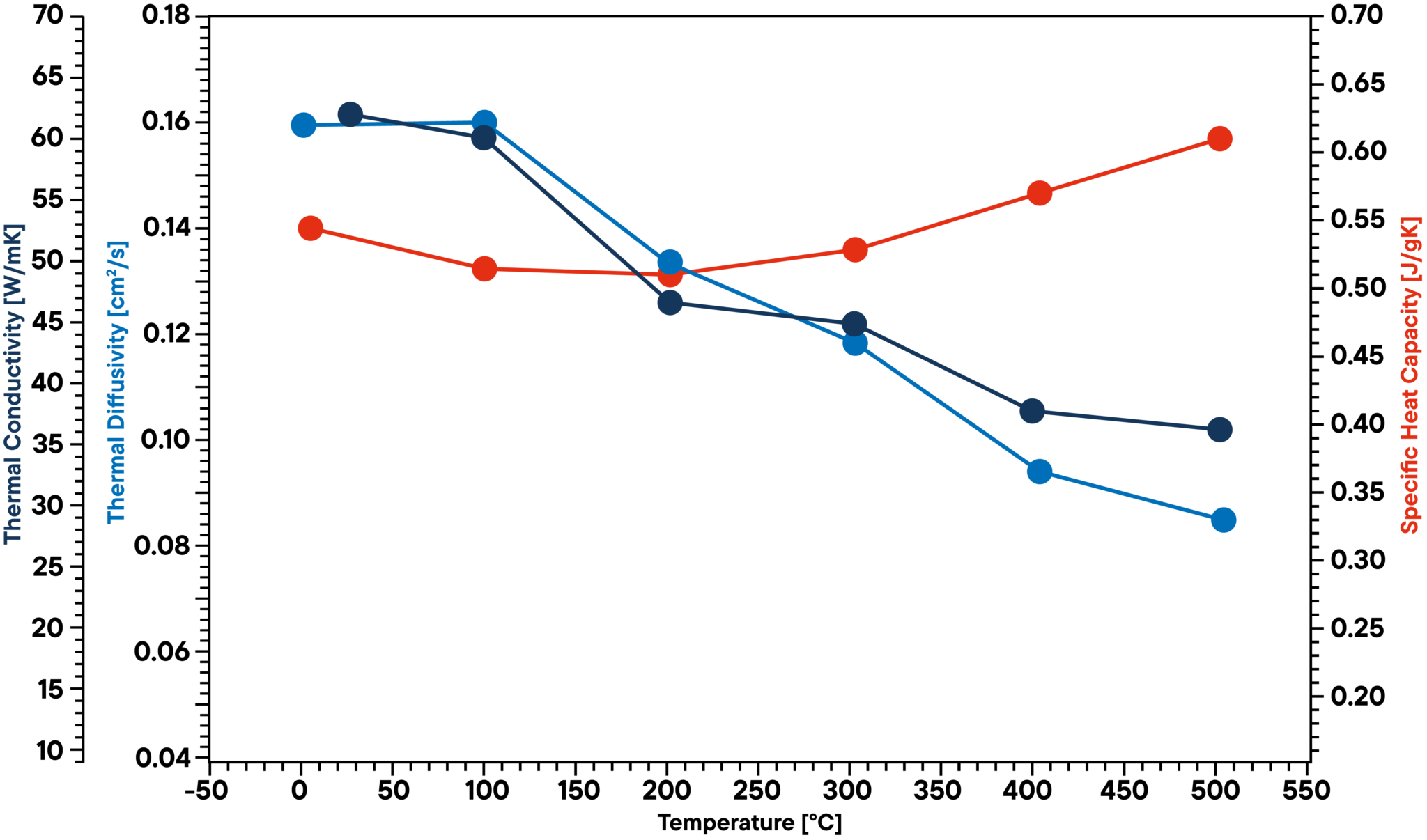
The measurement above shows the measurement of thermal conductivity using the LFA L52.
During the same measurement cycle, the specific heat capacity was measured using a comparative method with stainless steel as the reference.
Using these values and the density of the sample, the thermal conductivity can be determined. Thermal conductivity and temperature conductivity decrease at higher temperatures, while the specific heat capacity initially decreases slightly and then increases at temperatures above 200 °C.
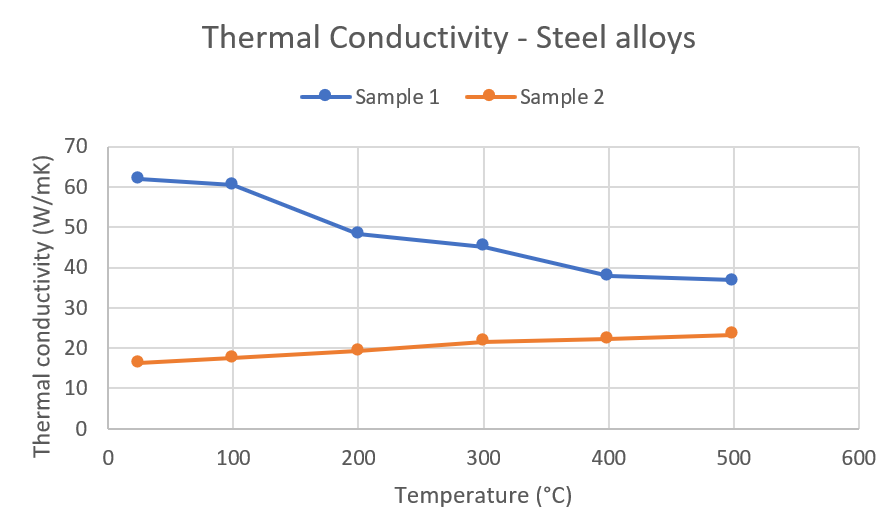
The same measurement was performed on another steel alloy (Sample 2).
In this case, Inconel was used as a reference for determining the specific heat capacity.
The following diagram shows the thermal conductivities of the two samples.