

Thermal Insulation Properties of Polymers
Precise Material Characterization for Energy-Efficient Insulation Materials and Innovative Polymer Materials


Polymers play a central role in modern thermal insulation systems. From building insulation to refrigeration and cryogenics, and on to lightweight construction and mobility applications, polymer materials are used to minimize heat loss and increase energy efficiency.
The development of high-performance insulation materials requires a comprehensive understanding of their thermophysical properties. Modern measurement techniques provide important information about thermal conductivity, thermal diffusivity, heat capacity, and long-term stability. This allows materials to be specifically optimized and designed for demanding applications.
LINSEIS’s material characterization solutions enable the precise analysis of thermal insulation materials and the reliable evaluation of their performance.
Relevant Questions
- What is the thermal conductivity of a polymer material?
- Which materials provide the best insulation?
- How do fillers affect thermal properties?
- How does thermal insulation performance change with temperature?
- What role does material density play in thermal insulation?
- How do aging and moisture affect insulation performance?
- What materials are suitable for high-performance insulation?
- How can the energy efficiency of building components be improved?
- Which materials are suitable for cryogenic applications?
- How can heat loss be reduced in a sustainable way?
Relevant Material and Process Parameters
| Parameter | Meaning |
|---|---|
| Thermal Conductivity | Evaluation of Insulation Performance |
| Thermal Diffusivity | Rate of heat propagation |
| Heat Capacity | Thermal storage capacity |
| Material density | Effect on Insulation Performance |
| Porosity | Optimization of Thermal Insulation |
| Temperature Dependence | Performance under operating conditions |
| Moisture Absorption | Long-term stability of thermal insulation performance |
| Aging Behavior | Service Life Assessment |
| Dimensional Stability | Dimensional stability under temperature fluctuations |
| Insulation properties | Energy efficiency of the material |
Test Methods for Thermal Insulation Materials


Transient Hot Bridge (THB)
The THB method enables the rapid and precise determination of the thermal conductivity of polymers, foams, and composite materials.
Analysis of
- Thermal conductivity
- Heat Transfer
- Material Comparison
- Effect of Filler
Typical Applications
- Polymer Materials
- Insulation Materials
- Foams
- Composite Materials

Heat Flow Meter (HFM)
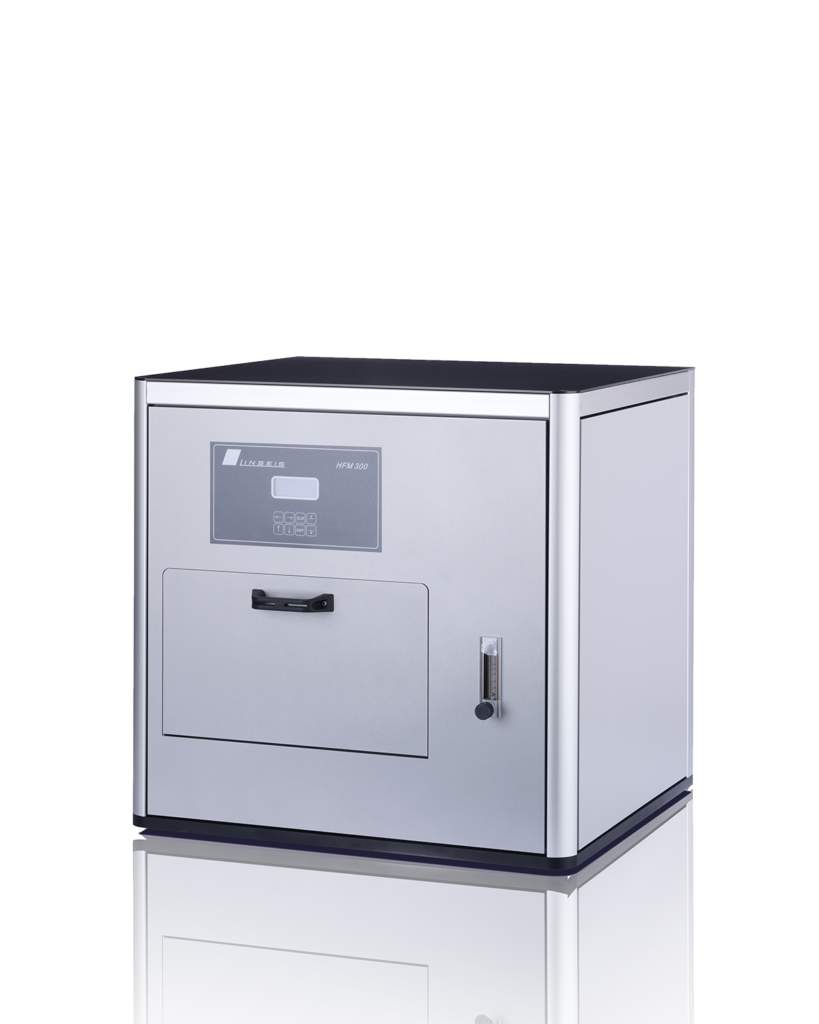
The HFM determines the thermal conductivity of insulation materials under real-world conditions.
Analysis of
- Thermal conductivity
- Heat Transfer
- Insulation Performance
- Energy Efficiency
Typical Applications
- Building Insulation
- Insulation Boards
- Foams
- Insulation Materials

Laser Flash Analysis (LFA)
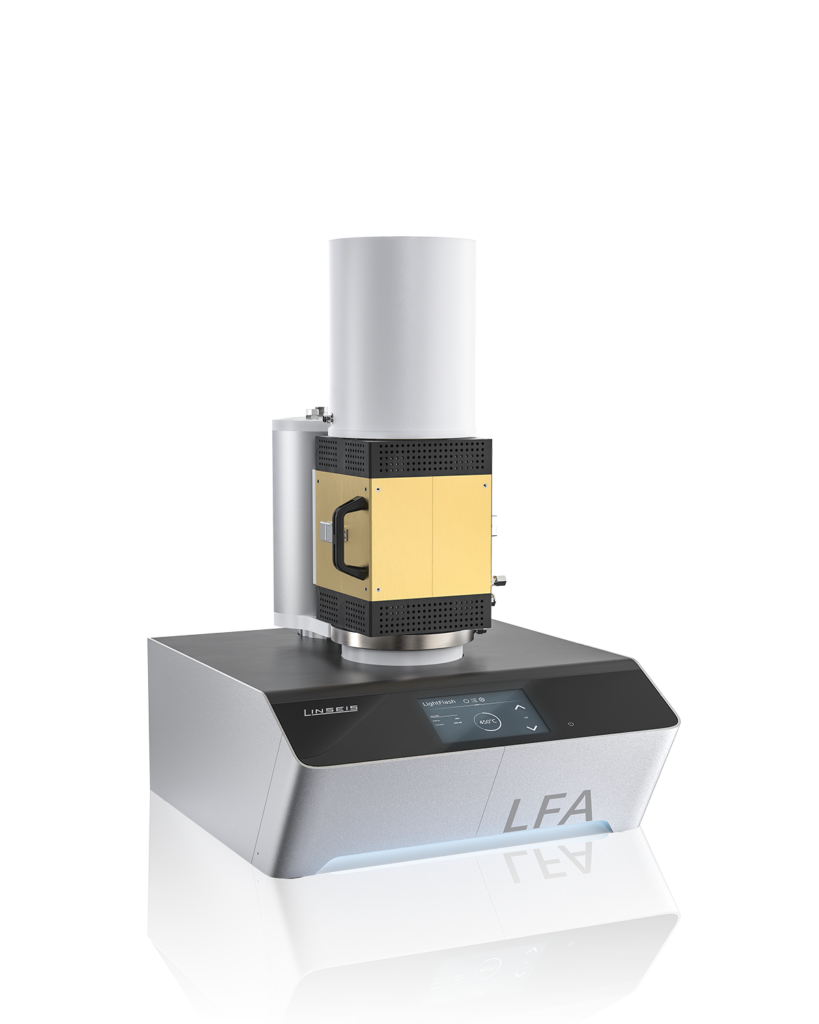
The LFA enables the determination of thermal diffusivity and thermal conductivity over a wide temperature range.
Analysis of
- Thermal Diffusivity
- Thermal conductivity
- Temperature Dependence
- Heat Transfer
Typical Applications
- High-Performance Insulation Materials
- Polymer Composite Materials
- Research Materials
- Lightweight components
Differential Scanning Calorimetry (DSC)
The DSC investigates thermal transitions and heat capacities of insulation materials.
Analysis of
- Heat Capacity
- Glass transitions
- Melting Processes
- Material Behavior
Typical Applications
- Polymer Insulation Materials
- Foams
- Composite Materials
- Functional Materials
Recommended Measuring Instruments for Thermal Insulation Materials

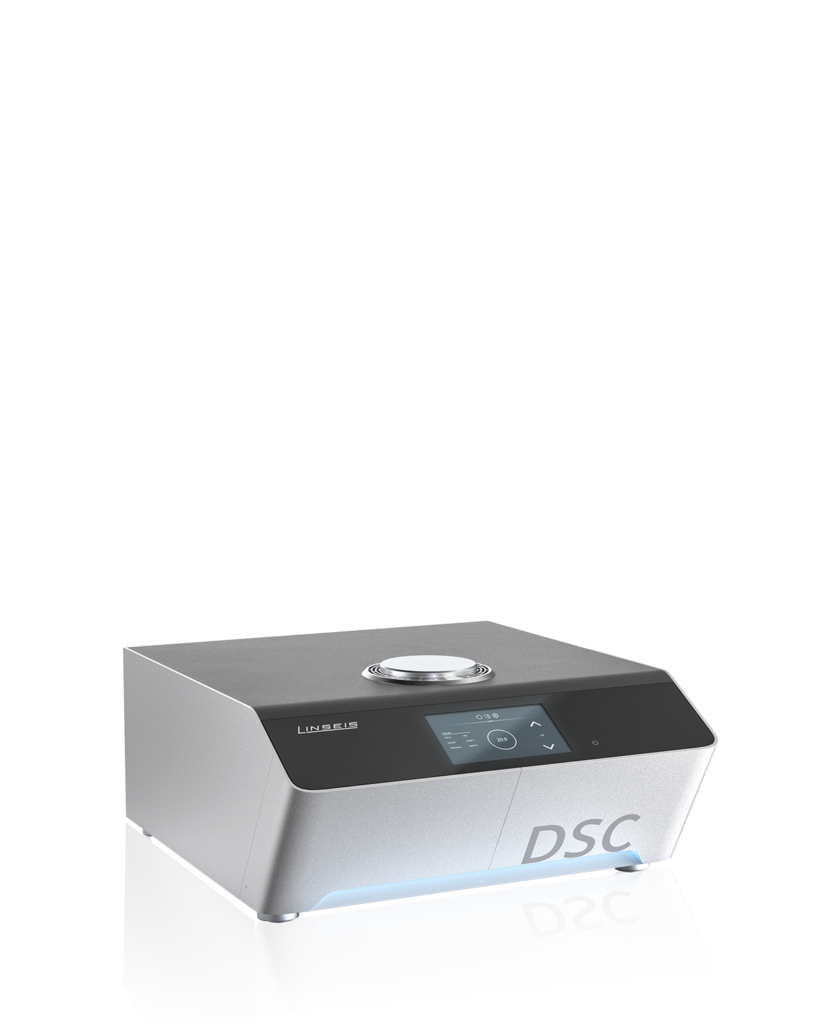
DSC L63


Case Study: Analysis of a Polymer Insulation Material
Thermal Conductivity of Graphene-Reinforced LDPE Composites
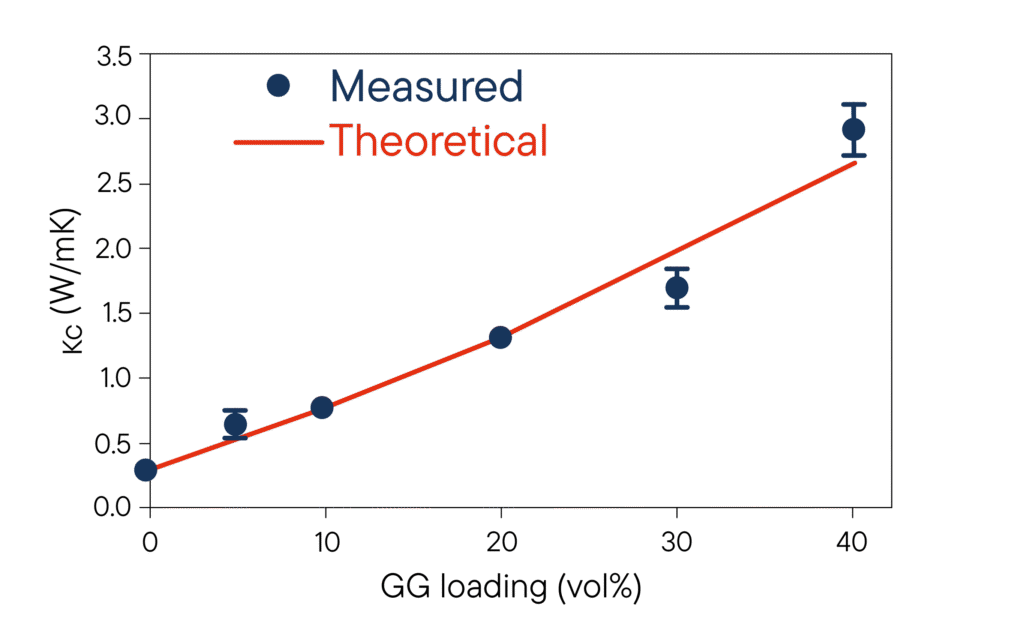
This practical example shows how the Linseis LFA L51 is used to analyze the thermal conductivity of graphene-reinforced LDPE composites. The measurement provides important information about the influence of graphene fillers on heat transfer in thermally conductive polymer materials.
Why Characterizing Thermal Insulation Properties Is Important
A material’s thermal properties play a key role in determining its suitability as an insulating material. Even small differences in thermal conductivity or material structure can significantly affect a system’s energy efficiency.
The combination of modern measurement methods makes it possible to:
- Determination of Thermal Conductivity
- Analysis of Thermal Diffusivity
- Study of Heat Transfer
- Development of High-Performance Insulation Materials
- Optimization of Lightweight Construction and Insulation Systems
- Quality Assurance and Material Comparison
Applications – Polymers
Chip-DSC 100 (Chip-DSC L66 Ultimate) – Polymer Oxidation – OIT (Oxidation Induction Time)
Chip-DSC 10 (Chip-DSC L66 Advanced) – Polymer Sample (PP) – Characterization of Polymers
Chip-DSC 10 (Chip-DSC L66 Advanced) – Polymer sample (PE) – characterization of polymers
FAQ – Thermal Insulation Materials
Why is thermal conductivity so important for polymer insulation materials?
Thermal conductivity describes how well a material conducts heat. The lower this value, the better the material is suited for use as insulation. Accurately determining thermal conductivity is therefore crucial for the development of energy-efficient insulation solutions.
What measurement methods are suitable for determining thermal insulation properties?
Depending on the material and application, methods such as THB, HFM, LFA, or DSC are used. These methods provide information on thermal conductivity, thermal diffusivity, heat capacity, and the general thermal behavior of polymer materials.
Which polymer materials are used as insulation?
The most common materials include polyurethane (PUR), polyisocyanurate (PIR), expanded polystyrene (EPS), extruded polystyrene (XPS), polyethylene foams, and modern high-performance composites.
How do fillers affect the thermal insulation properties of polymers?
Fillers can both increase and decrease thermal conductivity. While some additives are used to improve insulation, others are designed to specifically increase thermal conductivity for thermal management applications.
Why is thermal diffusivity relevant for insulation materials?
Thermal diffusivity describes how quickly heat spreads within a material. It complements thermal conductivity measurements and provides important information about a material’s dynamic temperature behavior.
In which industries are polymer insulation materials used?
Polymer-based insulation materials are used in the construction industry, automotive engineering, aerospace, cryotechnology, energy technology, electronics, and in a wide variety of cooling and insulation systems.