DIL L75 Vertical Single HT LT – Elastomer – Thermal Expansion
An elastomeric polymer is a polymer sample with a glass transition temperaturethat is generally lower than the temperature at which the material is used.
The main characteristic of an elastomer is that it is generally dimensionally stable yet flexible and can be deformed under load, while it returns to its original shape once the load is removed.
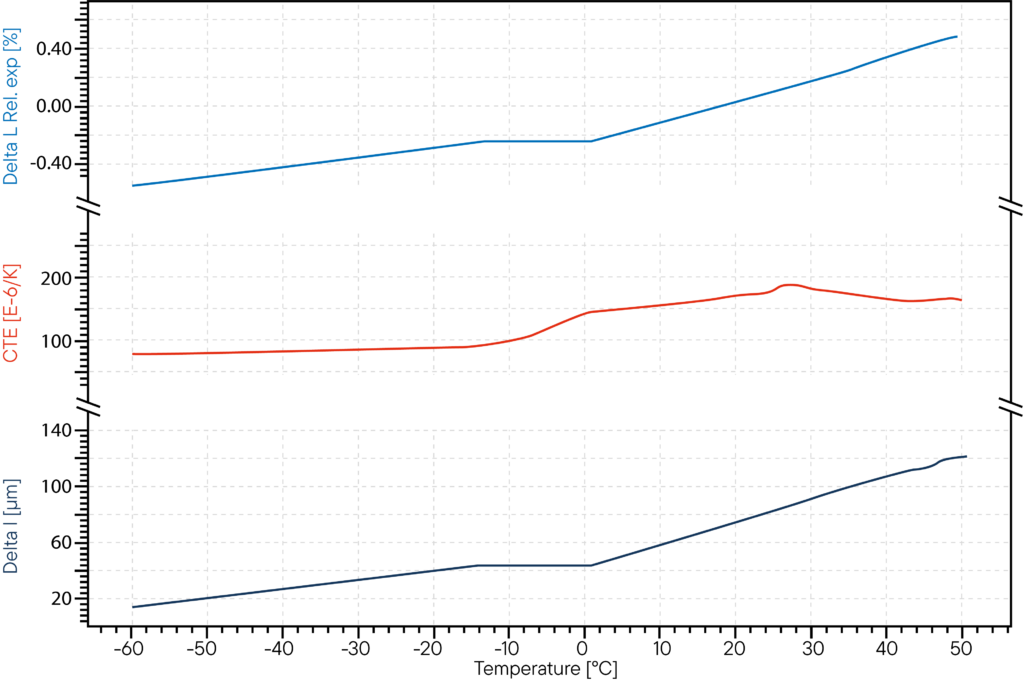
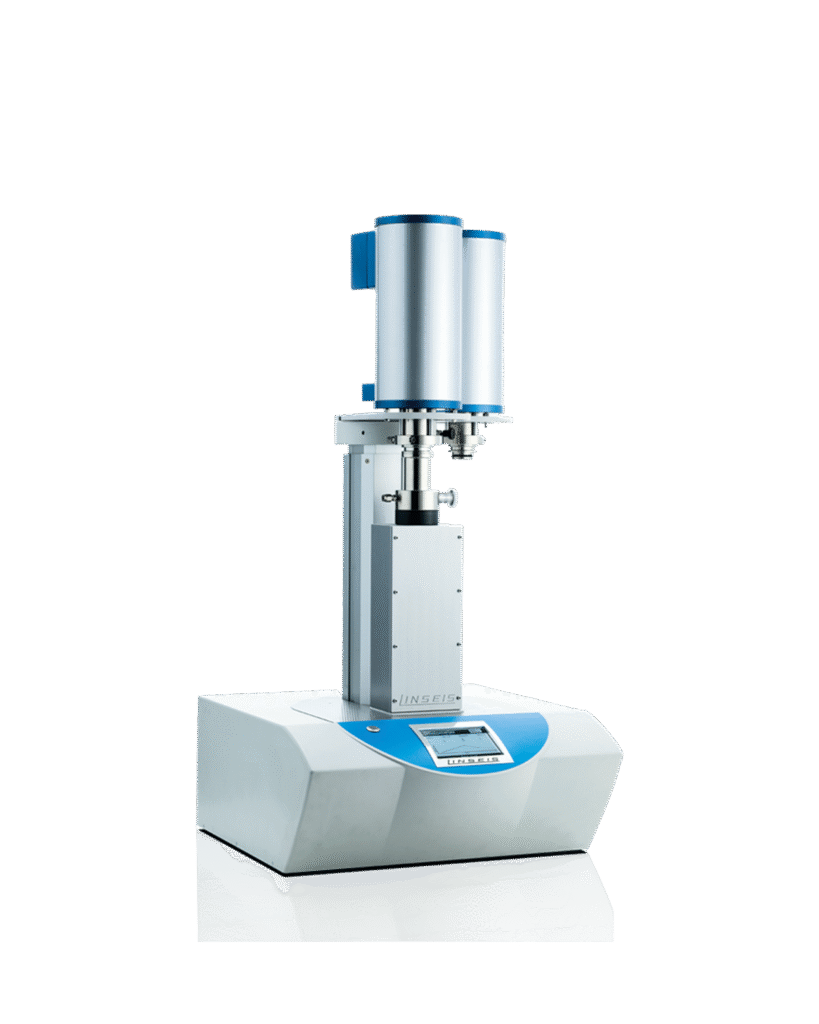
In this measurement example, an elastomer sample was tested using a horizontal L75 shear-rod dilatometer with liquid nitrogen cooling to determine the coefficient of thermal expansion below and above the glass transition temperature.
To do this, a rectangular piece of the elastomer was placed in the quartz sample holder. The device was then cooled to -60 °C, at which point the experiment began. The sample was heated to 50 °C at a linear heating rate of 2 K/min, and its expansion was recorded. As can be seen in the diagram, there is a transition region between -10 °C and 0 °C in which the sample’s expansion reaches a plateau.
The WAK before and after this plateau shows a significantly different range, which clearly indicates the different behavior of the elastomer before and after the glass transition temperature.