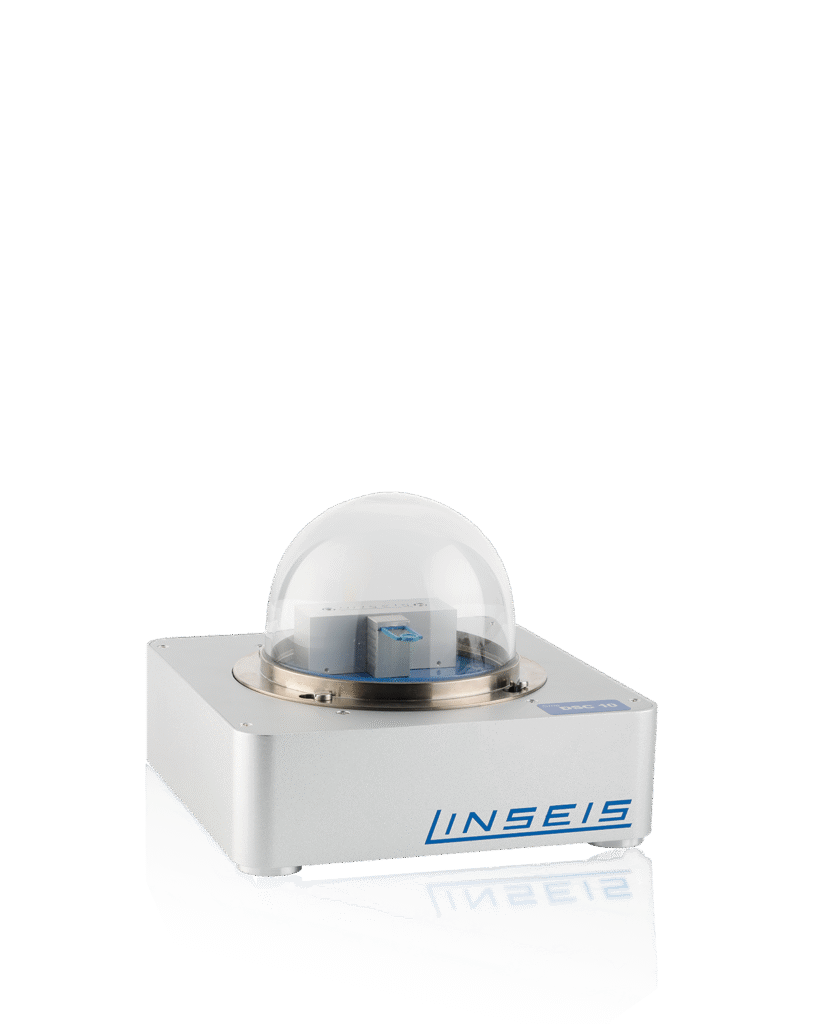
In particular, chip DSC is a powerful tool for identifying and evaluating polymers. Acrylonitrile-butadiene-styrene, abbreviated as ABS, is a very common copolymer. In practice, it is used for its high hardness, gloss, toughness, and electrical insulation properties.
It is known for its use in LEGO™, 3D printing, and many other applications because it is easy to work with.
In thermal analysis, it is often characterized by its glass transition at ~100 °C. The glass transition temperature is influenced by the amount of monomers used.
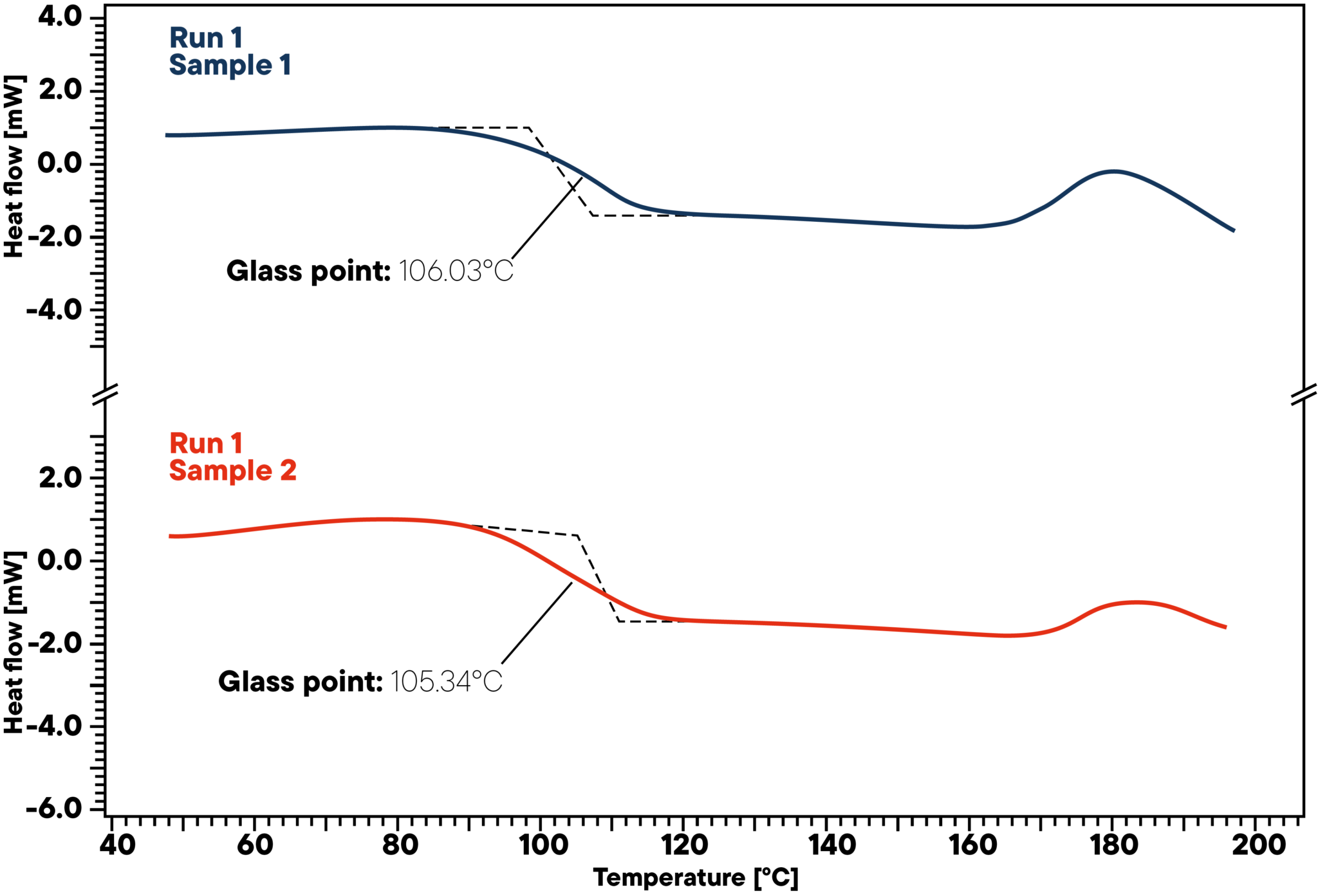
Determining Tg is therefore a good way to assess the quality of raw materials. In this example, two different ABS samples were analyzed using a Chip-DSC 1 (CHip-DSC L66 Basic) at a heating rate of 25 K/min.
Both curves show the first heating cycle, and in both cases, the typical glass transition of ABS at approximately 100 °C is evident.