

Polymer Recycling
Material Characterization for Sustainable Plastic Cycles and High-Quality Recyclates


Plastic recycling is an essential part of a sustainable circular economy. Recycling polymer materials reduces resource consumption, lowers CO₂ emissions, and allows valuable materials to be reused in new products.
However, the quality of recycled materials depends largely on their composition, thermal stability, and aging history. Modern analytical methods provide important information about material purity, polymer composition, additives, and degradation processes. This allows recycling processes to be optimized and high-quality secondary raw materials to be produced.
LINSEIS’s material characterization solutions enable the reliable analysis and evaluation of recycled materials, polymer blends, and recycling streams
Relevant Questions
- How does a polymer change as a result of repeated processing?
- What are the thermal properties of recycled material?
- What is the purity level of a recycled material?
- What additives or foreign substances are present?
- How does aging affect reusability?
- What types of polymers are found in a material stream?
- How does thermal stability change after recycling?
- How many times can a material be recycled?
- How do recycling processes affect material quality?
- How can high-quality recycled materials be produced?
Relevant Material and Process Parameters
| Parameter | Meaning |
|---|---|
| Melting temperature | Identification of polymer types |
| Glass transition temperature | Evaluation of Material Condition and Aging |
| Heat Capacity | Characterization of Thermal Properties |
| Mass Loss | Detection of additives and impurities |
| Thermal Stability | Evaluation of Processability |
| Ash Content | Determination of inorganic constituents |
| Oxidation Stability | Assessment of Aging and Service Life |
| Moisture Content | Impact on Processing and Quality |
| Crystallinity | Effect on Mechanical Properties |
| Polymer Composition | Quality Control of Recycled Materials |
Test Methods for Thermal Insulation Materials


Differential Scanning Calorimetry (DSC)
DSC enables the identification of polymers and the study of thermal transitions in recycled materials.
Analysis of
- Melting temperatures
- Glass transitions
- Crystallinity
- Material Aging
Typical Applications
- PE Recyclates
- PP Recyclates
- PET Recycling
- Polymer blends

Thermogravimetry (TGA)
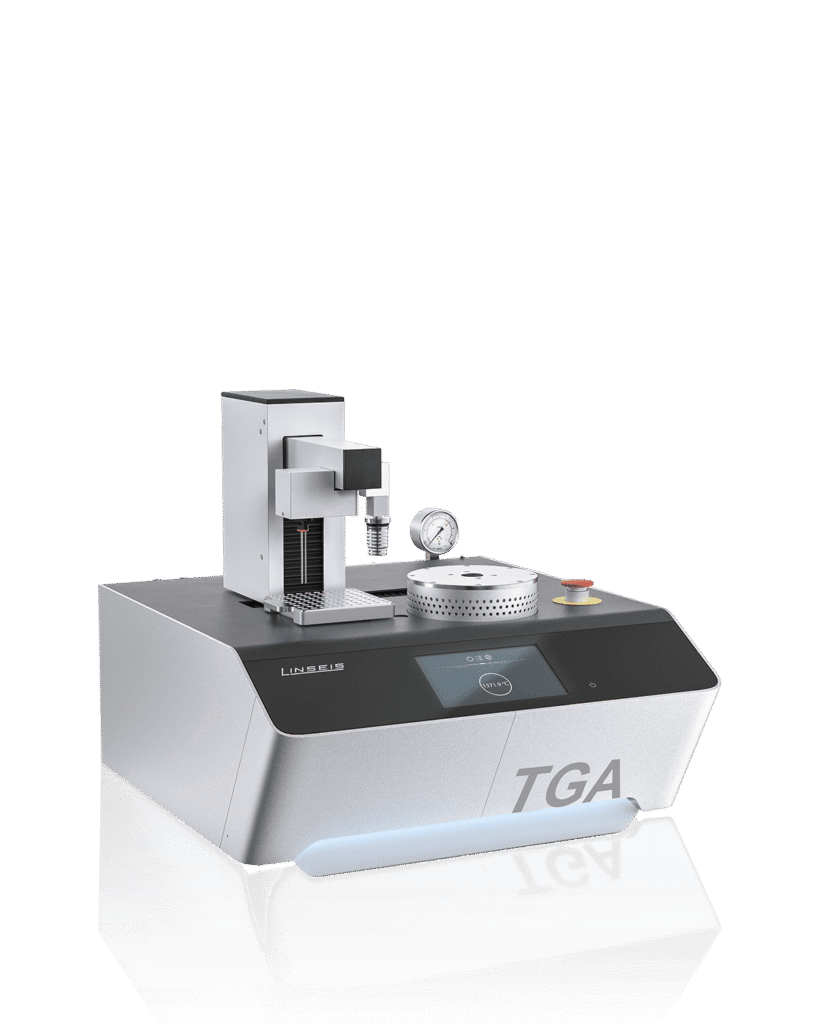
The TGA analyzes thermal stability, additives, and residues in recycled materials.
Analysis of
- Mass loss
- Additive content
- Fillers
- Ash content
Typical Applications
- Plastic waste
- Recycled materials
- Composite Materials
- Recycling streams

Simultaneous Thermal Analysis (STA)
STA combines TGA and DSC to provide a comprehensive analysis of recycled materials.
Analysis of
- Thermal Stability
- Melting processes
- Aging Behavior
- Material Composition
Typical Applications
- Recycled materials
- Polymer compounds
- Engineering Plastics
- Multi-component materials

Gas Analysis (EGA)
Coupled gas analysis identifies volatile components and decomposition products.
Analysis of
- Outgassing
- Additives
- Contaminations
- Decomposition products
Typical Applications
- Plastic Recycling
- Quality Control
- Pollutant Analyses
- Research and Development
Recommended Measurement Instruments for Polymer Recycling


DSC L63



Case Study: Analysis of a Recycled Polymer
Thermal Stability of PET/PBS Recyclates After Composting
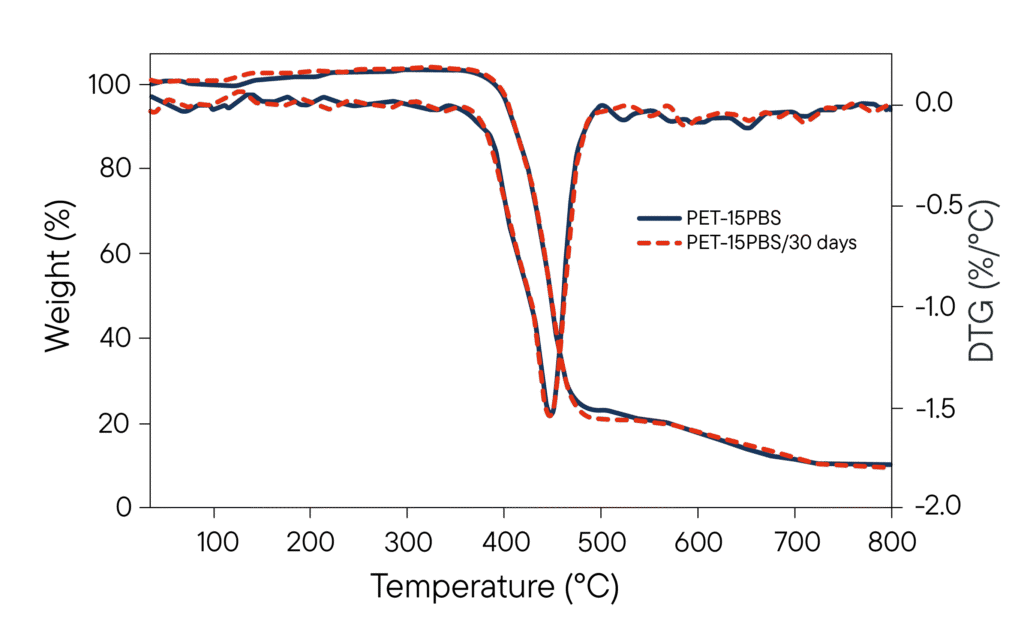
This practical example shows how the Linseis TGA L83 is used to investigate the thermal degradation behavior of PET/PBS recyclates. By comparing samples before and after composting, changes in thermal stability can be evaluated, and the potential effects of biodegradable impurities on the quality of recycled plastics can be investigated.
Why Material Analysis Is Crucial for Plastic Recycling
Recycling processes place high demands on quality assurance and material evaluation. Even minor changes in the polymer structure can affect the processability and performance of recycled materials.
The combination of modern measurement methods makes it possible to:
- Identification of Polymer Types
- Analysis of Aging and Degradation Processes
- Assessment of Material Purity
- Determination of Thermal Properties
- Optimization of Recycling Processes
- Quality Assurance for Recycled Materials
Applications – Polymers
Chip-DSC 100 (Chip-DSC L66 Ultimate) – Polymer Oxidation – OIT (Oxidation Induction Time)
Chip-DSC 10 (Chip-DSC L66 Advanced) – Polymer Sample (PP) – Characterization of Polymers
Chip-DSC 10 (Chip-DSC L66 Advanced) – Polymer sample (PE) – characterization of polymers
FAQ – Recycling
Why is material characterization important in polymer recycling?
Material characterization provides important information about the composition, aging, and quality of recycled materials. This allows for the determination of appropriate processing parameters and the production of high-quality recycled materials.
What measurement methods are suitable for analyzing recycled plastics?
DSC, TGA, STA, and coupled gas analyses are among the most important methods. They enable the identification of polymers as well as the assessment of aging, purity, and thermal stability.
How can different types of plastics be identified in recycling streams?
Thermal analysis methods such as DSC make it possible to identify plastics based on their characteristic melting and glass transition temperatures. This allows materials to be reliably classified and separated.
How does recycling affect the properties of polymers?
Multiple processing cycles can lead to chain degradation, oxidation, and changes in the material structure. This can affect mechanical properties, thermal stability, and processability.
What role do additives play in plastic recycling?
Additives affect the processing, stability, and service life of plastics. Analyzing their content is important for evaluating the quality and suitability of recycled materials for new applications.
How important is thermal stability for recycled materials?
Thermal stability determines whether a recycled material can be reprocessed without excessive material degradation. It is therefore a key quality parameter in plastics recycling.