

Oxidation and Aging of Polymers
Understand, evaluate, and optimize the long-term stability of polymeric materials under real-world operating conditions


Throughout their entire service life, polymers are exposed to various environmental factors. Temperature, oxygen, UV radiation, moisture, and mechanical stress can lead to aging processes that alter the material’s properties and performance over the long term.
The study of oxidation and aging processes is therefore an essential part of materials development and quality assurance. Modern analytical methods make it possible to evaluate stability, service life, and resistance to aging, as well as to develop high-performance, durable polymer materials.
LINSEIS’s material characterization solutions enable the early detection of aging processes and the targeted optimization of materials for demanding applications.
Relevant Questions
- How does a polymer change during long-term thermal exposure?
- What effect does oxygen have on material stability?
- How does a polymer age under real-world conditions?
- Which additives improve resistance to aging?
- How does the oxidation stability change over the product’s service life?
- What temperatures accelerate aging processes?
- How does UV radiation affect material properties?
- When do the first signs of degradation appear?
- Which materials offer the highest long-term stability?
- How can outages and equipment failures be prevented?
Relevant Material and Process Parameters
| Parameter | Meaning |
|---|---|
| Oxidation Induction Time (OIT) | Evaluation of Oxidation Resistance |
| Oxidation Induction Temperature (OIT) | Temperature resistance to oxidation |
| Mass loss | Detection of degradation processes |
| Thermal Stability | Behavior under long-term stress |
| Glass transition temperature | Changes in the material structure |
| Decomposition temperature | Assessment of Long-Term Stability |
| Aging Behavior | Prediction of Service Life |
| Residual stability | Evaluation of Remaining Material Properties |
| Moisture Absorption | Impact on Aging Processes |
| UV Resistance | Long-term performance in outdoor use |
Test Methods for Thermal Insulation Materials

Differential Scanning Calorimetry (DSC)
DSC enables the determination of the oxidation induction time (OIT) and the oxidation induction temperature (OIT), two of the most important parameters for evaluating the aging resistance of polymers.
Analysis of
- Oxidation Induction Time (OIT)
- Oxidation Induction Temperature (OOT)
- Glass transitions
- Aging Behavior
Typical Applications
- Polyolefins
- Packaging Materials
- Pipes
- Cable Insulation
Thermogravimetry (TGA)
The TGA examines decomposition and oxidation processes under controlled conditions.
Analysis of
- Mass loss
- Thermal Stability
- Oxidation
- Mining
Typical Applications
- High-Performance Polymers
- Elastomers
- Engineering Plastics
- Composite Materials
Simultaneous Thermal Analysis (STA)
STA combines heat flux and mass change analysis to provide a comprehensive investigation of aging and degradation processes.
Analysis of
- Oxidation
- Mining
- Reactivity
- Thermal Stability
Typical Applications
- Polymer compounds
- Composite Materials
- High-temperature polymers
- Specialty Plastics

Gas Analysis (EGA)
Coupled gas analysis identifies gases released during aging and decomposition processes.
Analysis of
- Metabolites
- Oxidizing gases
- Reaction Mechanisms
- Material degradation
Typical Applications
- Aging Studies
- Fire Behavior
- Quality Control
- Research and Development
Recommended Instruments for Oxidation and Aging


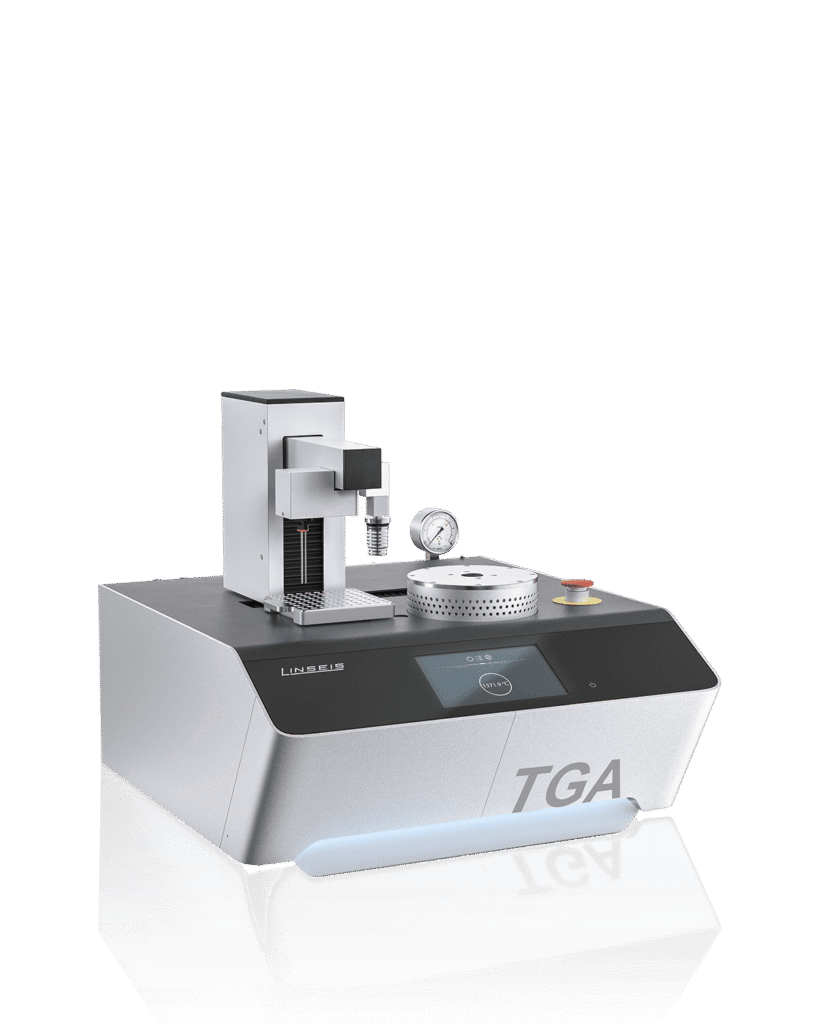
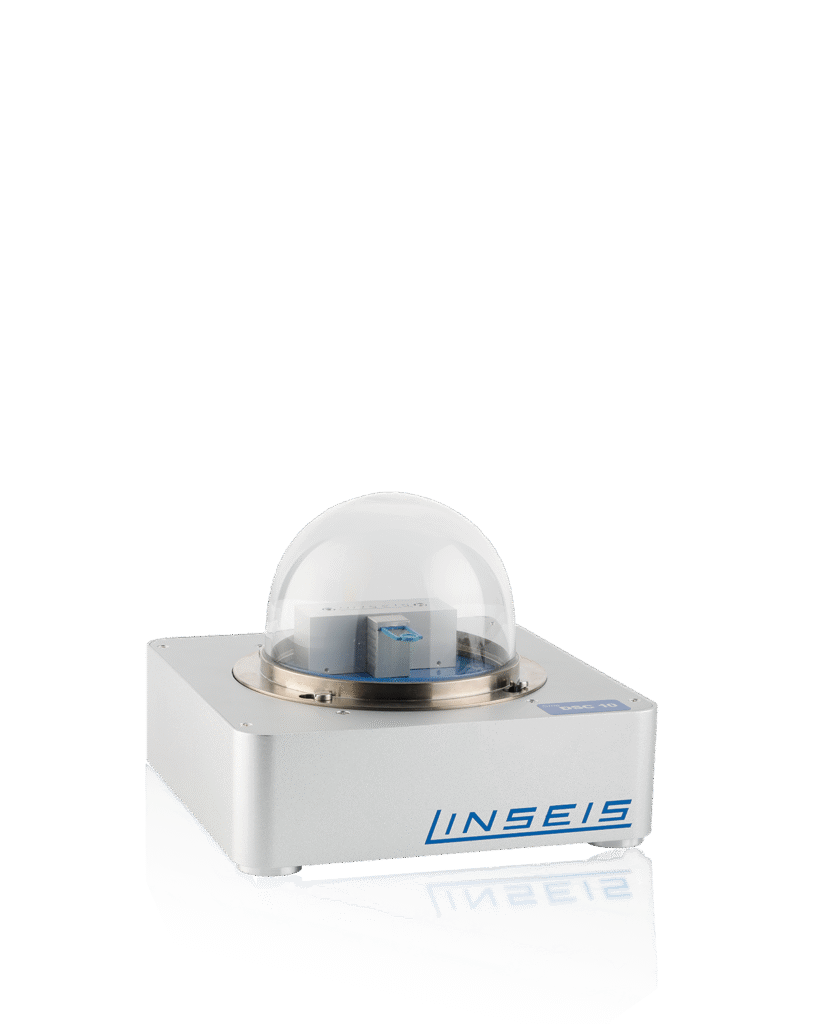
DSC L63

Case Study: Analysis of the Oxidation Stability of a Polymer Material
Thermal Stability of Naturally Weathered PVC Formulations
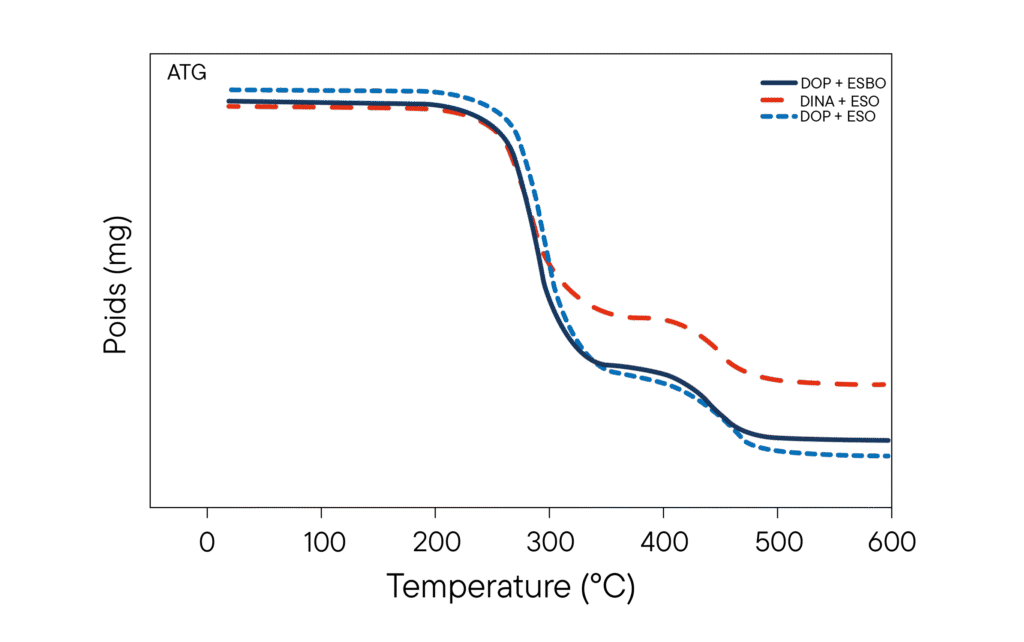
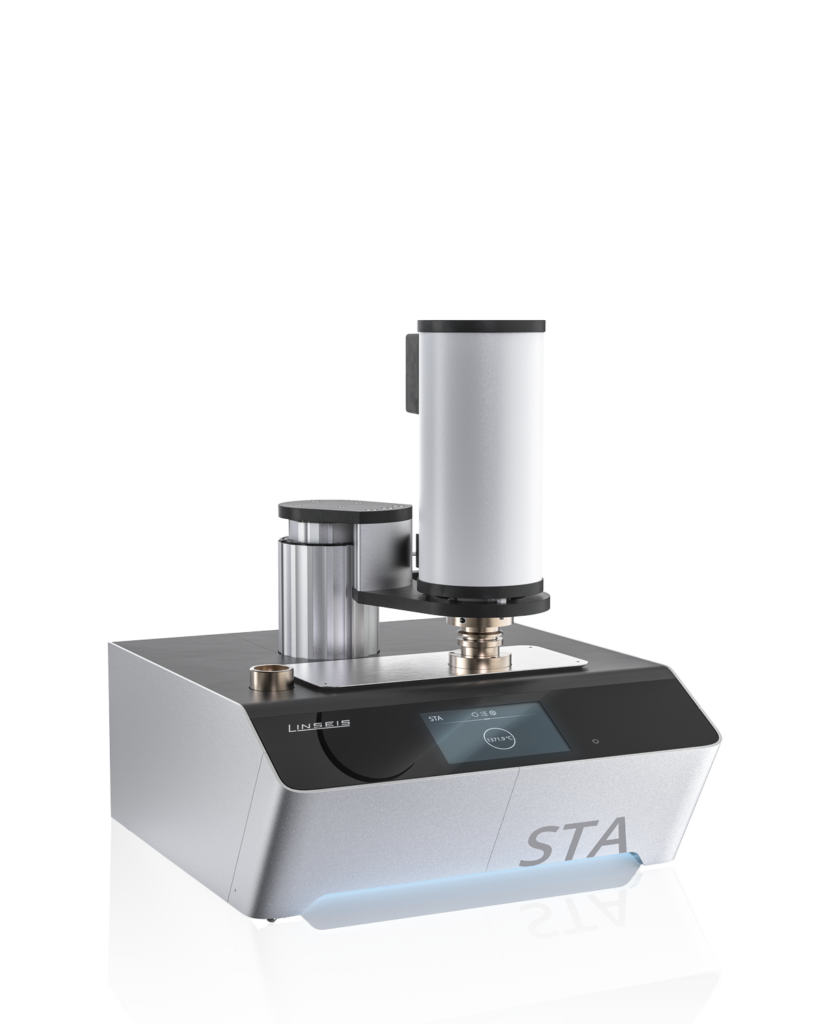
This practical example shows how the Linseis STA L81 is used to investigate the aging and degradation behavior of PVC formulations. The measurements provide important information about thermal stability, degradation processes, and the long-term durability of polymeric materials under real-world environmental conditions.
Why Analyzing Oxidation and Aging Is Crucial
Aging processes affect the mechanical, thermal, and chemical properties of polymer materials. Even minor changes in the material structure can lead to embrittlement, discoloration, loss of strength, or a reduced service life.
The combination of modern measurement methods makes it possible to:
- Analysis of Oxidative Aging Processes
- Determination of Oxidation Stability
- Assessment of Thermal Stress Resistance
- Study of Material Degradation
- Optimization of Formulations and Additives
- Prediction of Long-Term Behavior and Service Life
Applications – Polymers
Chip-DSC 100 (Chip-DSC L66 Ultimate) – Polymer Oxidation – OIT (Oxidation Induction Time)
Chip-DSC 10 (Chip-DSC L66 Advanced) – Polymer Sample (PP) – Characterization of Polymers
Chip-DSC 10 (Chip-DSC L66 Advanced) – Polymer sample (PE) – characterization of polymers
FAQ – Oxidation and Aging
Why is it important to study oxidation and aging in polymers?
Oxidation and aging have a significant impact on a material’s service life and performance. Early analysis can help prevent material damage and enable products to be specifically optimized for long-term applications.
What is the oxidation induction time (OIT)?
The oxidation induction time describes the time interval until the onset of a measurable oxidation reaction under defined conditions. It is an important parameter for evaluating the aging resistance of polymers.
What measurement methods are suitable for analyzing aging processes?
DSC, TGA, STA, TMA, and coupled gas analyses provide important information about oxidative stability, degradation, material breakdown, and changes in material structure.
What factors influence the aging of polymers?
The most important factors include temperature, oxygen, UV radiation, humidity, chemical agents, and mechanical stress. Often, several factors act simultaneously and accelerate material aging.
How can aging tests support product development?
Aging tests allow for the evaluation of new materials and additives under accelerated conditions. This makes it possible to predict service life and improve materials in a targeted manner.
In which industries does the analysis of oxidation and aging play an important role?
These studies are particularly important in the automotive, electronics, construction, medical technology, packaging, energy, and aerospace industries, where long-term material reliability is crucial.