

Curing and UV Curing of Polymers
Precise material characterization for optimizing cross-linking reactions, curing processes, and UV-curing systems


Curing and UV-curing processes play a central role in the manufacture of modern polymer materials. From adhesives and coatings to fiber-reinforced composites, cross-linking reactions significantly determine the mechanical, thermal, and chemical properties of the final product.
The development of high-performance materials requires a detailed understanding of reaction kinetics, heat generation, degree of cross-linking, and long-term stability. Modern measurement techniques provide important information for optimizing production processes and ensuring consistently high product quality.
LINSEIS’s material characterization solutions enable the precise analysis of curing processes and the targeted optimization of process parameters.
Typical Challenges in Curing Processes
Relevant Questions
- At what temperature does the curing reaction begin?
- How quickly does the networking process take place?
- What level of connectivity is achieved?
- How does UV radiation affect material properties?
- What curing conditions produce optimal material properties?
- How do thermal conductivity and heat capacity change during hardening?
- How do additives affect the curing process?
- How can production time be reduced?
- How can material defects and incomplete cross-linking be prevented?
- How does curing affect long-term stability?
Relevant Material and Process Parameters
| Parameter | Meaning |
|---|---|
| Onset of curing | Start of the cross-linking reaction |
| Curing Temperature | Optimization of the process window |
| Reaction Enthalpy | Evaluation of the curing process |
| Degree of cross-linking | Material Properties After Curing |
| Glass transition temperature (Tg) | Operating temperature of the material |
| Thermal Conductivity | Thermal Management During Curing |
| Thermal Stability | Behavior under stress |
| Residual reactivity | Assessment of Incomplete Curing |
| UV Reaction Rate | Efficiency of UV curing |
| Aging Behavior | Long-term performance |
Measurement Methods for Curing Processes
Differential Scanning Calorimetry (DSC)
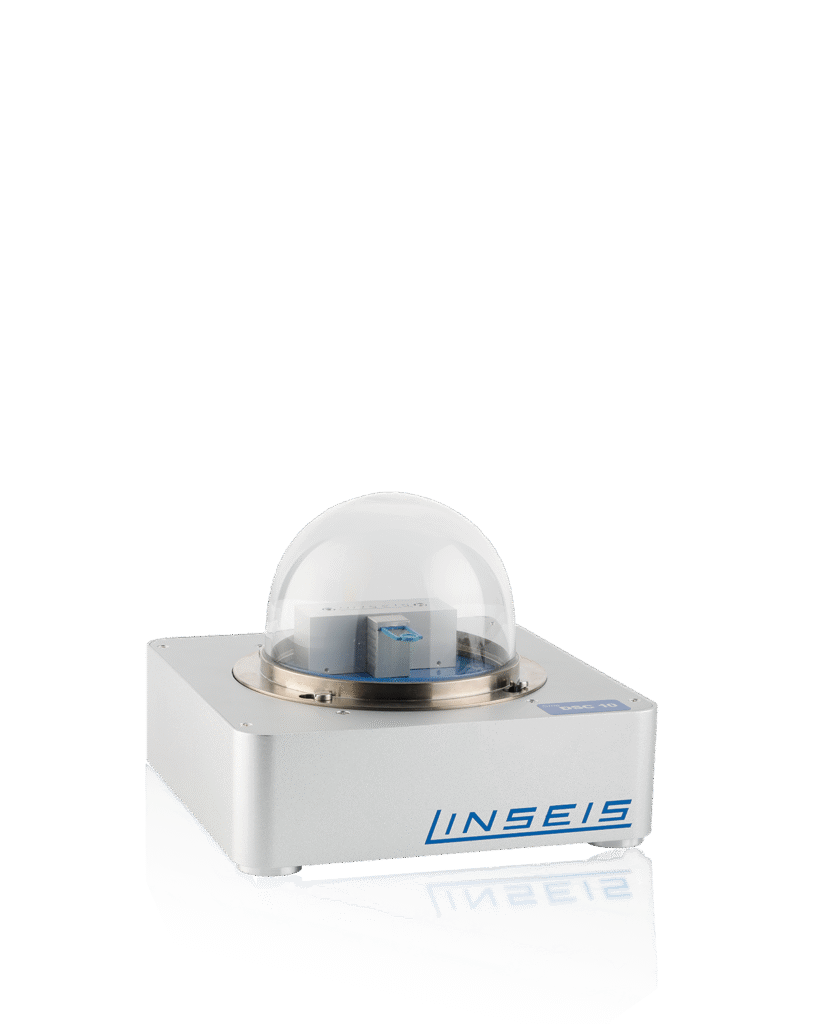
DSC enables the precise analysis of curing reactions and thermal transitions.
Analysis of
- Curing Reactions
- Reaction enthalpy
- Glass transitions
- Degree of connectivity
Typical Applications
- Epoxy resins
- Adhesives
- Coatings
- UV-curing systems

Simultaneous Thermal Analysis (STA)
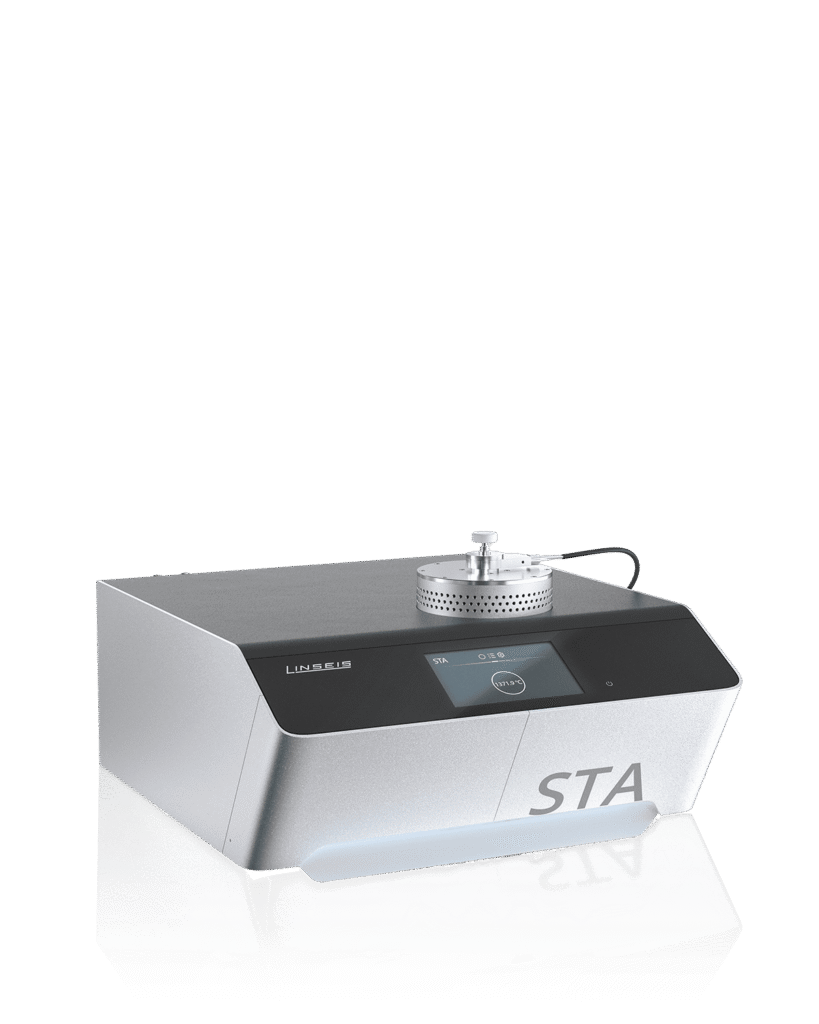
The STA combines heat flux and mass change measurements to provide comprehensive material characterization.
Analysis of
- Thermal Stability
- Mining
- Reactivity
- Networking processes
Typical Applications
- High-Performance Polymers
- Composite Materials
- Resin Systems
- Coatings
Thermogravimetry (TGA)
The TGA examines aging and decomposition processes after curing.
Analysis of
- Thermal Stability
- Decomposition
- Oxidation
- Material Composition
Typical Applications
- thermosets
- Coatings
- Adhesives
- Composite Materials

Thermomechanical Analysis (TMA)
TMA analyzes dimensional changes during and after curing.
Analysis of
- Shrinkage
- Expansion
- Stress Development
- Dimensional Stability
Typical Applications
- Electronic Materials
- Composite Materials
- Encapsulants
- High-precision components
Recommended Measurement Instruments for Curing and UV Curing

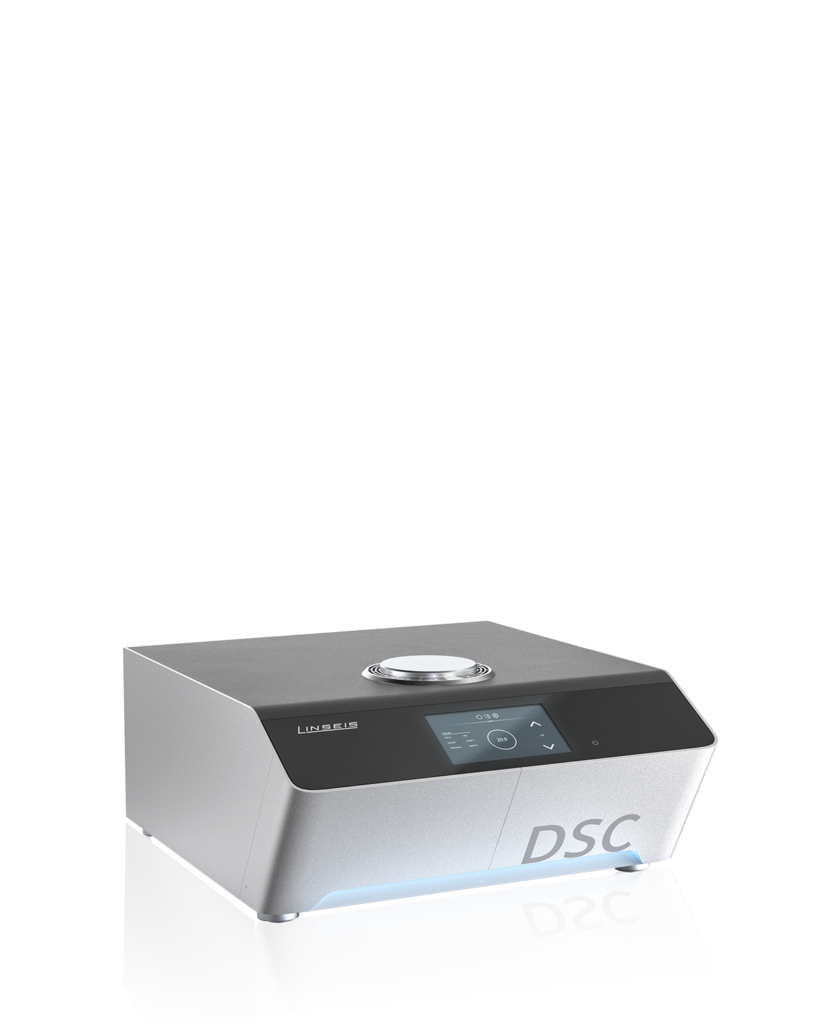
DSC L63
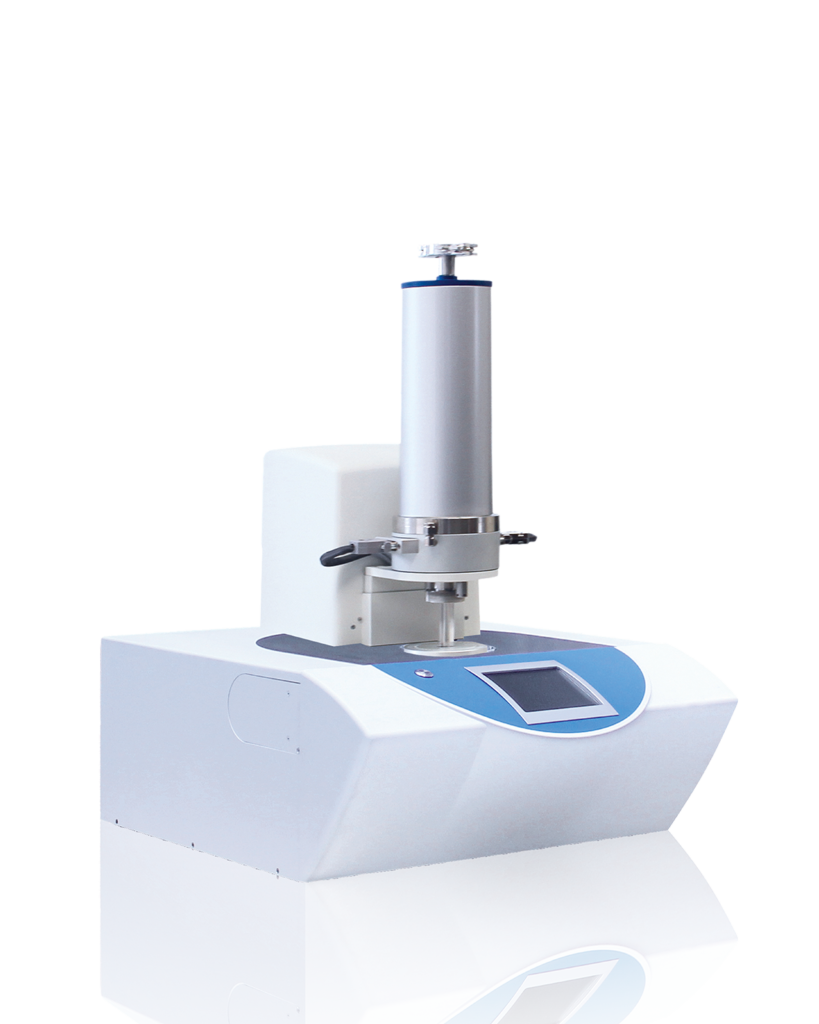
Case Study: Analysis of UV Curing in a Dual-Cure Resin System
Curing Kinetics of UV-Curable Resin Systems
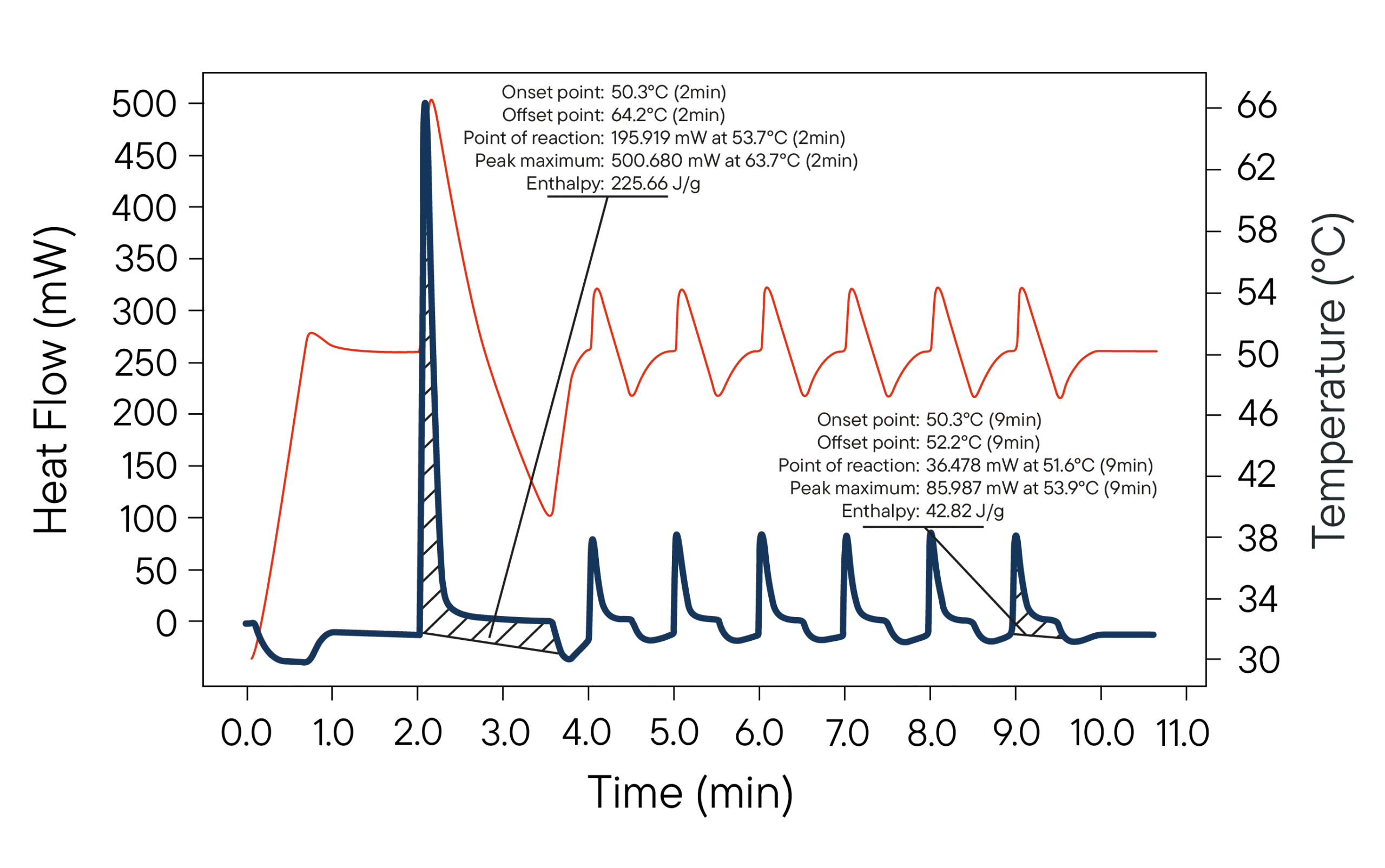
This practical example demonstrates how the Linseis Chip-DSC L66 Advanced with UV option is used to analyze UV curing reactions. The measurement allows for the determination of reaction enthalpy, curing kinetics, and degree of conversion, and provides important information for optimizing coatings, adhesives, and additive manufacturing processes.
Why Material Characterization Is Crucial for Curing Processes
Even slight changes in temperature, UV intensity, or material composition can significantly affect the final result. A precise analysis enables the optimization of production processes and the development of high-performance materials.
The combination of modern measurement methods makes it possible to:
- Analysis of Curing and Cross-linking Reactions
- Determination of Reaction Kinetics and Reaction Enthalpy
- Study of Thermal Transitions
- Assessment of Thermal Stability
- Optimization of UV Curing Processes
- Development of New Resin and Coating Systems
Applications – Polymers
FAQ – Curing and UV Curing
Why is it important to analyze curing processes in polymers?
Curing plays a decisive role in determining the subsequent material properties of a polymer. Mechanical strength, temperature resistance, chemical resistance, and dimensional stability depend directly on the degree of cross-linking and the process conditions. A precise analysis enables the optimization of formulations and production processes.
What measurement methods are suitable for studying curing and UV-curing processes?
DSC, chip-DSC, STA, TGA, and TMA are the primary methods used to characterize curing reactions. These methods provide information on reaction kinetics, reaction enthalpy, thermal stability, degree of cross-linking, and dimensional changes during curing.
What is the difference between thermal curing and UV curing?
In thermal curing, the cross-linking reaction is activated by heat. UV curing, on the other hand, uses light of a specific wavelength to trigger polymerization. UV-curing systems often enable significantly shorter processing times and are used, for example, in coatings, adhesives, and additive manufacturing processes.
Why is the reaction enthalpy relevant in curing processes?
The reaction enthalpy provides information about the energy released or absorbed during the cross-linking reaction. It allows conclusions to be drawn about the progress of the reaction, the degree of cross-linking, and the efficiency of a curing process, and is therefore an important parameter in process optimization.
How can the degree of cross-linking of a polymer be determined?
The degree of cross-linking can be determined using calorimetric methods such as DSC or chip-DSC. By comparing the remaining reaction enthalpy before and after curing, it is possible to assess how completely the cross-linking reaction has proceeded.
What advantages does chip DSC offer for the analysis of UV-curable materials?
The Chip-DSC enables extremely fast measurements with high sensitivity and, when used in combination with UV light sources, can directly detect the curing reaction during irradiation. This allows for the precise determination of reaction kinetics, curing rate, and optimal process parameters.
What materials are typically analyzed using hardening analysis?
Materials frequently analyzed include epoxy resins, acrylates, UV coatings, adhesives, coatings, potting compounds, dental materials, and matrix systems for fiber-reinforced composites. The analysis supports both material development and quality assurance.
How can curing analyses contribute to process optimization?
By determining optimal curing conditions, cycle times can be shortened, energy consumption reduced, and product quality improved. At the same time, material defects such as incomplete cross-linking, over-curing, or stress buildup can be avoided.