

High-Temperature Materials
Precise Material Characterization for Extreme Temperatures in the Energy, Aerospace, and Industrial Sectors


Modern manufacturing processes such as forging, rolling, welding, heat treatment, and additive manufacturing place the highest demands on the thermal behavior of metallic materials. Even the slightest changes in thermal expansion, microstructure, or phase distribution can have a decisive impact on component quality, dimensional accuracy, and service life.
The precise characterization of thermal expansion, phase transitions, thermal stability and thermal conductivity therefore forms the basis for the development of robust manufacturing processes and high-quality components. Modern thermoanalytical methods enable the targeted optimization of materials, heat treatments, and process parameters.
LINSEIS analytical instruments can be used to characterize metallic materials throughout the entire manufacturing process—from material development and process optimization to quality assurance.
Relevant Questions
- How does thermal expansion change during heat treatment?
- What phase changes occur during heating and cooling?
- How do heat treatments affect material properties?
- Which materials are suitable for additive manufacturing processes?
- How do thermal stresses develop during the joining process?
- How does the microstructure change after welding or forming processes?
- Which process parameters result in optimal material properties?
- How can the dimensional stability of thermally stressed components be improved?
Relevant Material and Process Parameters
| Parameter | Meaning |
|---|---|
| Coefficient of Thermal Expansion (CTE) | Dimensional stability during forming and heat treatment processes |
| Phase Transitions | Microstructural Development During Heating and Cooling |
| Austenitizing and Martensitic Temperatures | Optimization of Hardening and Heat Treatment Processes |
| Thermal Stresses | Evaluation of Warpage and Component Quality |
| Thermal Conductivity | Temperature distribution and heat dissipation in the workpiece |
| Thermal Stability | Behavior During Repeated Temperature Cycles |
| Thermal Conductivity | Rate at which heat propagates through a material |
| Microstructural Stability | Long-term stability of the microstructure under thermal stress |
Measurement Methods for Alloys & Phase Diagrams


Dilatometry (DIL)
Determination of thermal expansion and analysis of phase transformations and heat treatments of metallic materials.
Analysis of
- Thermal expansion
- Coefficient of Thermal Expansion (CTE)
- Phase Transitions
- Austenitization
- Martensite Formation
Typical Applications
- Tool Steels
- Heat Treatment
- Additive Manufacturing
- Welding Technology
- CCT and TTT Diagrams
Differential Scanning Calorimetry (DSC)
Analysis of thermal transitions and thermal effects during manufacturing and heat treatment processes.
Analysis of
- Phase transitions
- Elimination Reactions
- Heat Capacity
- Melting Processes
- Reaction enthalpies
Typical Applications
- Tool Steels
- Aluminum Alloys
- Titanium alloys
- Material Development
- Process Optimization
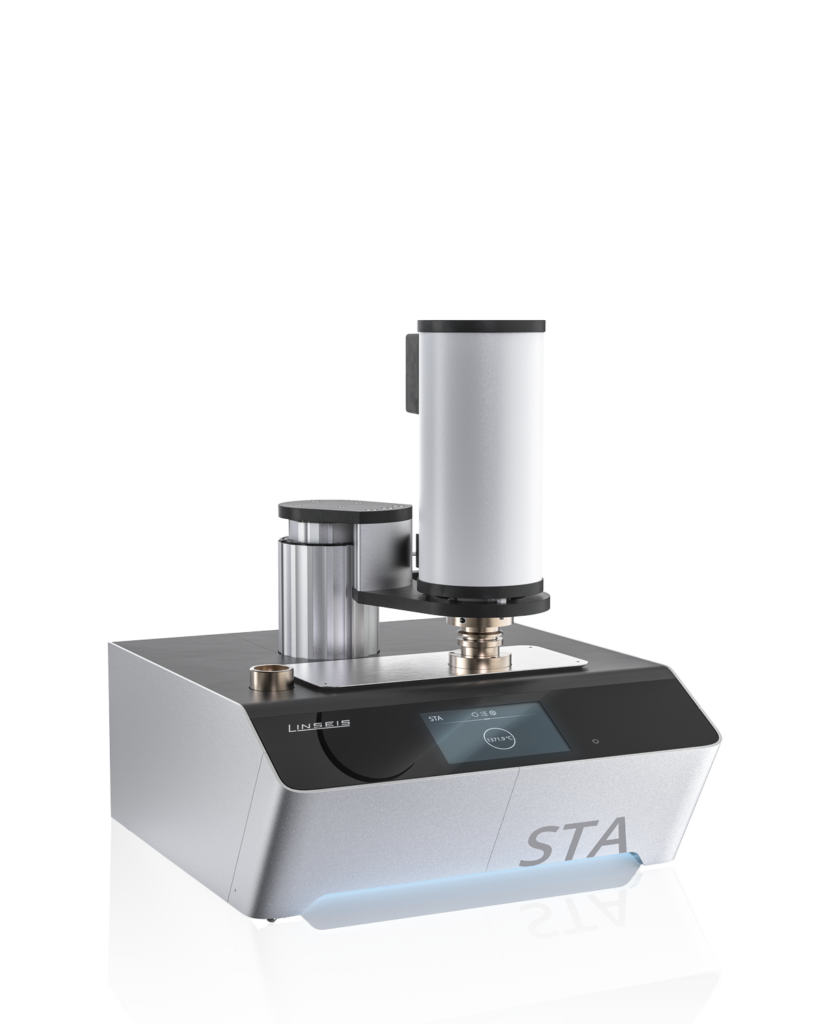
Simultaneous Thermal Analysis (STA)
Investigation of thermal reactions and changes in mass under various process conditions.
Analysis of
- Oxidation
- Thermal stability
- High-temperature reactions
- Bulk Changes
- Material Behavior
Typical Applications
- Heat Treatment
- Powder Metallurgy
- Additive Manufacturing
- Material Development
- Quality Control

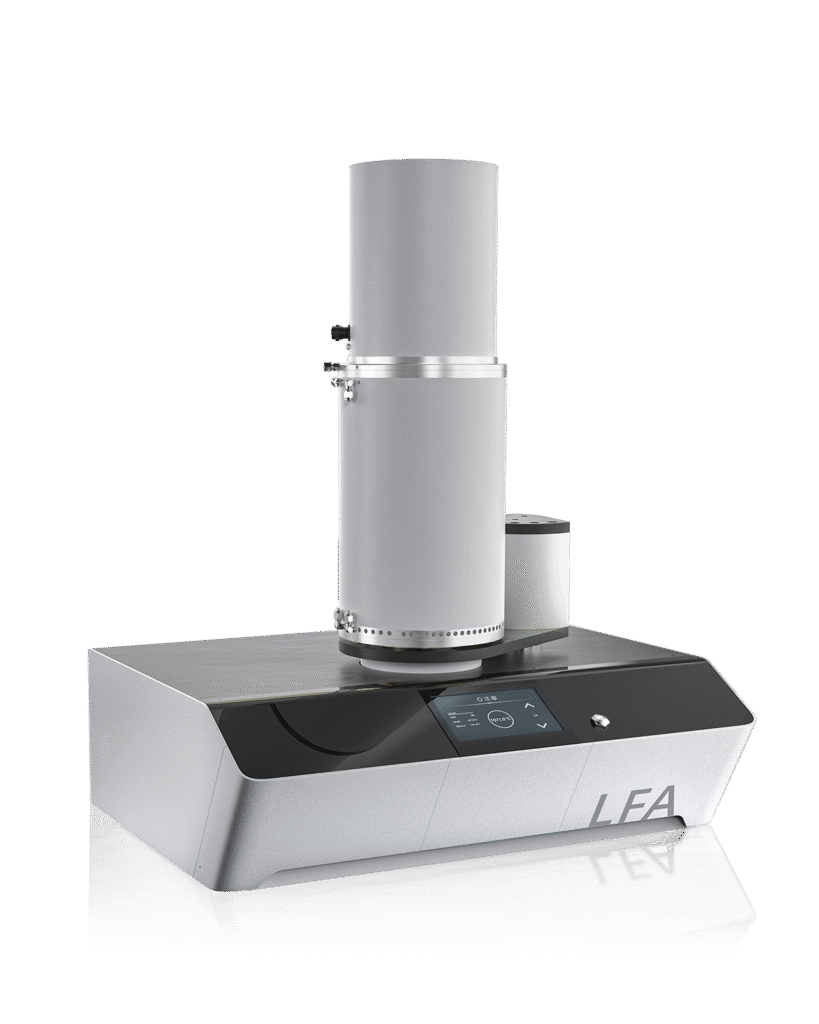
Laser Flash Analysis (LFA)
Determination of the thermal conductivity and temperature conductivity of metallic materials.
Analysis of
- Thermal conductivity
- Thermal Conductivity
- Heat diffusion
- Thermal Management
- Temperature-Dependent Properties
Typical Applications
- Tool Steels
- Welded Joints
- Additively Manufactured Components
- High-Performance Alloys
- Process Development
Recommended Measuring Instruments for High-Temperature Materials

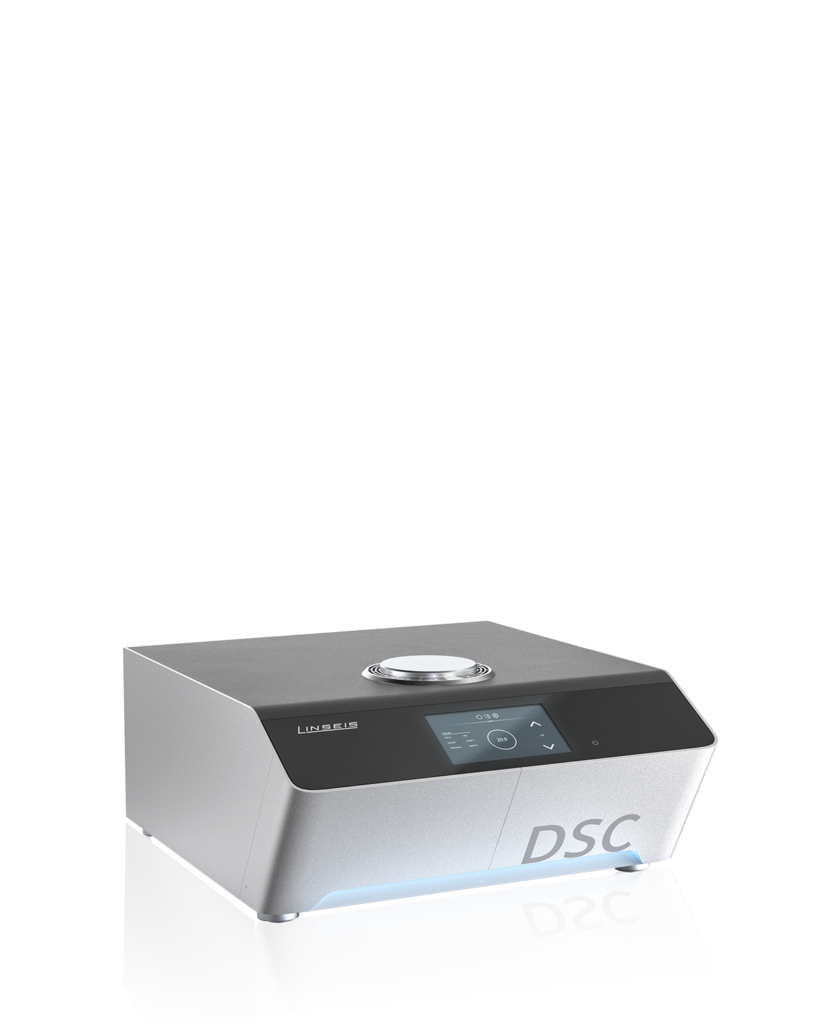
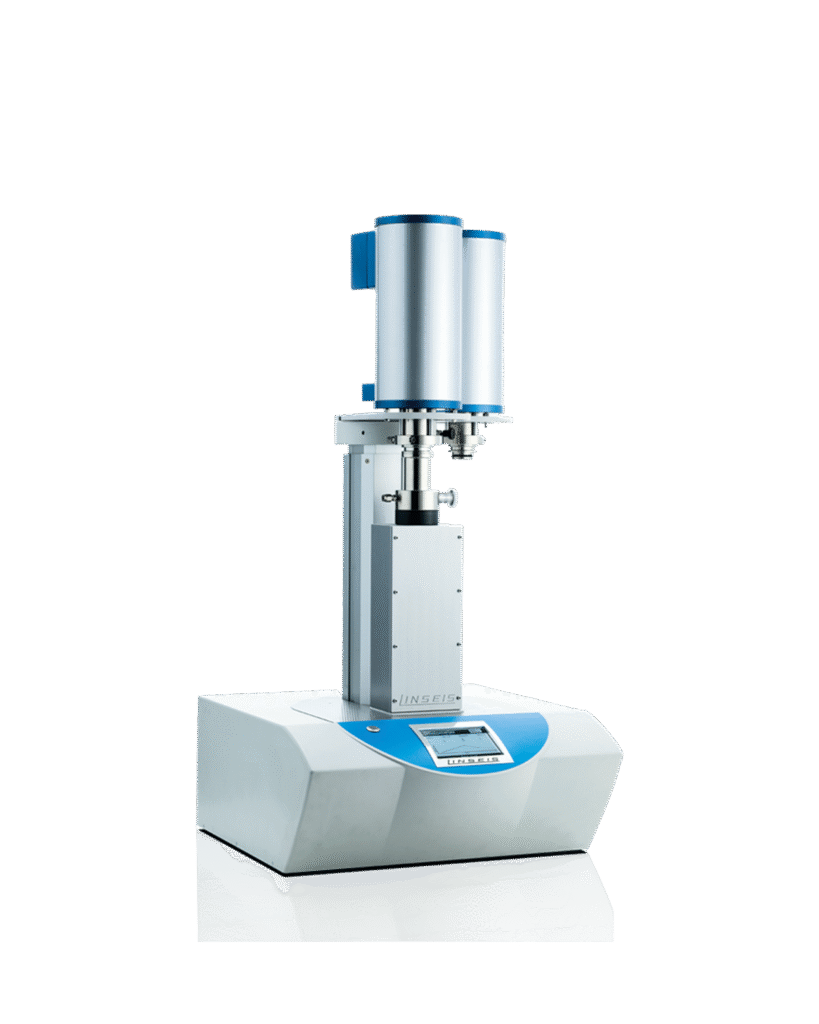
DSC L63

Case Study: Thermal Expansion of Additively Manufactured Tool Steels
Characterization of the Thermal Expansion Behavior of Additively Manufactured Tool Steels
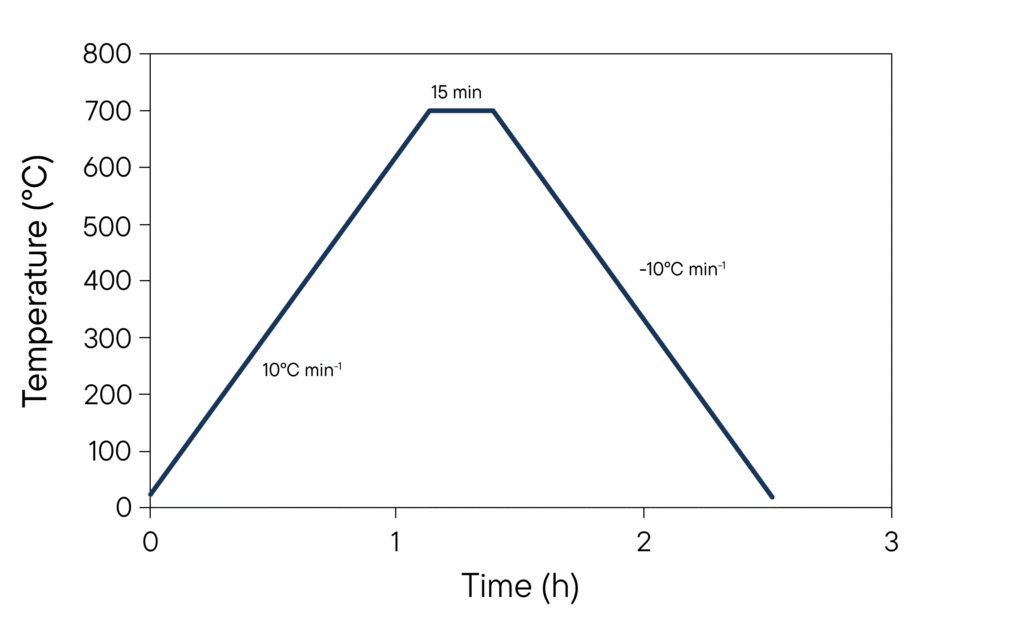
Thermal expansion is a critical parameter for materials in forming and microstructure engineering. With the LINSEIS DIL L75 Vertical was used to investigate the thermal expansion behavior of an additively manufactured Fe-Cr-Mo-V-Mn tool steel before and after heat treatment. The measurements demonstrate the influence of heat treatment on the coefficient of thermal expansion as well as on microstructural stability and confirm the material’s high dimensional stability for demanding tooling and manufacturing applications.
Why Material Characterization Is Crucial in Metal Forming and Microstructure Engineering
The quality of modern manufacturing processes is largely determined by the thermal behavior of the materials used. Comprehensive thermoanalytical characterization supports the development of stable processes, reduces component warpage, and improves the long-term performance of metallic components.
The combination of modern analytical methods makes it possible to:
- Determination of Thermal Expansion and CTE
- Analysis of Phase Transitions
- Optimization of Heat Treatments
- Evaluation of Thermal Stresses
- Characterization of Additively Manufactured Materials
- Improvements in Forming and Joining Processes
Applications – Metals and Alloys
FAQ – Metal Forming and Microstructure Technology
Why is thermal expansion so important for forming and joining processes?
During heat treatment, welding, or additive manufacturing processes, temperature gradients arise that can lead to thermal stresses and distortion. Knowing the coefficient of thermal expansion enables targeted process optimization and improves the dimensional accuracy of components.
What measurement methods are suitable for heat treatment processes?
Dilatometry is the standard method for studying thermal expansion and phase transitions. In addition, DSC provides information on thermal transitions, STA analyzes high-temperature reactions, and LFA determines thermal conductivity and temperature conductivity.
Why are phase transitions studied?
Phase transformations affect a material’s hardness, strength, ductility, and wear behavior. A thorough understanding of these transformations is crucial for developing optimal heat treatment processes and for creating CCT and TTT diagrams.
What role does material characterization play in additive manufacturing?
Additively manufactured components often have different microstructures than conventionally manufactured materials. Thermoanalytical measurements help optimize heat treatments, reduce residual stresses, and tailor material properties.
What materials can be analyzed using LINSEIS systems?
The systems are suitable for tool steels, stainless steel, aluminum, titanium, and nickel alloys, as well as for additively manufactured materials, welded joints, and powder-metallurgically produced components.
What are the advantages of combining different measurement methods?
By combining dilatometry, DSC, STA, and LFA, thermal expansion, phase transitions, thermal conductivity, and thermal stability can be comprehensively investigated. This enables the targeted optimization of materials and manufacturing processes, as well as reliable quality assurance.