

Alloys & Phase Diagrams
Precise Material Characterization for Alloy Development, Phase Transformations, and Metallurgical Process Optimization


Alloys form the basis of modern high-performance materials and are used in virtually all industrial sectors—from the automotive and aerospace industries to mechanical engineering and energy, electronics, and medical technology. Their properties are largely determined by their composition, phase distribution, and heat treatment.
The targeted development of new alloys requires a detailed understanding of melting and solidification processes, phase transformations, diffusion processes, and the thermophysical properties of materials. Precise measurement methods provide important information about phase diagrams, melting points, thermal expansion, thermal conductivity , and thermal stability and support the development of high-performance, durable materials.
LINSEIS analytical instruments can be used to characterize alloys throughout the entire development and production process—from material development through heat treatment to quality control.
Relevant Questions
- At what temperatures do phase transitions occur?
- How does the alloy composition affect the material’s behavior?
- What are the alloy’s melting and solidification temperatures?
- How does thermal expansion change as the temperature rises?
- What is the thermal conductivity of the material?
- How do heat treatments affect the microstructure?
- Which alloy is suitable for high-temperature applications?
- How can phase diagrams be determined experimentally?
Relevant Material and Process Parameters
| Parameter | Meaning |
|---|---|
| Solidus and Liquidus Temperatures | Melting and Solidification Behavior of the Alloy |
| Phase Transitions | Microstructural Development and Temperature-Dependent Material Properties |
| Coefficient of Thermal Expansion (CTE) | Dimensional Stability Under Temperature Changes |
| Thermal Conductivity | Heat Dissipation and Thermal Management |
| Heat Capacity | Thermal storage behavior of the material |
| Thermal Conductivity | Rate at which heat propagates through a material |
| Oxidation Behavior | Resistance to high temperatures and reactive atmospheres |
| Thermal Stability | Long-term behavior under thermal stress |
Measurement Methods for Alloys & Phase Diagrams

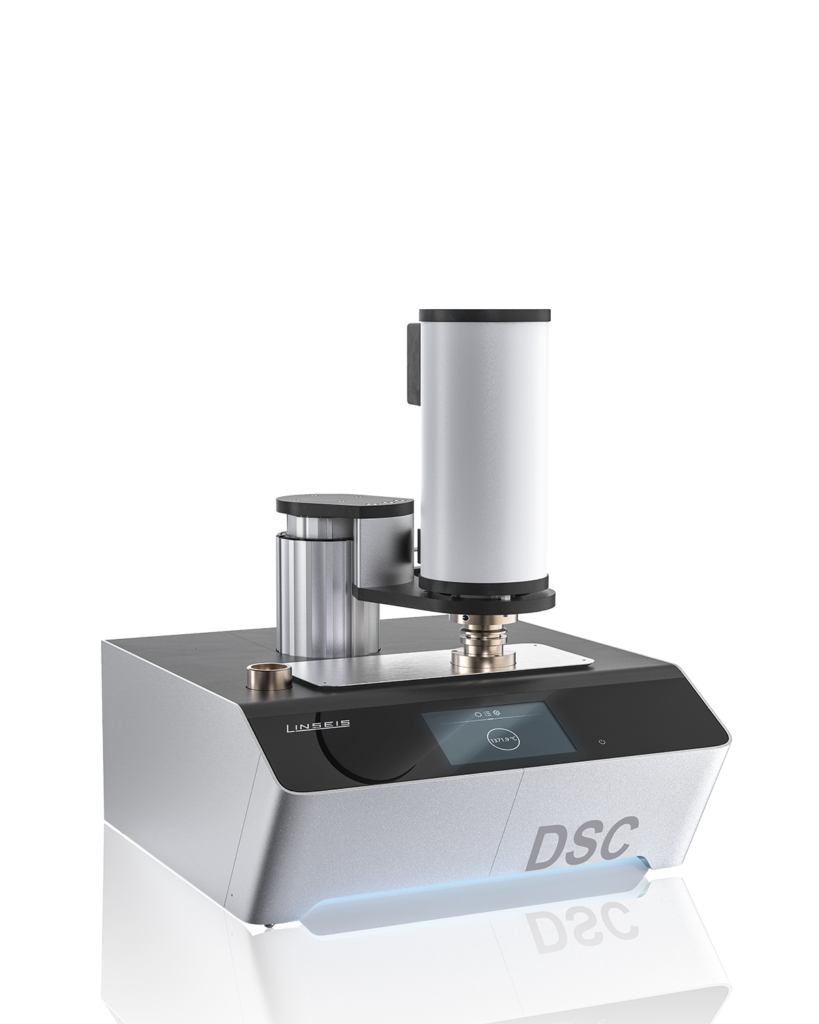
Differential Scanning Calorimetry (DSC)
Analysis of melting and solidification processes, phase transitions, and heat capacities of metallic materials.
Analysis of
- Solidus and Liquidus Temperatures
- Phase Transitions
- Melting Processes
- Heat Capacity
- Reaction enthalpies
Typical Applications
- Aluminum Alloys
- Titanium alloys
- Nickel-based alloys
- Copper Alloys
- Material Development

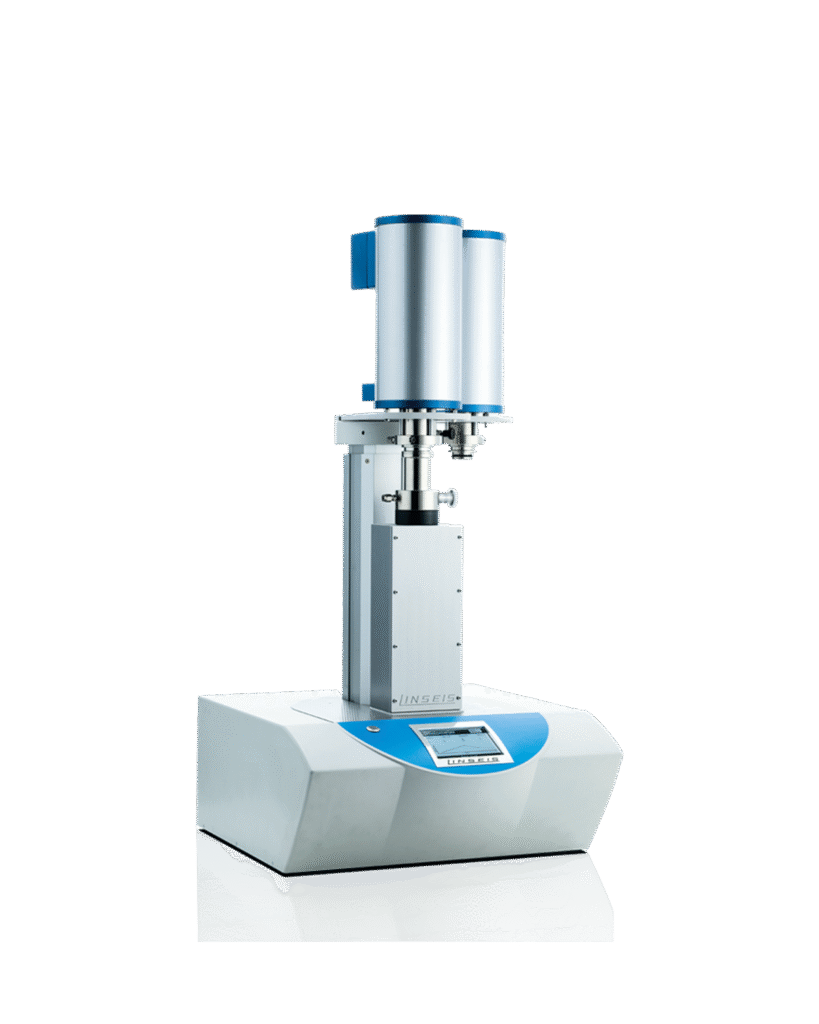
Dilatometry (DIL)
Determination of thermal expansion and analysis of phase transformations and heat treatments.
Analysis of
- Thermal expansion
- Phase Transitions
- Austenitization
- Martensite Formation
- Changes in Dimensions
Typical Applications
- Steel
- Cast iron
- Tool Steels
- Heat Treatment
- CCT and TTT Diagrams
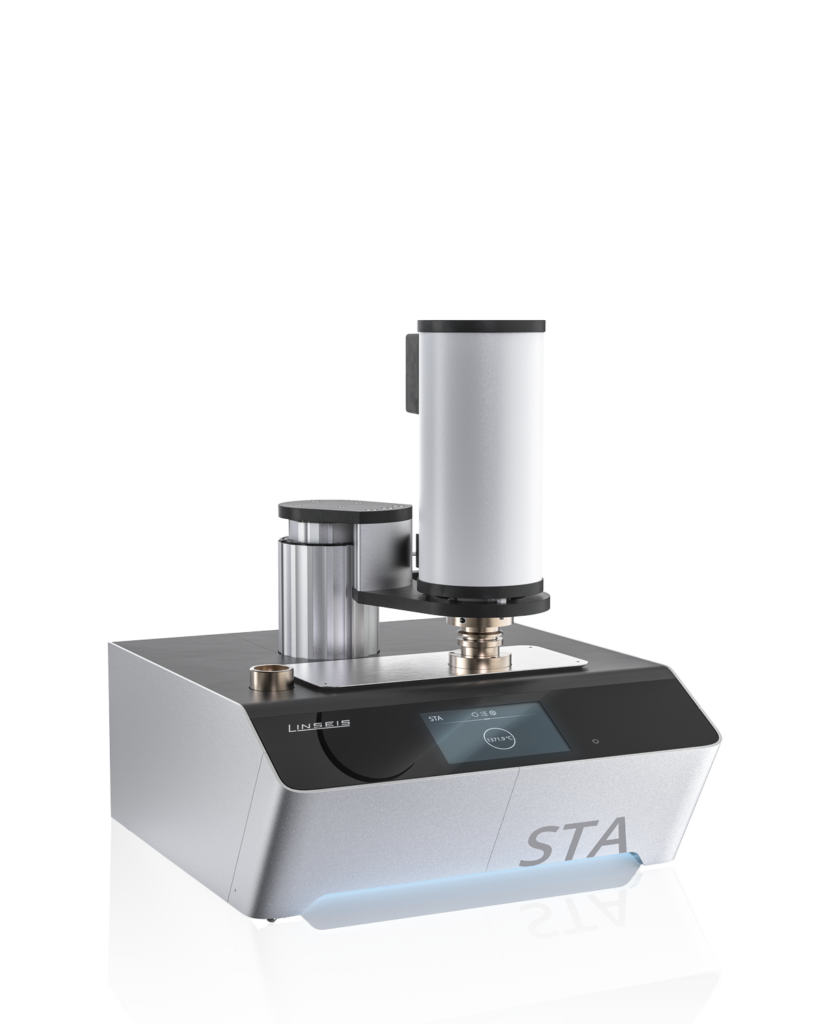
Simultaneous Thermal Analysis (STA)
Simultaneous analysis of thermal effects and changes in mass at high temperatures.
Analysis of
- Thermal stability
- Oxidation behavior
- High-temperature reactions
- Bulk Changes
- Decomposition processes
Typical Applications
- High-Temperature Alloys
- Powder Metallurgy
- Inert Gas Processes
- Material Development
- Quality Control
Laser Flash Analysis (LFA)
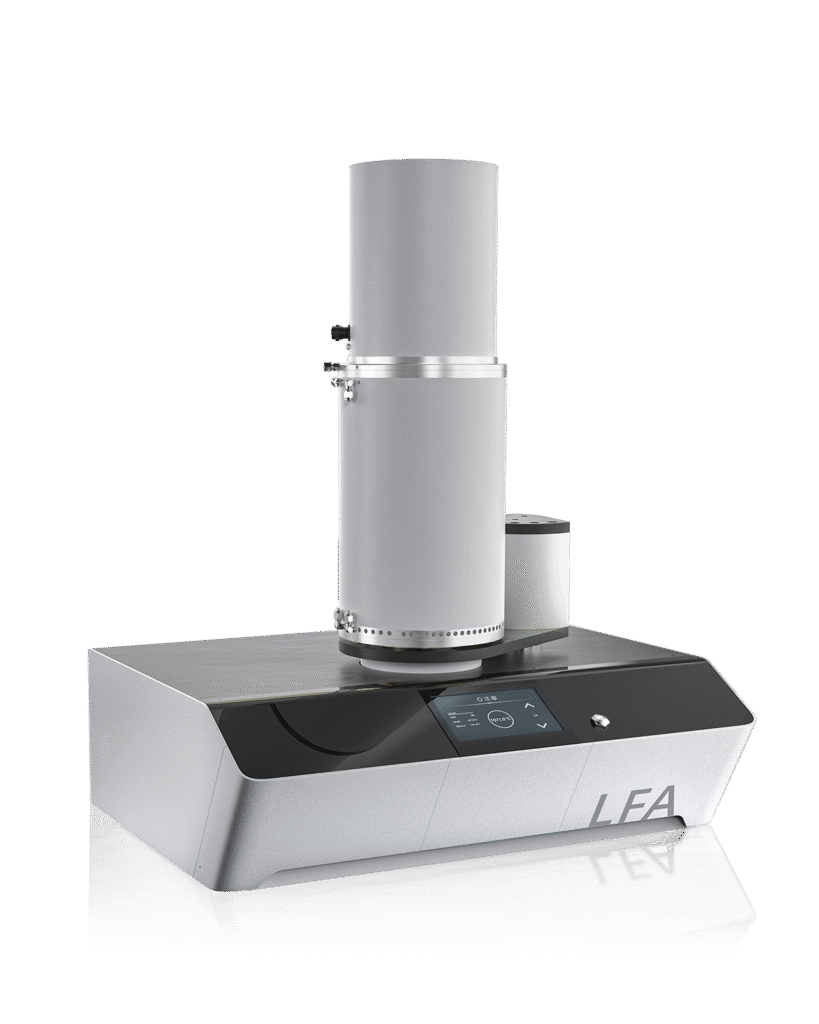
Determination of the thermal conductivity and temperature conductivity of metallic materials.
Analysis of
- Thermal conductivity
- Thermal Conductivity
- Heat diffusion
- Temperature Dependence
- Thermal Management
Typical Applications
- Aluminum
- Copper
- Nickel Alloys
- Titanium
- High-Performance Materials
Recommended Measuring Instruments for Alloys & Phase Diagrams

Case Study: High-Temperature Phase Transitions in Y-Ni Alloys
Investigation of Phase Transitions in Yttrium-Nickel Alloys Using STA
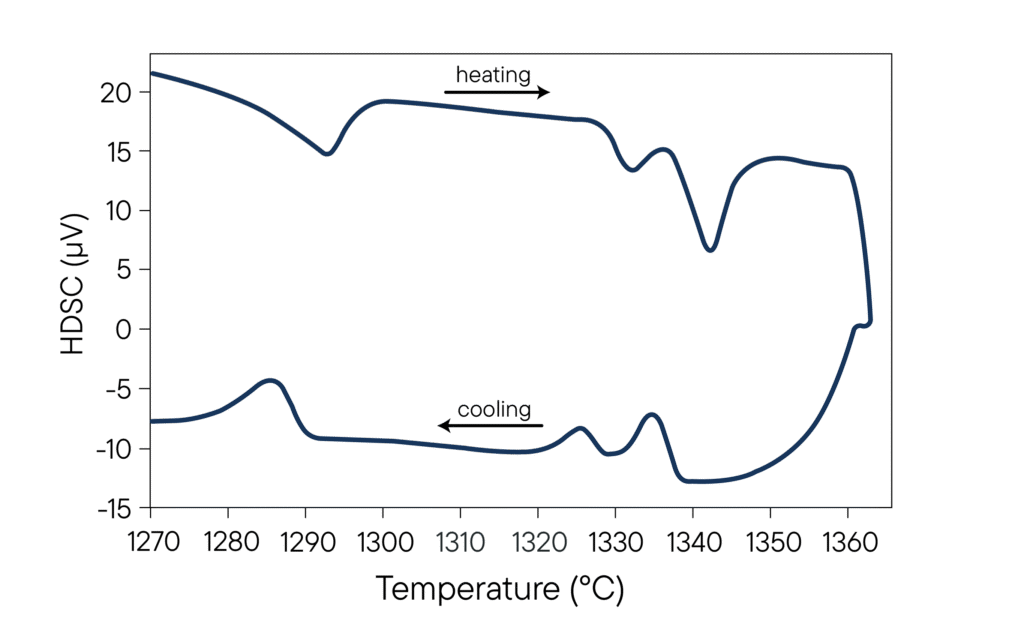
The development of intermetallic alloys requires a precise understanding of phase transformations at high temperatures. With the LINSEIS STA L81 , the phase transitions of a Y-Ni alloy were investigated during controlled heating and cooling cycles. The DTA measurements allow for the precise determination of transformation temperatures as well as peritectic and metatectic reactions. The results provide valuable information for the creation of phase diagrams, alloy development, and the optimization of metallurgical processes.
Why Material Characterization of Alloys Is Crucial
The properties of an alloy are largely determined by its composition, microstructure, and thermal history. Modern thermoanalytical methods enable a comprehensive investigation of these relationships and provide an important foundation for the development of high-performance metallic materials.
The combination of modern analytical methods makes it possible to:
- Determination of Solidus and Liquidus Temperatures
- Analysis of Phase Transitions
- Study of Thermal Expansion
- Characterization of Thermal Conductivity
- Assessment of Thermal Stability
- Optimization of Alloys and Heat Treatments
Applications – Metals and Alloys
FAQ – Alloys & Phase Diagrams
Why are phase diagrams so important for alloys?
Phase diagrams show which phases are stable at specific temperatures and alloy compositions. They form the basis for the development of new alloys and for the optimization of casting, welding, and heat treatment processes.
What measurement methods are suitable for analyzing alloys?
DSC, HDSC, DIL, STA, and LFA are primarily used for characterizing alloys. While DSC analyzes melting and phase transitions, dilatometry examines thermal expansion and microstructural transformations. STA provides information on high-temperature reactions, and LFA determines thermal conductivity.
Why is the thermal expansion of alloys studied?
The coefficient of thermal expansion affects the dimensional stability, fit accuracy, and thermal stresses of components. A precise understanding of this coefficient is crucial, particularly in high-temperature applications or when different materials are combined.
What information does the DSC provide for alloys?
Dynamic Differential Calorimetry enables the determination of melting temperatures, solidification processes, precipitation reactions, phase transformations, and specific heat capacity, thereby providing important information for materials development.
What role does dilatometry play in metallurgy?
Dilatometry is one of the most important methods for studying phase transformations during heat treatment. Among other things, it enables the creation of CCT and TTT diagrams, as well as the analysis of austenitization, martensite formation, and sintering processes.
Which alloys can be analyzed using LINSEIS systems?
The measurement systems are suitable for virtually all metallic materials, including aluminum, steel, titanium, nickel, copper, magnesium, and cobalt alloys, as well as powder metallurgy, cemented carbides, and modern high-performance materials.