Reaction kinetics describes the rate of chemical reactions and provides crucial information for the development, optimization, and scaling of chemical processes. The analysis of kinetic parameters enables the determination of activation energies, reaction mechanisms, and temperature- and atmosphere-dependent reaction profiles.
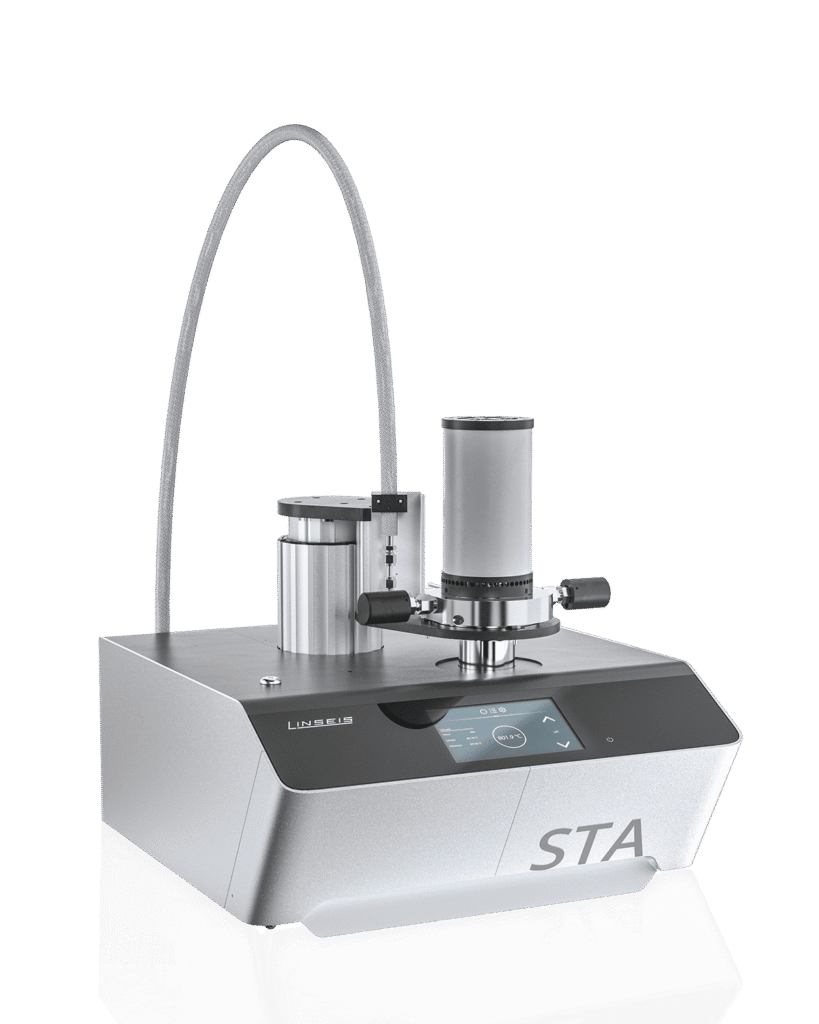
Using methods such as DSC, STA, TGA, High-pressure measurements and thermal conductivity analyses enable the investigation of chemical reactions under conditions that closely resemble real-world scenarios. The data obtained support both basic research and industrial process development.
With over 69 years of experience, Linseis develops high-precision measurement systems for investigating thermally activated processes and complex reaction mechanisms.
Optimizing chemical processes requires a detailed understanding of the underlying reaction mechanisms.
Relevant Questions
How fast does a chemical reaction occur?
What is the activation energy of the process?
How does temperature affect the reaction rate?
Which reaction steps determine the overall reaction?
How do different gas atmospheres affect the process?
What reaction mechanisms occur under high-pressure conditions?
How do reaction kinetics change during long-term cycles?
How can process parameters be optimized?
Relevant Material and Process Parameters
Parameter
Meaning
Activation Energy
Evaluation of the Reaction Barrier
Reaction Enthalpy
Energetic Evaluation of Reactions
Reaction Rate
Process Optimization
Start of the reaction
Determination of Critical Temperatures
Change in Mass
Investigation of Decomposition and Reactions
Thermal Conductivity
Effect on Heat Transfer and Reaction Progression
Atmospheric Dependence
Behavior in Process Gases
Cycle Stability
Evaluation of Repeated Reaction Cycles
Measurement Methods for Catalytic Materials
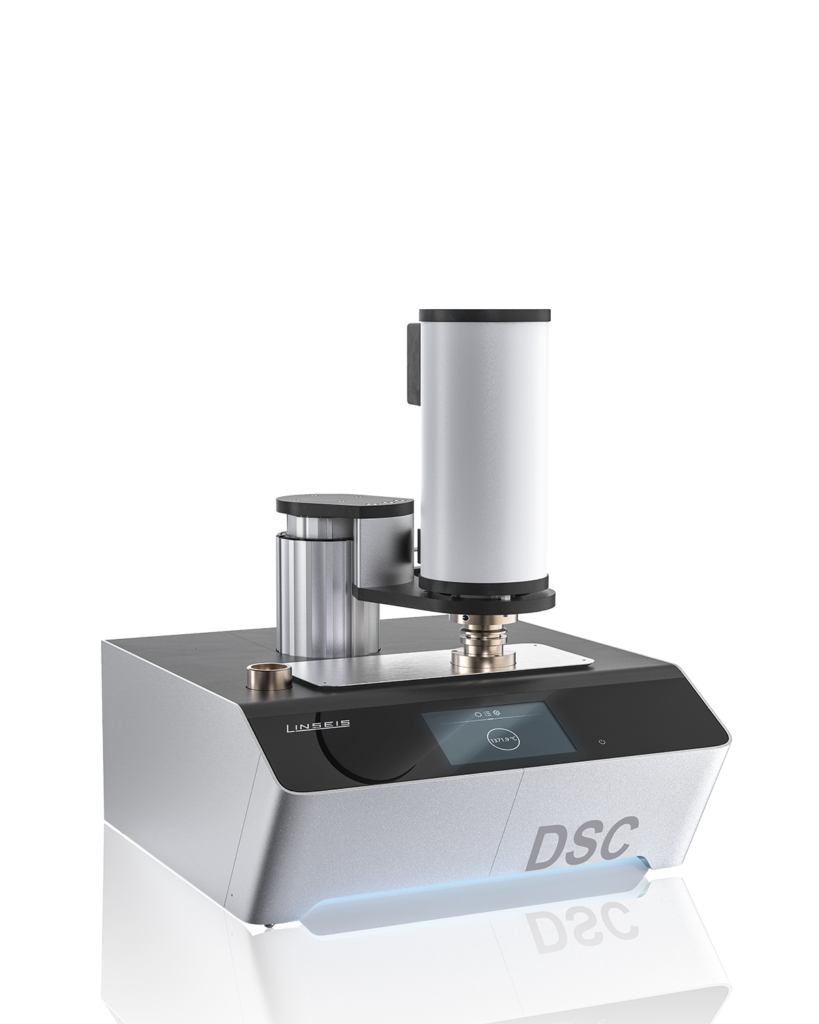
Differential Scanning Calorimetry (DSC)
DSC enables the analysis of heat flows during chemical reactions and provides information on:
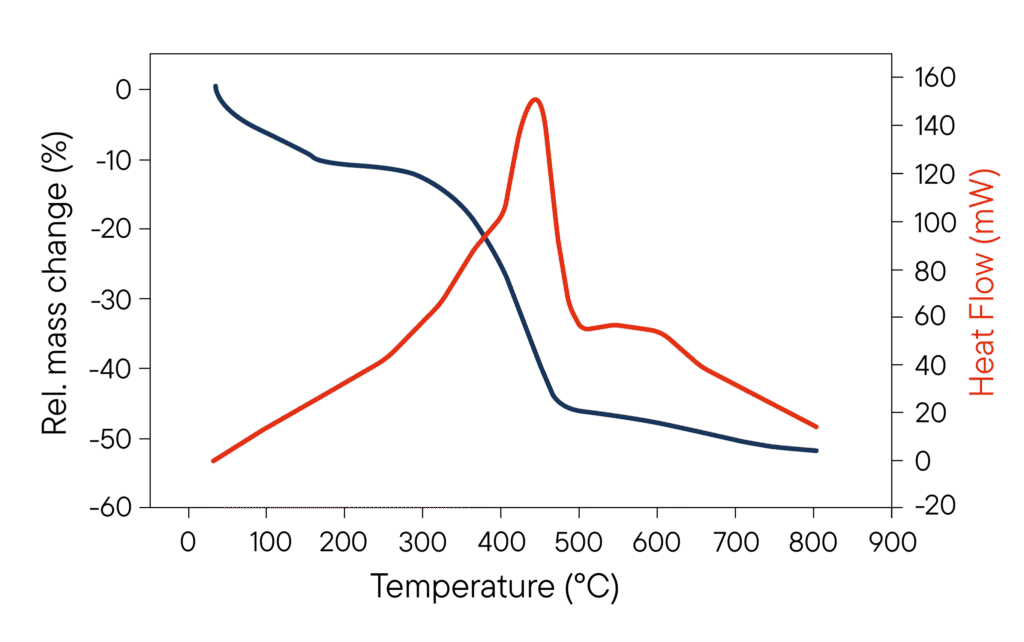
Thermogravimetric Analysis of Ash from Empty Oil Palm Fruit Bunches for Potassium Recovery
TGA measurements conducted using the Linseis TGA L83 illustrate the decomposition behavior of oil palm biomass and help determine optimal incineration conditions for efficient potassium recovery. Download the white paper to learn more about the complete measurement setup, the thermal analysis data, and their evaluation.
Why Material Analysis Is Crucial for Reaction Kinetics
The study of kinetic parameters provides a deeper understanding of chemical processes and supports the development of efficient reaction systems.
The combination of modern analytical methods makes it possible to:
What measurement methods are suitable for studying reaction kinetics?
DSC, STA, TGA, and high-pressure measurements are used in particular to study reaction kinetics. These methods provide information on reaction rate, activation energy, and reaction mechanisms.
How can the activation energy of a reaction be determined?
The activation energy is often determined by DSC measurements at different heating rates. This allows kinetic models to be developed and reaction barriers to be calculated.
Why is temperature important for reaction kinetics?
Temperature directly affects the reaction rate. Even small changes in temperature can significantly alter the rate of chemical reactions.
What information does the STA provide regarding reaction kinetics?
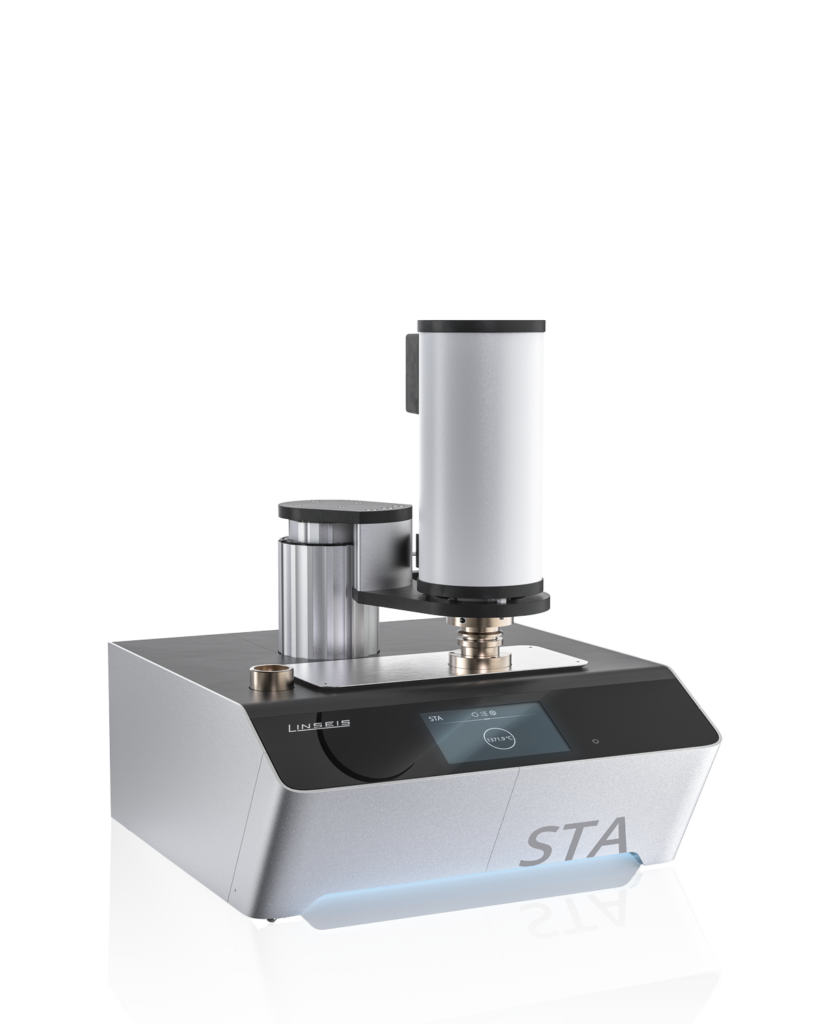
The STA combines heat flux and mass change measurements, thereby enabling the analysis of complex reaction mechanisms in a single experiment.
Why are high-pressure measurements relevant to reaction kinetics?
Many industrial reactions take place under elevated pressure. High-pressure measurements make it possible to study reaction kinetics under realistic process conditions.
What role does reaction kinetics play in process optimization?
Understanding reaction kinetics allows for the targeted adjustment of temperature, pressure, and residence time to improve yield, efficiency, and process stability.