Sintering processes are a key component of the manufacture of engineering ceramics. During controlled heating, organic components are removed, ceramic particles are densified, and the final microstructure of the material is formed. The temperature profile, atmosphere, heating rate, and holding times have a significant influence on the quality of the finished component.
Inadequately controlled debinding or sintering control can lead to cracks, pores, warpage, incomplete densification, or undesirable phases. The precise characterization of mass loss, shrinkage, phase formation, and thermal reactions is therefore crucial for stable and reproducible manufacturing processes.
LINSEIS analytical instruments can be used to examine ceramic materials throughout the entire thermal manufacturing process—from binder decomposition through the onset of sintering to final densification and phase stability.
Relevant Questions
At what temperature does demolding begin?
Within what temperature range is the organic binder completely removed?
How does the heating rate affect mass loss?
At what temperature does the green body begin to shrink?
How does the density change during the sintering process?
What phases occur during firing?
How can cracking and warping be prevented?
Which temperature profiles ensure consistent component quality?
Relevant Material and Process Parameters
Parameter
Meaning
Decomposition temperature
Onset and progression of the removal of organic binder components
Mass Loss
Assessment of binder degradation, moisture loss, and decomposition processes
Start of sintering
The temperature at which the densification of the ceramic green body begins
Shrinkage
Dimensional Change and Compaction During the Firing Process
Heating rate
Impact on de-binding, temperature distribution, and process stability
Phase Formation
Development of the Ceramic Microstructure During Sintering
Thermal Stability
Resistance of the material to high process temperatures
Residual porosity
Effect on Density, Strength, and Functional Material Properties
Measurement Methods for Sintering Processes
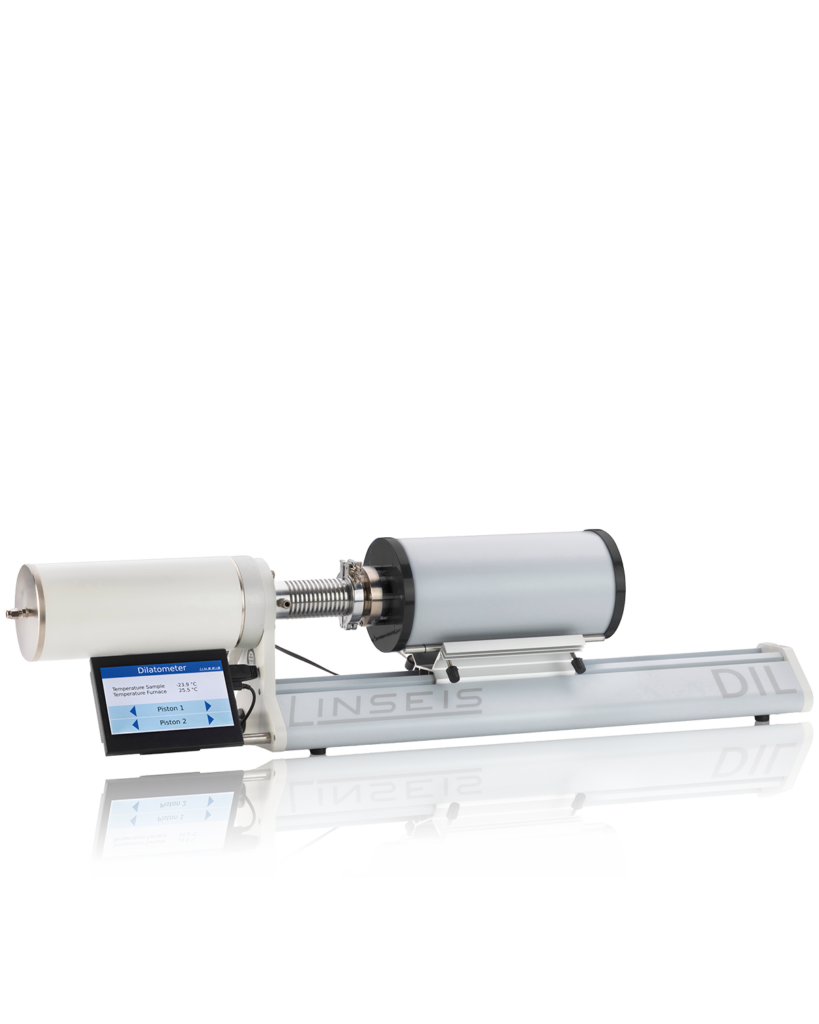
Dilatometry (DIL)
Analysis of shrinkage, the onset of sintering, and dimensional changes in ceramic green bodies.
Case Study: Thermal Degradation of Photocured Calcium Phosphate Suspensions
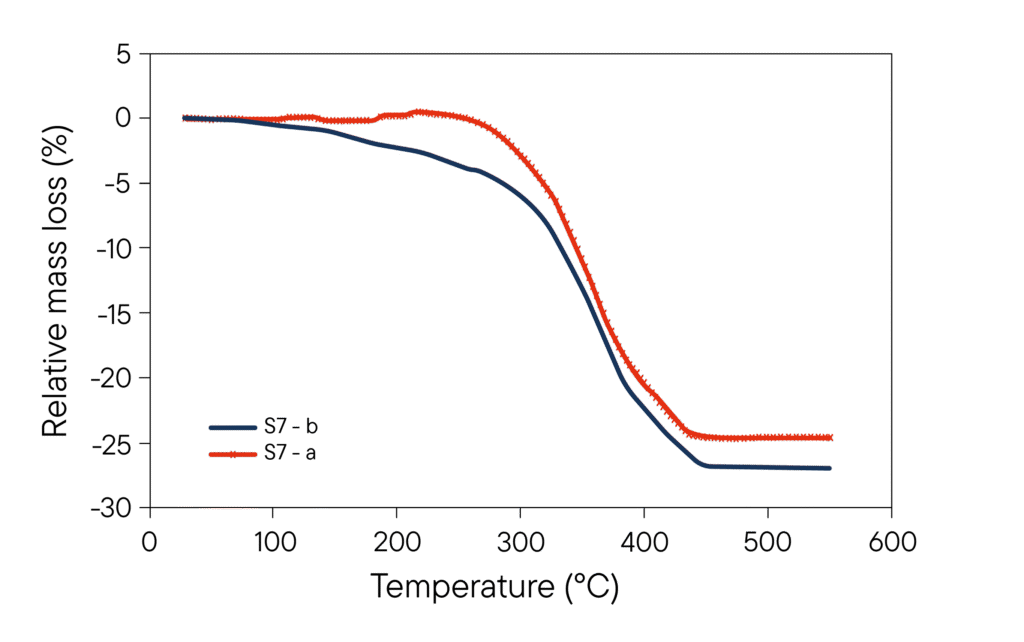
Thermal Degradation of Photocured Calcium Phosphate Suspensions
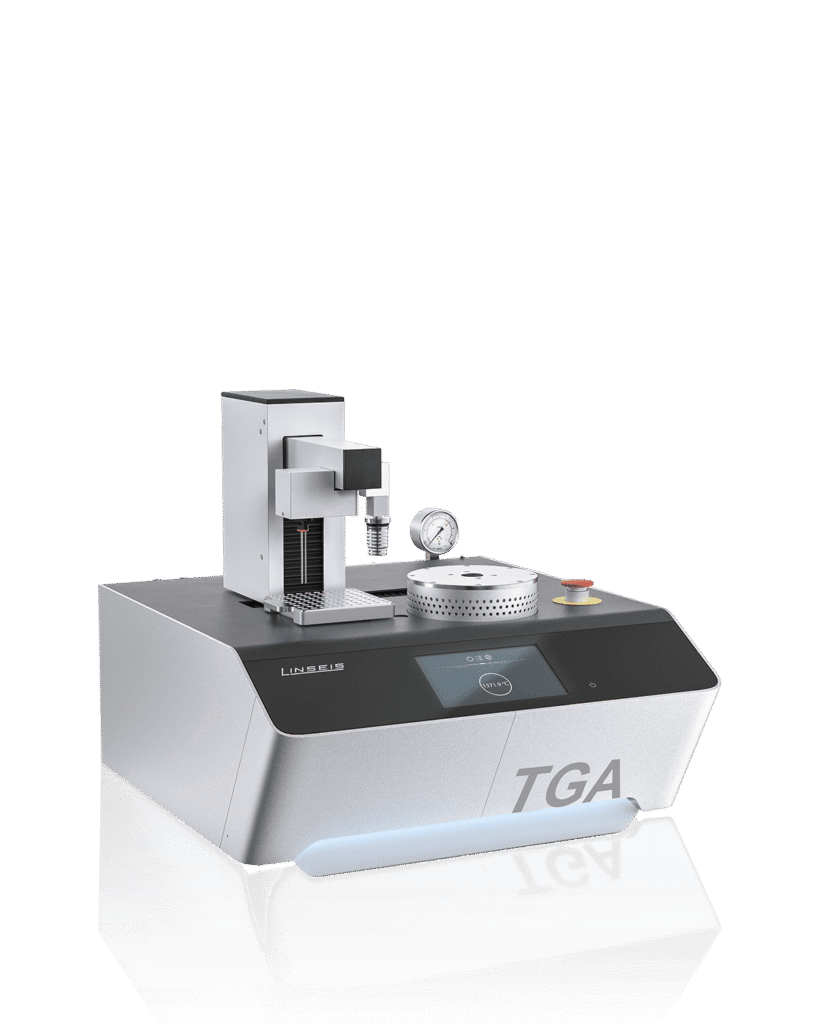
With the LINSEIS TGA L83 , the thermal decomposition of photopolymerized tricalcium phosphate suspensions for ceramic additive manufacturing was investigated. The results demonstrate the influence of curing conditions on binder degradation and support the development of optimized debinding profiles for defect-free, additively manufactured ceramic components.
Why the Analysis of Ceramic Sintering Processes Is Crucial
The quality of a ceramic component is largely determined by the thermal process control. Even slight deviations in the heating rate, debinding, or sintering temperature can affect the microstructure, dimensional accuracy, and mechanical stability.
The combination of modern analytical methods makes it possible to:
Determining the Release Area
Analysis of Mass Loss and Binder Decomposition
Determination of the Onset of Sintering and Shrinkage
Investigation of Phase Formation and Thermal Reactions
Organic binders must be removed from the ceramic green body in a controlled manner and as completely as possible. If the decomposition occurs too quickly or is incomplete, it can lead to gas pressure, cracks, pores, or deformation. A TGA measurement helps determine suitable temperature ranges and heating rates.
Which measurement method is suitable for determining the onset of sintering?
Dilatometry is the primary method for determining the onset of sintering, shrinkage, and compaction. It measures even the smallest changes in length during a defined temperature program and enables precise optimization of the firing profile.
How does TGA support the optimization of debinding processes?
The TGA shows at what temperatures mass loss occurs and how many decomposition stages there are. From this, suitable heating rates, holding times, and temperature ranges for controlled binder removal can be determined.
Why is the heating rate critical during sintering?
An excessively high heating rate can lead to steep temperature gradients, uncontrolled gas evolution, and cracking. Conversely, an excessively low heating rate prolongs the process time. Thermal analyses help determine a compromise that is both cost-effective and ensures material integrity.
What materials can be analyzed?
LINSEIS systems are suitable for oxide and non-oxide ceramics, calcium phosphates, zirconia, alumina, silicon nitride, silicon carbide, ceramic composites, as well as photopolymer-based and injection-molded green bodies.
What are the advantages of combining TGA, STA, and DIL?
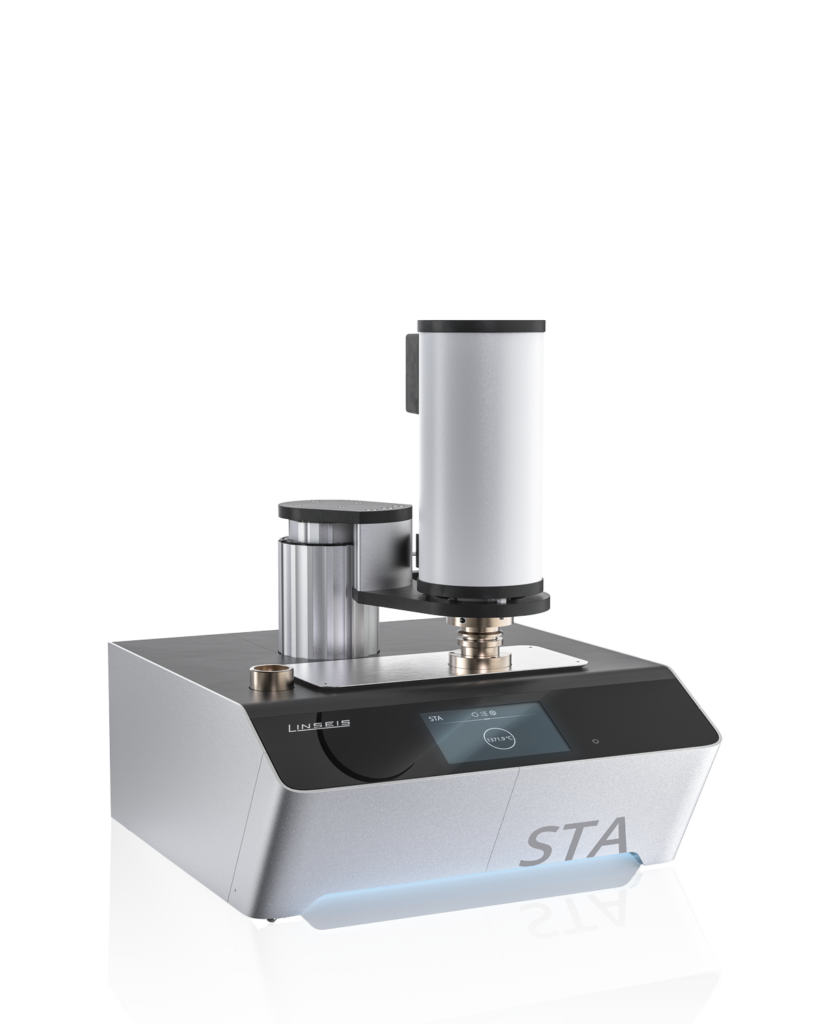
TGA characterizes binder decomposition, STA provides additional information on thermal reactions and phase transitions, while dilatometry measures shrinkage and compaction. Together, these methods provide a complete picture of the thermal manufacturing process.
How can defects in sintered ceramic components be reduced?
Defects can be minimized through optimized debinding and sintering profiles, controlled atmospheres, and appropriate heating and cooling rates. Thermoanalytical characterization provides the necessary process data for this purpose.