HCS (HCS L36) – Hall Coefficient – Inorganic Materials/Semiconductors
Thermoelectric materials and microelectronics constitute a broad field of research in modern industry. The miniaturization of computer chips, electronic circuit boards, and processors has now reached the nanometer scale, and thermal management is becoming increasingly important. Since heat and magnetic fields affect most materials, determining their influence and thermoelectric behavior is of great interest.
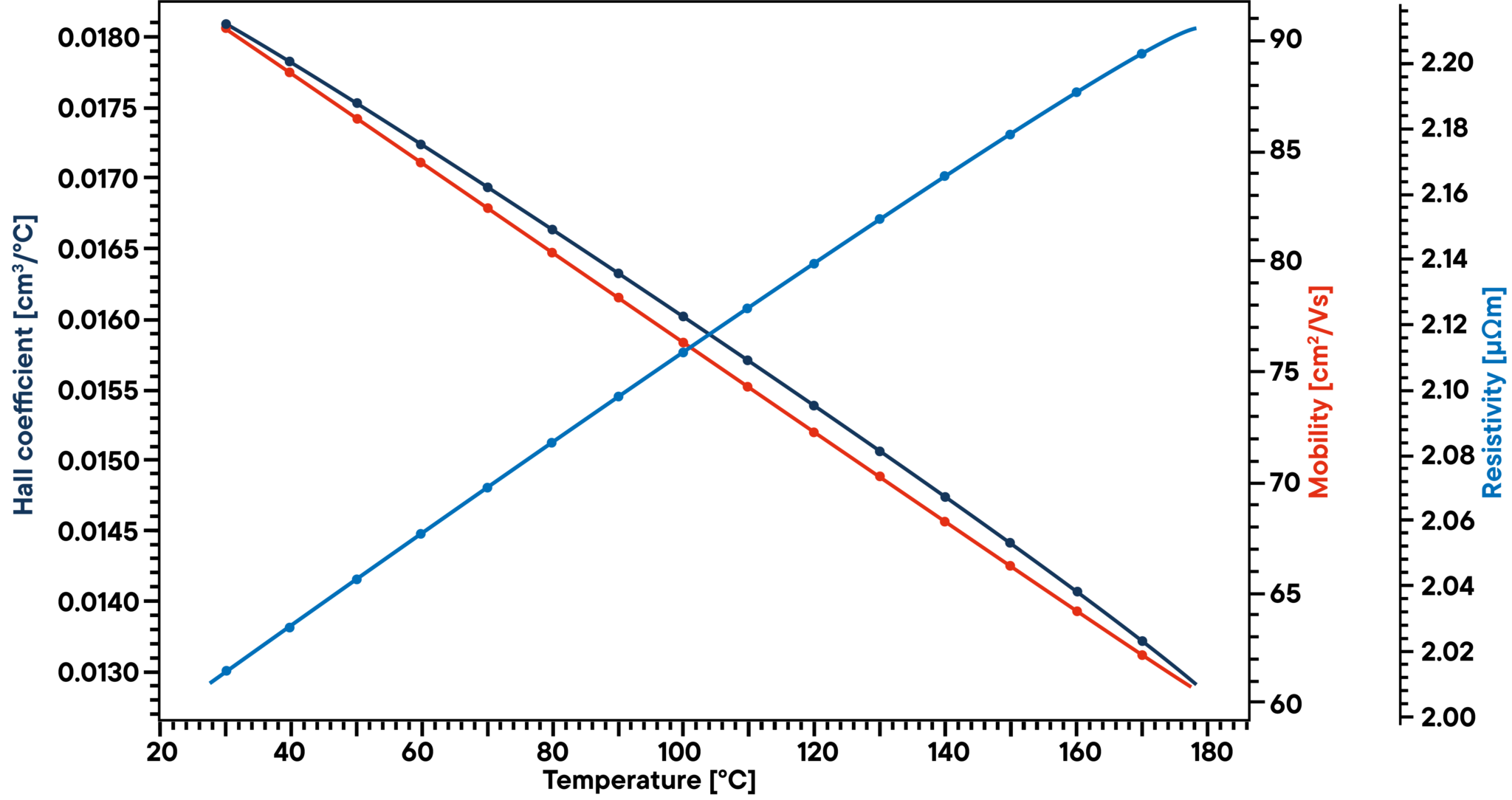
The current graph shows the measurement of the Hall coefficient, mobility, and resistivity of a 150-nm-thick thin-film sample of antimony (Sb) over a temperature range from room temperature to 180 °C.
It is widely used in the field of thermoelectric materials (in the form of alloys, e.g., Bi₁ -xSb_x), and microelectronics is an emerging area of application.
Nevertheless, metallic antimony is most widely used in the form of lead-antimony plates in lead-acid batteries.
The light blue curve shows the resistivity, which increases with temperature—as is typical for a metal sample.
The red curve represents charge carrier mobility, which naturally decreases as resistivity increases.
The dark blue curve represents the Hall coefficient, which describes the sensitivity of charge carriers to external magnetic influences.
Appropriate measuring device
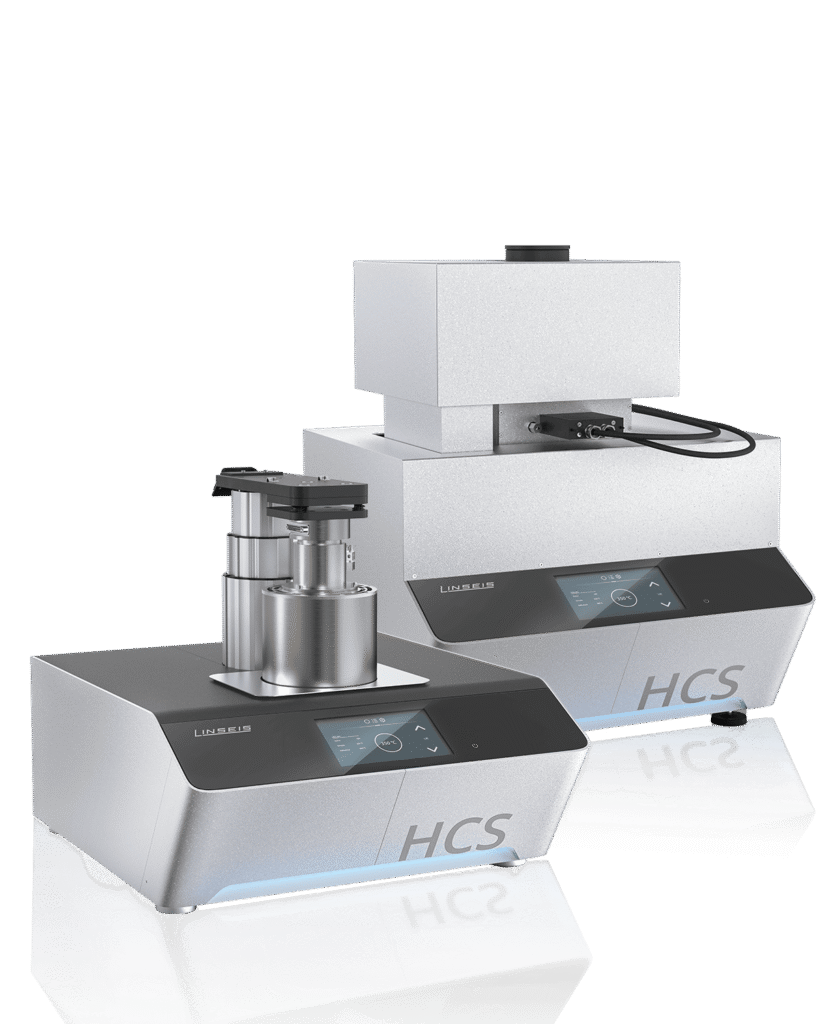
HCS L36
Precise Hall-effect measurements on semiconductors, thin films, and modern materials