TGA L81 – Decomposition Measurement of Exterior Plaster
Plaster is typically used on the exterior and interior surfaces of brick walls to protect the bricks (or whatever other material the walls are made of) from the elements and environmental factors.
The plaster used typically consists of minerals, silicates, and carbonates—and, of course, water. It is mixed with water and then applied to the wall, where it dries and hardens.
The final product is a durable solid that should retain its shape for a long time. However, the plastering process itself and the exact composition of the plaster mixture can have a significant impact on the plaster’s lifespan and durability.
The following measurement example shows a damage analysis of a gypsum plaster that developed cracks and structural damage after one summer-winter cycle.
The manufacturer assumed that the installation had not been performed properly and analyzed the damaged wall section using thermogravimetric analysis (TGA)with a reference sample that showed no cracks after heating and cooling cycles.
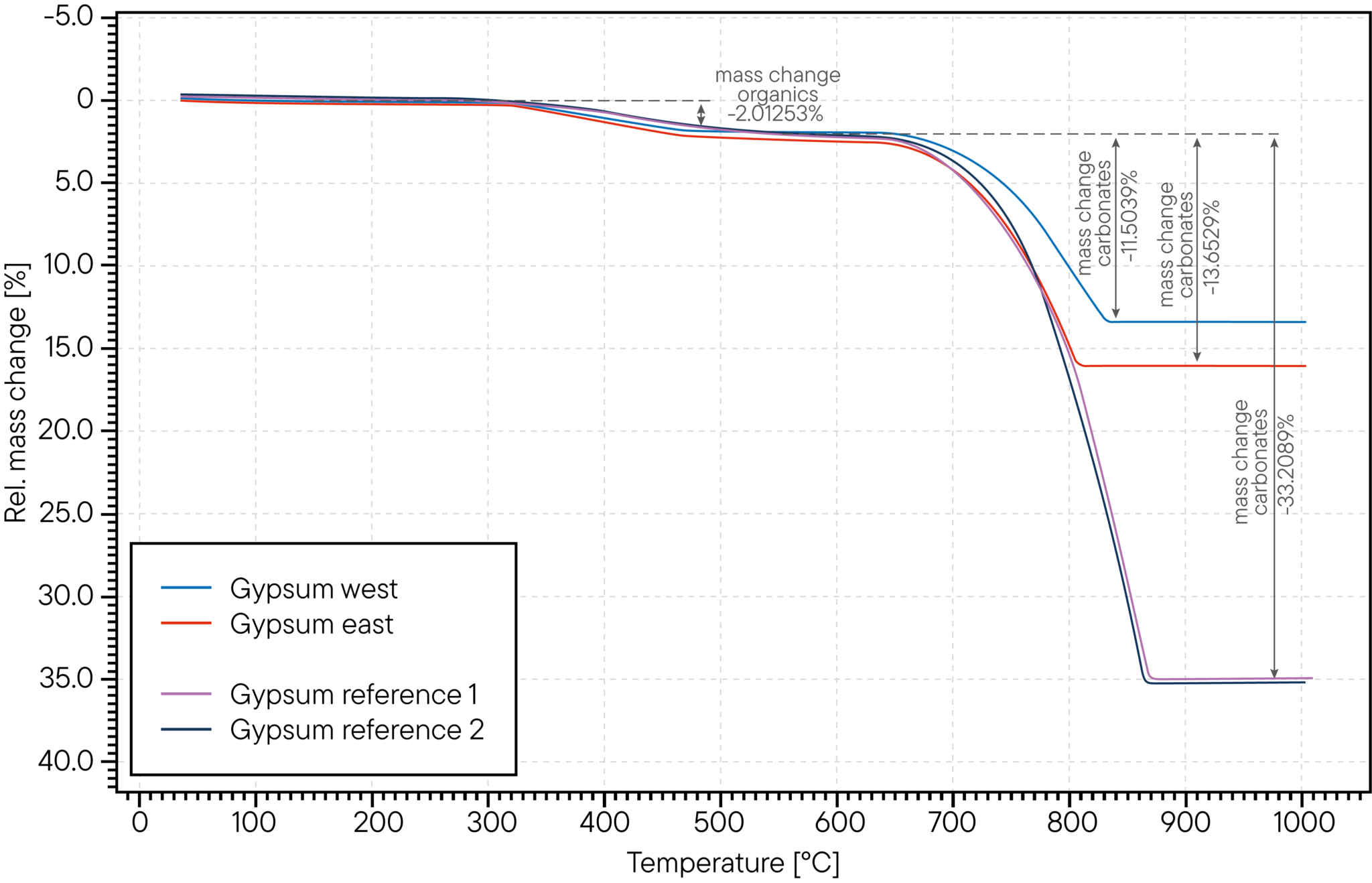
The measurement shows that the carbon and organic content of the “poor-quality” samples (dark and light blue curves) is nearly identical to that of the reference samples (red and purple curves).
The percentage weight loss remains at the same level—around 2% mass loss—in the range around 500 °C. However, there is a significant difference in the weight loss stage between 800 °C and 900 °C, during which the carbonates present release carbon dioxide.
The reference samples show a mass loss of about 30% due to released CO₂, while the samples from the wall with cracks show only an 11% loss of mass and a 13% loss of mass, respectively. This suggests that the plaster on the wall, which exhibited structural defects, has a significantly lower carbonate content than it should, indicating that the plaster was in fact mixed incorrectly.
Interestingly, there is also a difference in carbonate content between the west side (weather-facing side) and the east side of the building.
Appropriate measuring device
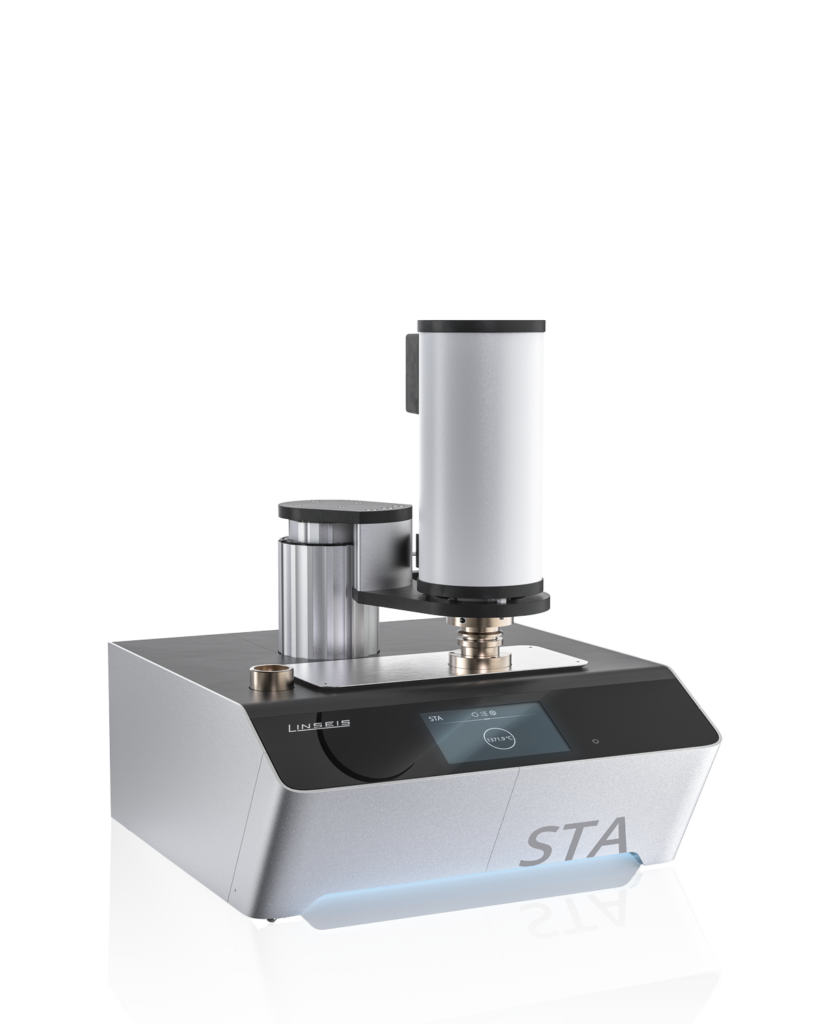
STA L81
TG + DSC – High temperature STA with furnace configuration up to 2400°C