Cement is one of the most commonly used materials in construction. It consists of a mixture of minerals, silicates, carbonates, and water.
The exact composition, moisture content, and organic content have a major impact on the curing time and the properties of the final product.
Therefore, an analysis of the raw materials and the dry cement is necessary.
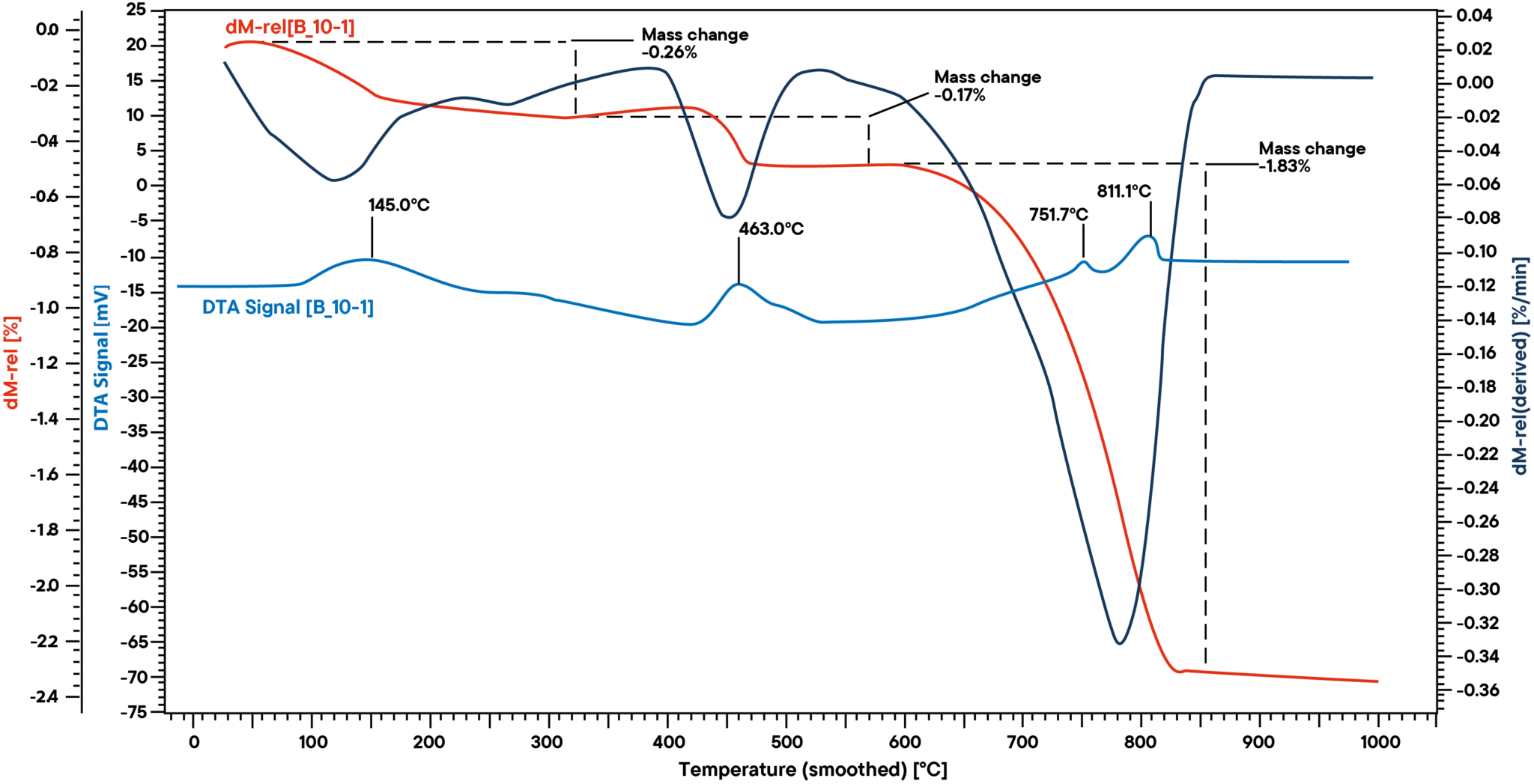
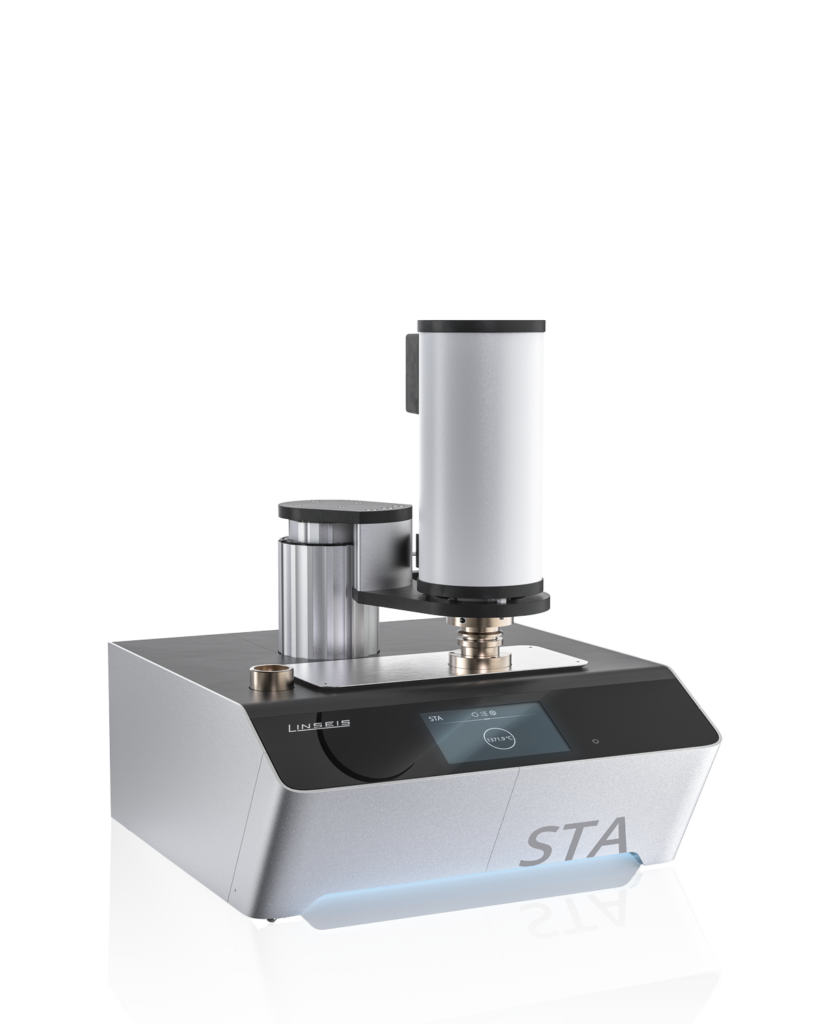
The measurement above was performed using a TG-DSC (STA) . The main components of cement are tricalcium silicate, dicalcium silicate, and tricalcium aluminates.
After mixing raw cement with water, various hydrates slowly form.
When introduced into a STA, the absorbed water first evaporates during thermal decomposition; then the calcium silicate hydrates decompose, and at temperatures of 570°C and above, the hydroxides of calcium, magnesium, and aluminum follow.
This effect can be seen as mass loss steps (red curve) accompanied by parallel endothermic effects on the DSC signal (light blue curve). Subsequently, carbon dioxide is released from the carbonates, resulting in a large mass loss step at approximately 800°C.
Appropriate measuring device
STA L81
TG + DSC – High temperature STA with furnace configuration up to 2400°C