Fire protection materials protect buildings, technical systems, and infrastructure from the effects of high temperatures and fire. Whether intumescent coatings, fire protection panels, fire-resistant materials, or high-temperature insulation materials—their performance depends crucially on their thermal and thermophysical properties.
The development of modern fire protection systems requires a precise analysis of thermal conductivity, thermal stability, decomposition behavior, and thermal expansion. This is the only way to develop materials that function reliably even under extreme temperature conditions and meet applicable safety requirements.
LINSEIS analytical instruments enable the comprehensive characterization of fire-retardant materials, from research and development through material optimization to quality control.
Relevant Questions
How does a material behave under high thermal stress?
At what temperature does thermal decomposition begin?
What is the thermal conductivity of the fire-resistant material?
How does the material structure change in the event of a fire?
What type of thermal expansion occurs at high temperatures?
How can fire protection systems be optimized?
Which materials are suitable for high-temperature applications?
How does the material composition affect fire resistance?
Relevant Material and Process Parameters
Parameter
Meaning
Thermal Conductivity
Thermal Insulation and Heat Protection
Thermal Stability
High-Temperature Resistance
Decomposition temperature
Onset of thermal changes in the material
Change in Mass
Decomposition and Oxidation Behavior
Coefficient of Thermal Expansion (CTE)
Dimensional Stability Under Temperature Variations
Heat Capacity
Heat storage capacity of the material
Thermal Conductivity
Rate of heat propagation
Fire Resistance
Performance under fire exposure
Test Methods for Fire-Resistant Materials
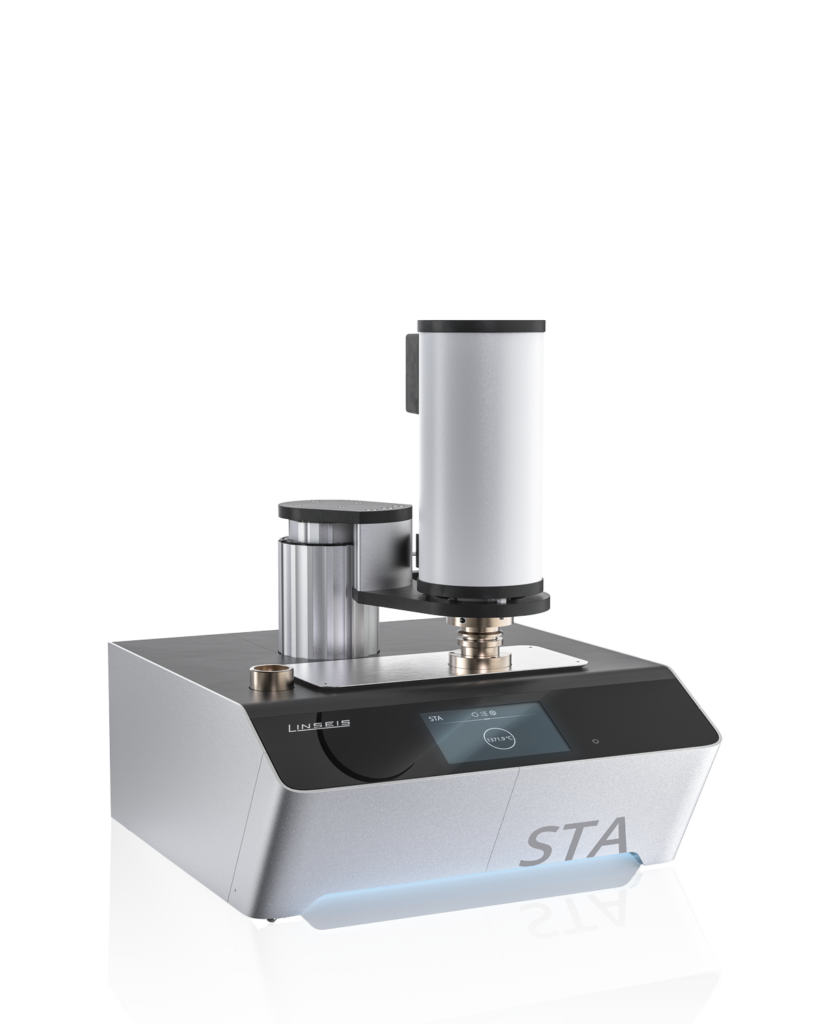
Simultaneous Thermal Analysis (STA)
Simultaneous investigation of mass changes and thermal effects to evaluate thermal stability and high-temperature behavior.
Case Study: Thermal Characterization of Fire-Resistant Materials
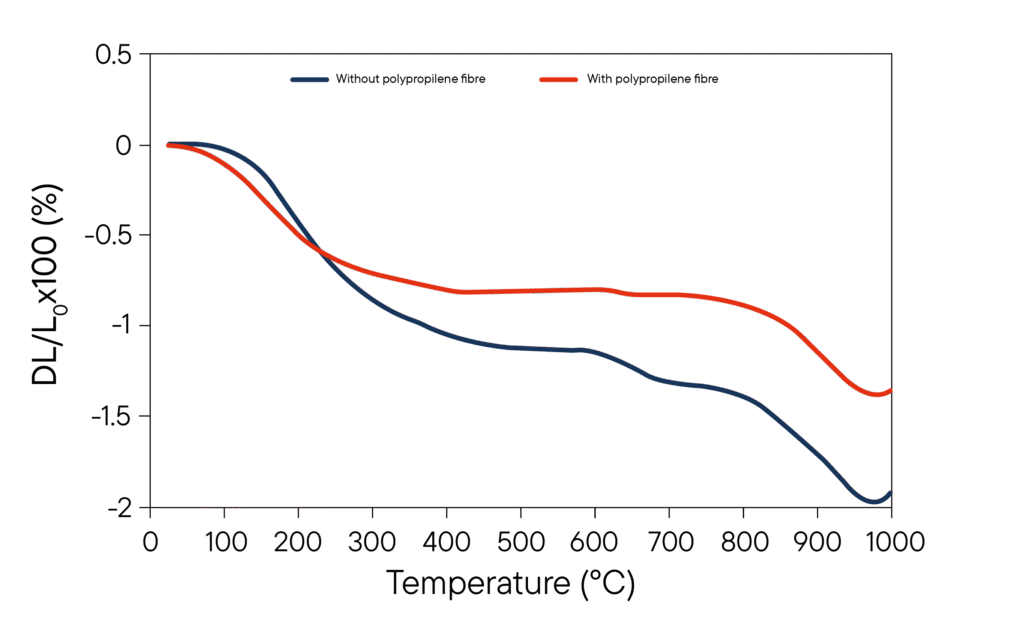
Characterization of the Thermal Shrinkage of Fire-Resistant Plaster Compounds
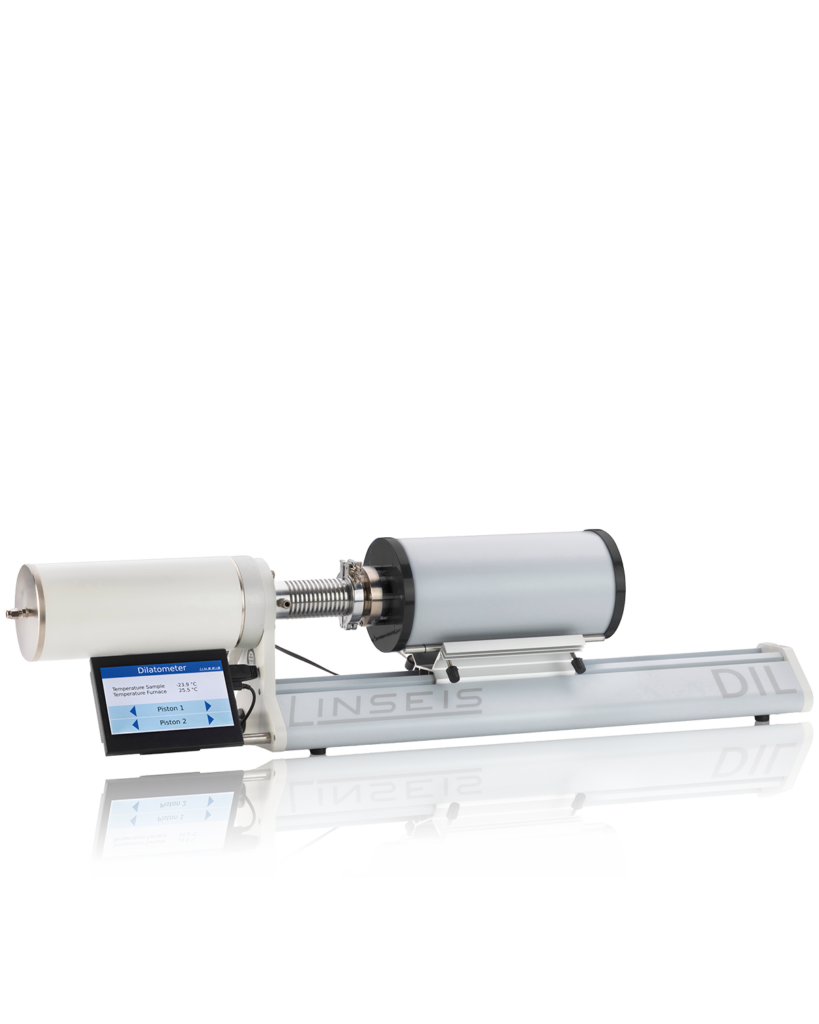
With the LINSEIS DIL L75 Horizontal , the thermal shrinkage behavior of alkali-activated slag plasters was investigated up to 1000 °C. The results show that polypropylene fibers significantly reduce thermal shrinkage and improve dimensional stability. These findings support the development of high-performance fire-resistant coatings and sustainable building materials.
Why Material Characterization Is Crucial in Fire Protection
Fire protection materials must reliably maintain their protective properties even under extreme temperature conditions. The combination of modern thermal analysis methods enables a comprehensive evaluation of material behavior and supports the development of safe, durable, and code-compliant fire protection systems.
The combination of modern analytical methods makes it possible to:
Why is thermal stability so important in fire-resistant materials?
Fire-resistant materials must maintain their protective function even at very high temperatures for a defined period of time. Thermal stability indicates the maximum temperatures at which a material retains its properties and the point at which thermal changes or decomposition processes begin.
What testing methods are suitable for characterizing fire-resistant materials?
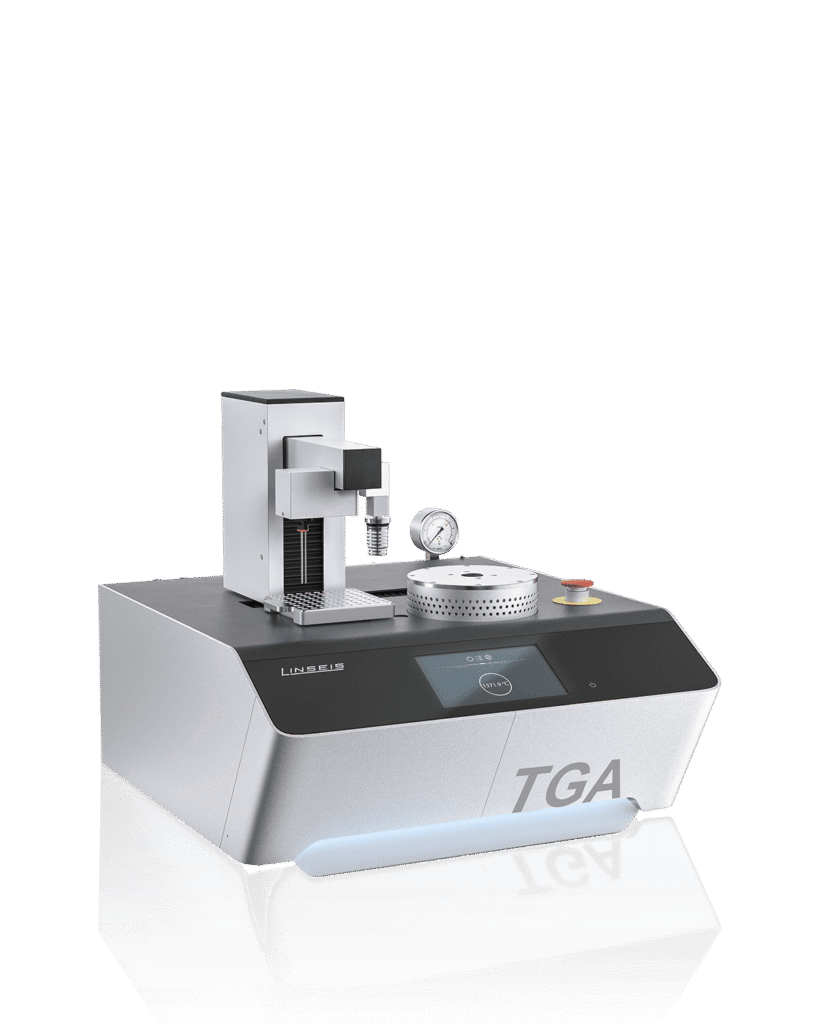
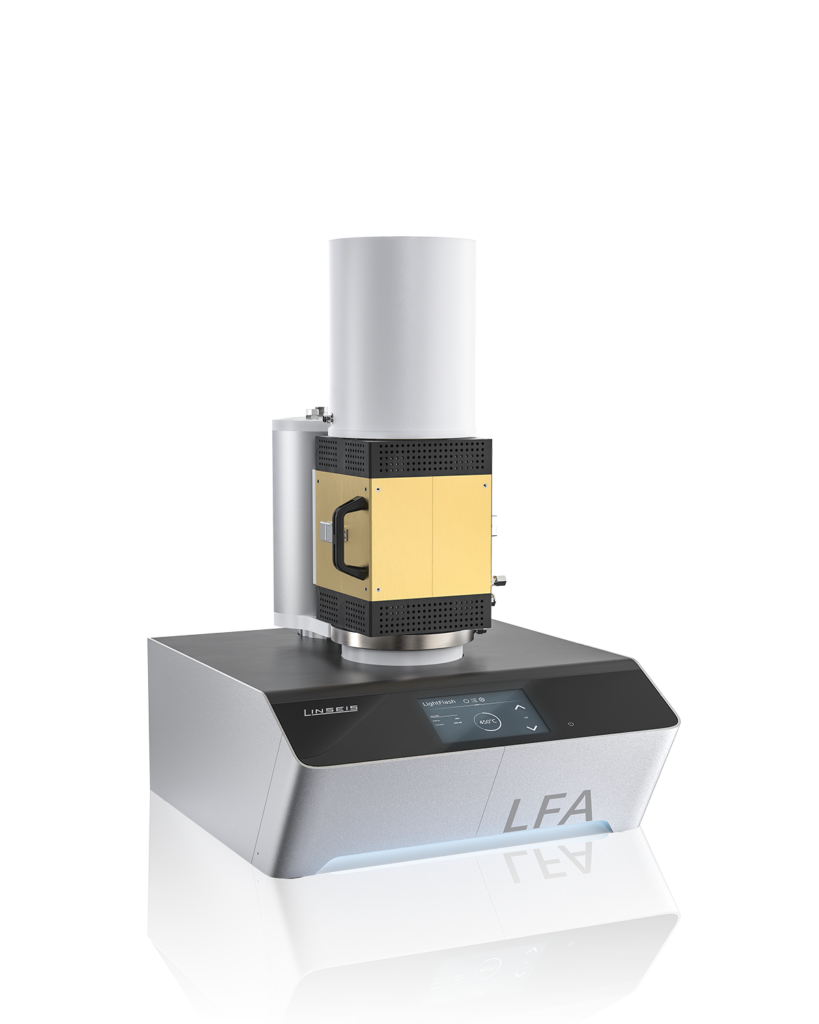
Different methods are used depending on the material. STA and TGA examine decomposition and oxidation processes; DSC analyzes thermal transitions and heat capacities; DIL determines thermal expansion; and LFA provides information on thermal conductivity and temperature conductivity.
Why is thermal conductivity relevant in fire protection?
Low thermal conductivity reduces heat transfer through building components and delays the time it takes for critical temperatures to be reached. This parameter is therefore crucial for the development of high-performance fire protection and insulation systems.
What materials can be analyzed using LINSEIS systems?
The measurement systems are suitable for intumescent coatings, fire-resistant panels, fire-resistant concrete, ceramics, high-temperature insulation materials, fiber-reinforced composites, polymeric fire-resistant materials, and other passive fire protection systems.
How does thermal analysis support the development of new fire-resistant materials?
By precisely determining thermal properties, material formulations can be specifically optimized. R&D departments gain important insights into decomposition behavior, heat transfer, and high-temperature stability, enabling them to develop higher-performance and safer materials.
What are the advantages of combining different measurement methods?
The combination of STA, TGA, DSC, DIL, and LFA enables comprehensive material characterization. While individual methods measure specific material properties, their combination provides a comprehensive understanding of thermal behavior—from heat transfer to thermal stability under fire conditions.