Asphalt is a sticky, black, and highly viscous liquid or semi-solid substance consisting of bitumen and aggregate. Asphalt is primarily used in road construction, where it serves as an adhesive or binder for the aggregate particles.
Calorimetry is useful for studying the thermal behavior of asphalts.
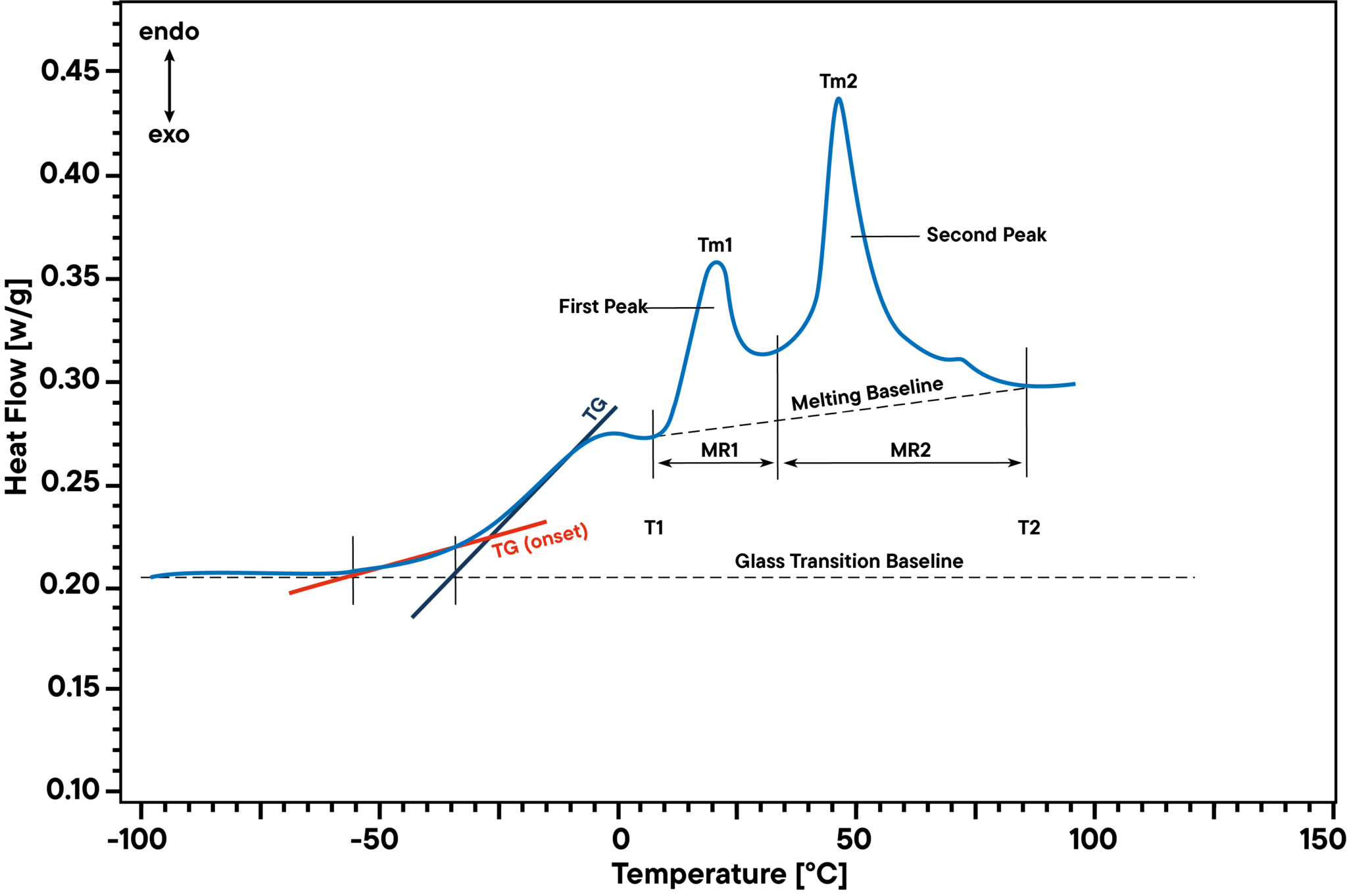
There are important parameters such as the glass transition temperature, the melting temperature range of the crystallites, and the enthalpy of fusion. Immediately after the Tg transition, a small exothermic effect was observed for most asphalts.
It is believed that this is the result of crystallization that occurs during the heating process. This exothermic effect is followed by two or three endothermic peaks.
The third one usually appears as a shoulder on the second peak.
DSC tests of fractions based on their different chemical properties show that naphthenic aromatics contribute significantly to the endothermic effect of the base asphalt.
It is believed that polar aromatics are primarily responsible for the shoulder peak, as they exhibit a slight endothermic effect within approximately the same temperature range. Due to its chemical nature, asphaltene does not exhibit an endothermic effect.