Glass is used in numerous high-tech applications—from optical components and precision instruments to architectural glass, electronics, and high-temperature applications. Thermomechanical properties such as thermal expansion, glass transition, softening behavior, and dimensional stability are critical to the reliability of these components.
Even slight differences in thermal expansion behavior can lead to stress, warping, or even material failure. The precise determination of these properties enables the targeted development of new glass materials as well as the optimization of existing production and processing methods.
LINSEIS offers various measurement methods for analyzing the thermomechanical properties of glass materials across a wide temperature range.
Relevant Questions
What is the coefficient of thermal expansion of glass?
At what temperature does the glass transition (Tg) occur?
How does the material behave during rapid temperature changes?
What stresses result from different coefficients of thermal expansion?
How dimensionally stable is the glass at high temperatures?
Which types of glass are suitable for precision and optical applications?
How do composition and heat treatment affect thermal properties?
Which materials offer the highest thermal shock resistance?
Relevant Material and Process Parameters
Parameter
Meaning
Coefficient of Thermal Expansion (CTE)
Evaluation of Thermal Stresses
Glass Transition Temperature (Tg)
Process and Application Limits
Softening point
Dimensional stability at high temperatures
Dimensional Change
Dimensional Stability of Components
Thermal Stresses
Risk of cracking and warping
Thermal Shock Resistance
Behavior under temperature fluctuations
Crystallization
Effect on Material Properties
Long-Term Stability
Reliability in Use
Measurement Methods for the Thermomechanics of Glasses
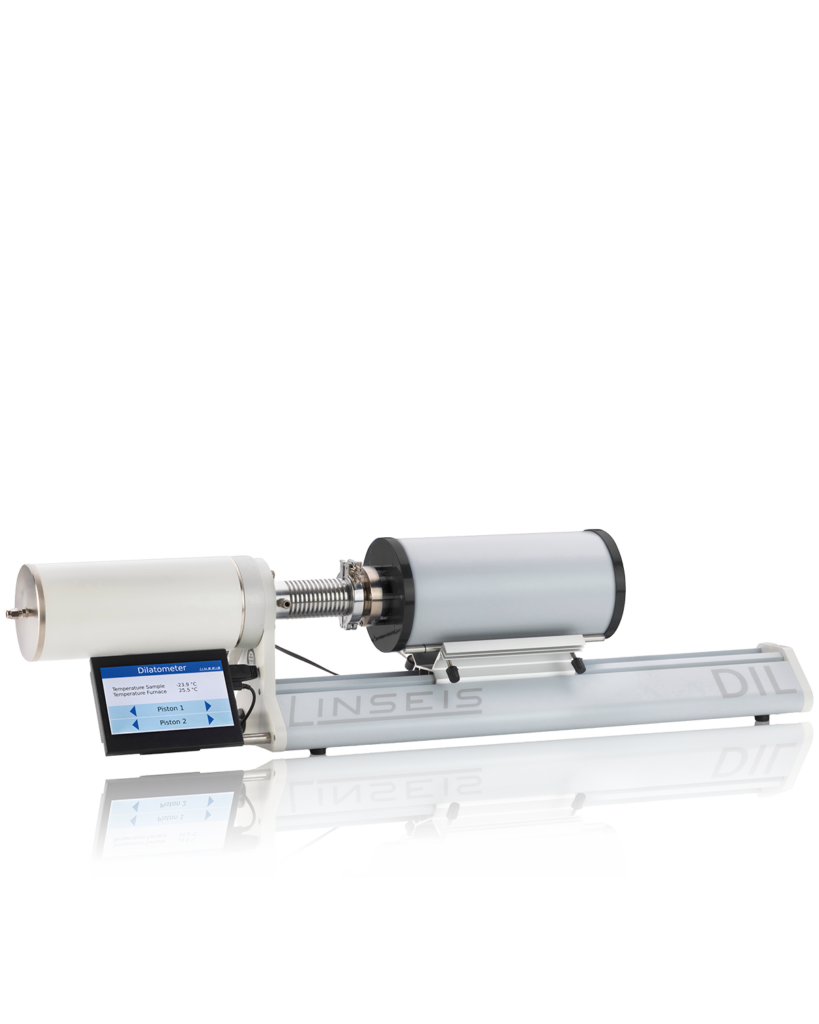
Dilatometry (DIL)
Determination of thermal expansion, glass transitions, and dimensional changes for technical and optical glasses.
Case Study: Analysis of the Thermal Expansion of Glass-Ceramics
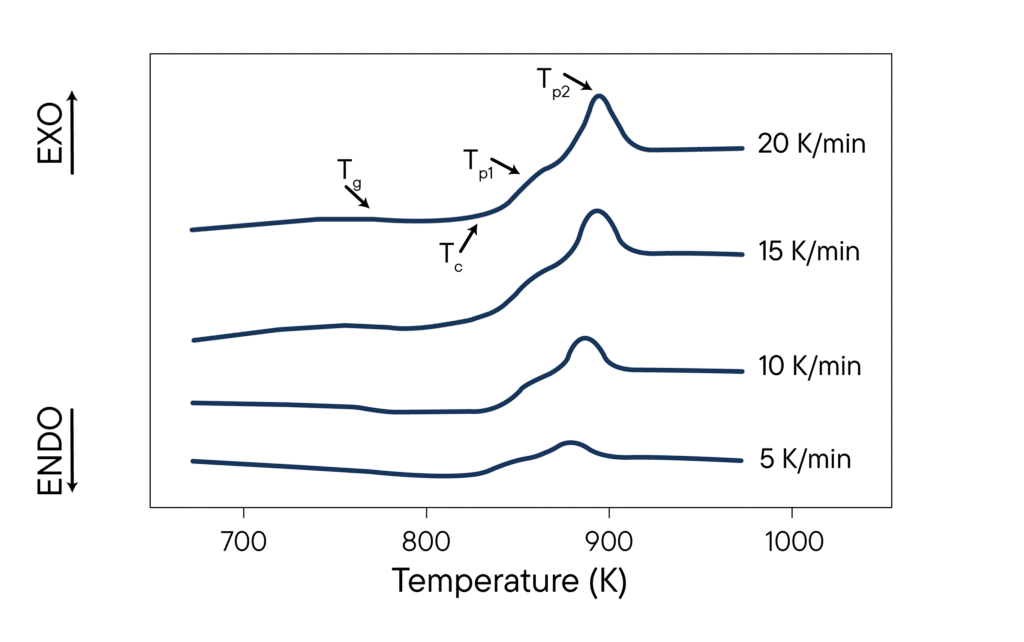
Crystallization Kinetics of a Barium-Zinc-Borosilicate Glass
The crystallization of borosilicate glasses has a significant impact on their processing and subsequent material properties. Using the LINSEIS STA L81 was used to investigate the crystallization behavior of a lead-free BaO–ZnO–B₂O₃–SiO₂ glass. The results reveal two successive crystallization processes and provide important insights for optimizing sintering and manufacturing processes for electronic and glass-ceramic applications.
Why Thermomechanics Is Crucial for Glasses
Glass materials are used in optical systems, electronics, architecture, and high-temperature applications. Thermal properties such as thermal expansion, glass transition, and dimensional stability play a key role in determining the reliability and service life of these components.
The combination of modern analytical methods makes it possible to:
Determination of Thermal Expansion and Glass Transitions
Evaluation of Thermal Shock Resistance
Analysis of Dimensional Changes Under Thermal Stress
Investigation of Crystallization and Structural Processes
Characterization of Thermal Transport Properties
Optimization of Glass Compositions and Manufacturing Processes
Thermal expansion determines the extent to which glass deforms in response to temperature changes. It affects the dimensional stability, stress development, and reliability of components in technical and industrial applications.
How is the coefficient of thermal expansion of glass determined?
The coefficient of thermal expansion is typically measured using a dilatometer. This involves recording and analyzing the changes in length of a specimen during a defined temperature program.
What is the glass transition temperature (Tg), and why is it important?
The glass transition describes the temperature range in which glass transitions from a rigid to a viscoelastic state. This parameter is critical for the processing, heat treatment, and operating temperature of a glass material.
What effects do thermal stresses have on glass?
Thermal stresses arise from temperature differences or varying coefficients of thermal expansion within a component. They can lead to warping, cracking, or, in extreme cases, material failure.
What is meant by thermal shock resistance?
Thermal shock resistance describes a glass’s ability to withstand rapid temperature changes without sustaining damage. It depends largely on the material’s thermal expansion, strength, and geometry.
What measurement methods are used for the thermomechanical characterization of glass?
Dilatometry (DIL), thermomechanical analysis (TMA), and differential scanning calorimetry (DSC) are the primary methods used to investigate thermomechanical properties. These methods provide information on thermal expansion, glass transitions, and dimensional changes.
Why is thermomechanical characterization important even during the material development phase?
Knowledge of thermomechanical properties enables the targeted development of glass materials with defined expansion and stability characteristics. This helps prevent future problems such as stress cracks, warping, or material failure as early as the development phase.