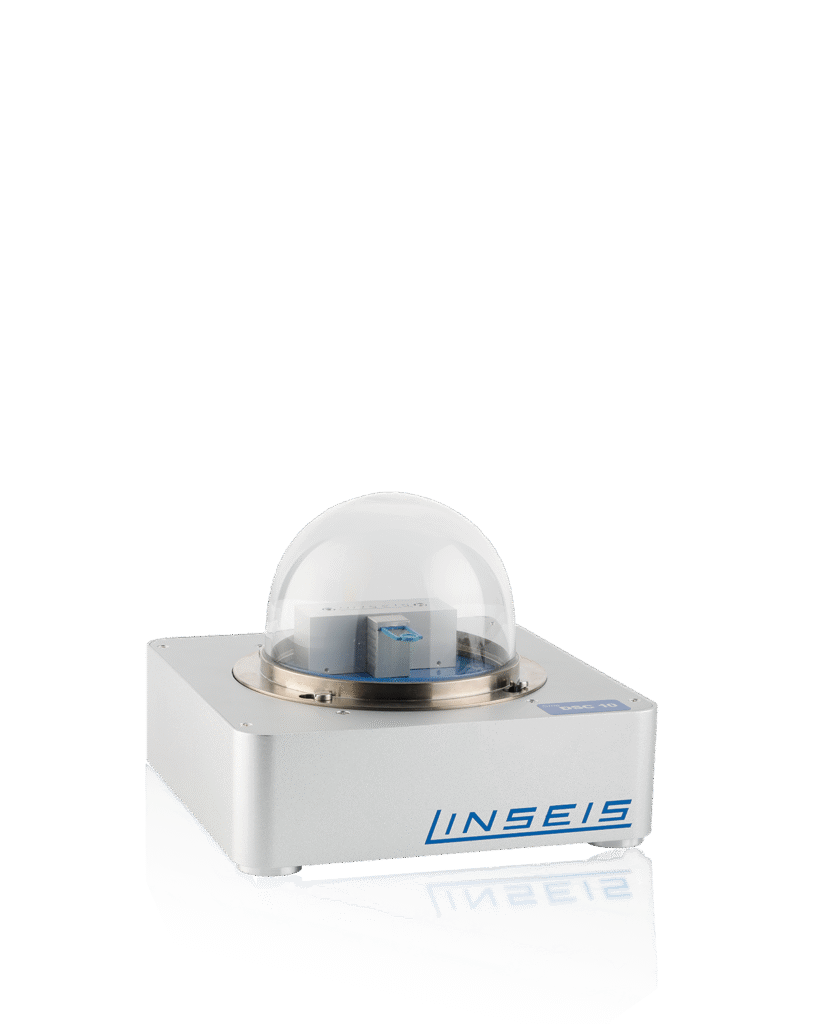
The Chip-DSC offers high resolution and sensitivity, combined with high heating and cooling rates, making it an ideal instrument for this type of analysis.
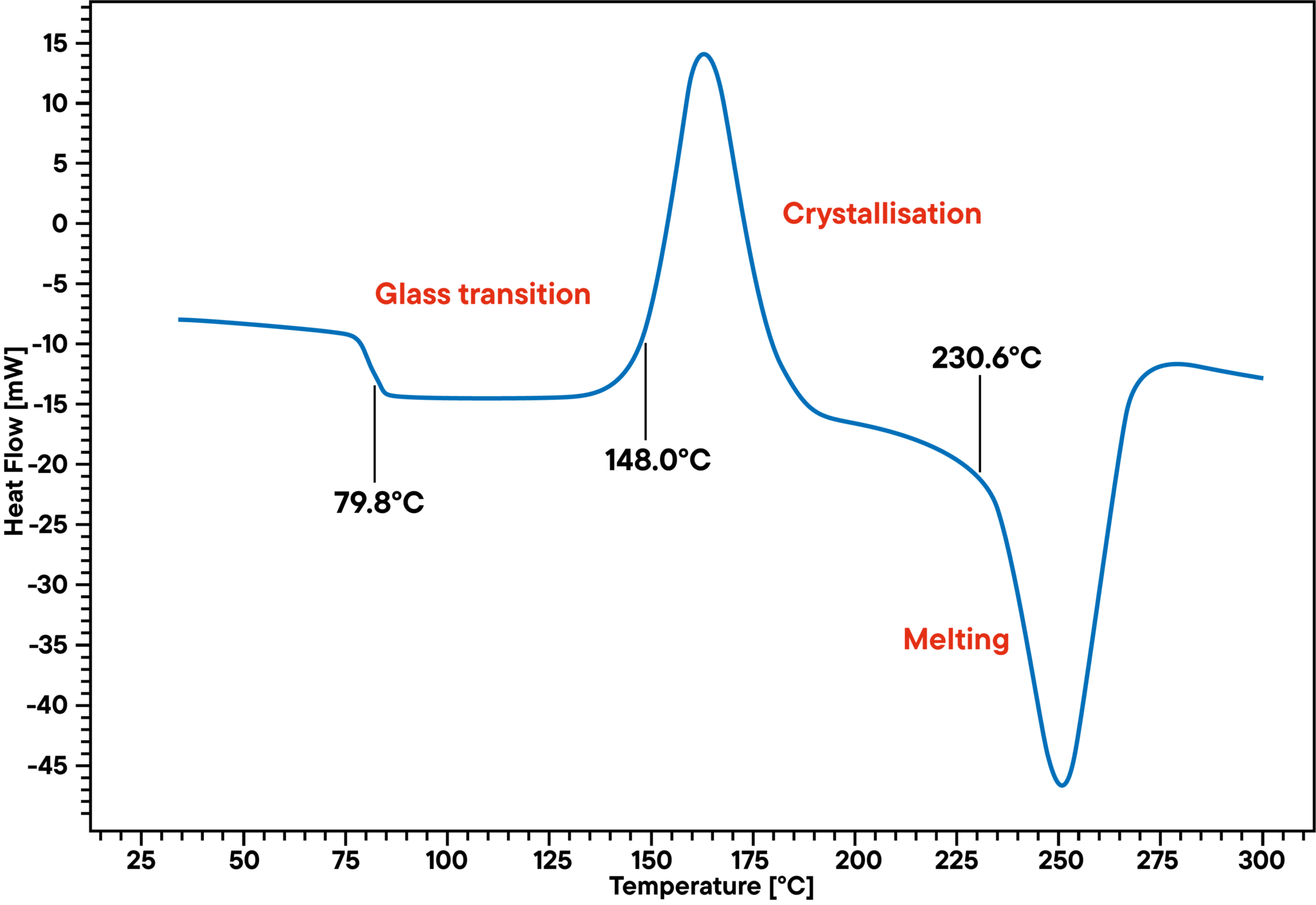
As an example, a PET (polyethylene terephthalate)granulate was heated, quench-cooled to freeze the amorphous state, and then analyzed using chip-DSC at a linear heating rate of 50 K/min.
The resulting curve shows a significant glass transition at about 80 °C, followed by a cold crystallization of the amorphous components beginning at about 148 °C and a melting peak at 230 °C.
From the enthalpy of the cold crystallization peak, the degree of crystallinity can be determined by comparison with the enthalpy of pure crystalline PET.
Depending on the sample’s thermal history, the degree of crystallinity changes and can therefore be used as an indicator of the polymer’s history and mechanical behavior.