Silicone oils (polymerized siloxanes with organic side chains) are the silicon analogs of carbon-based organic compounds and can form (relatively) long and complex molecules based on silicon instead of carbon. Silicone oils are excellent electrical insulators and offer good heat transfer and thermal stability. Furthermore, unlike their carbon-based counterparts, they are non-flammable. Their main applications include lubricants and hydraulic fluids.
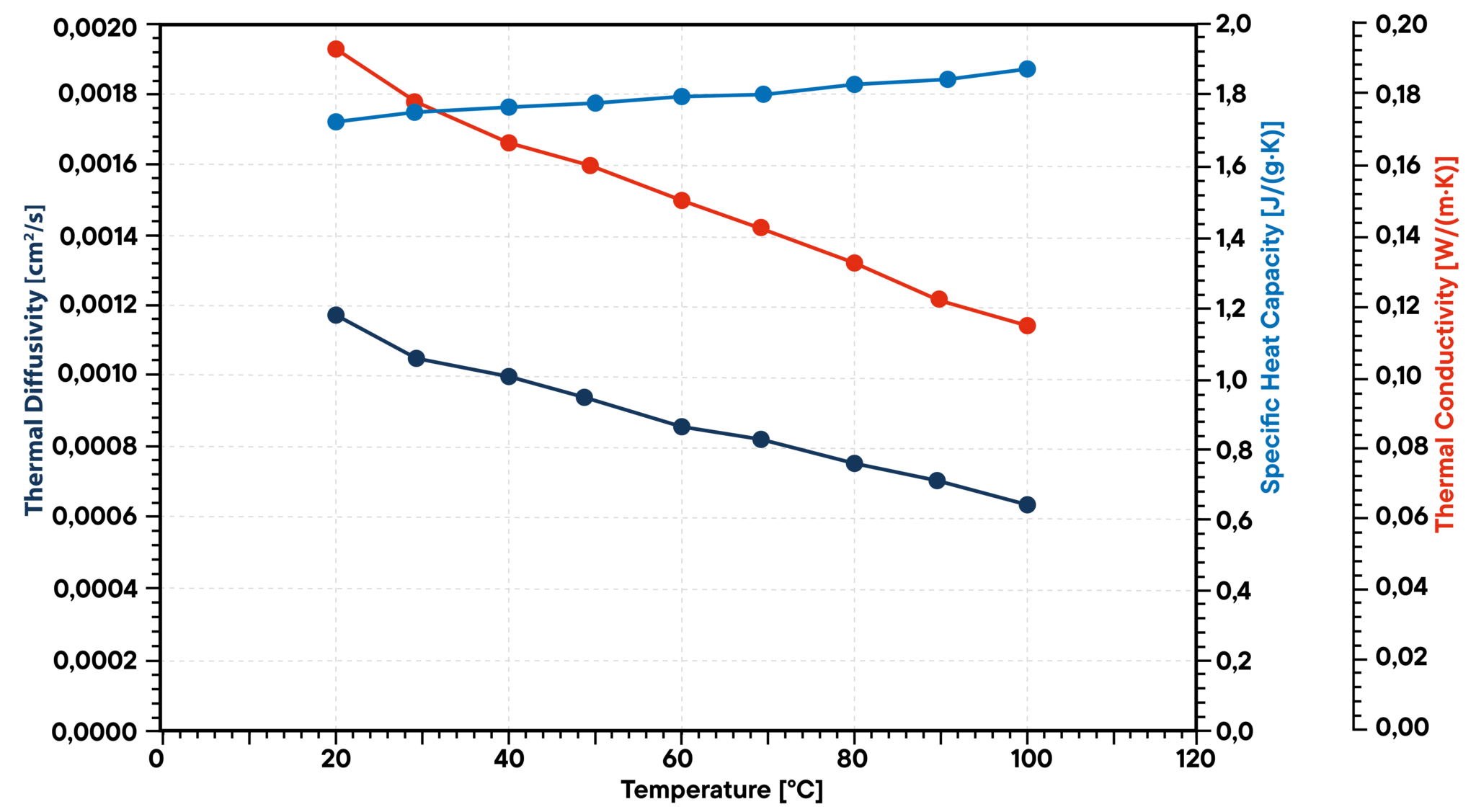
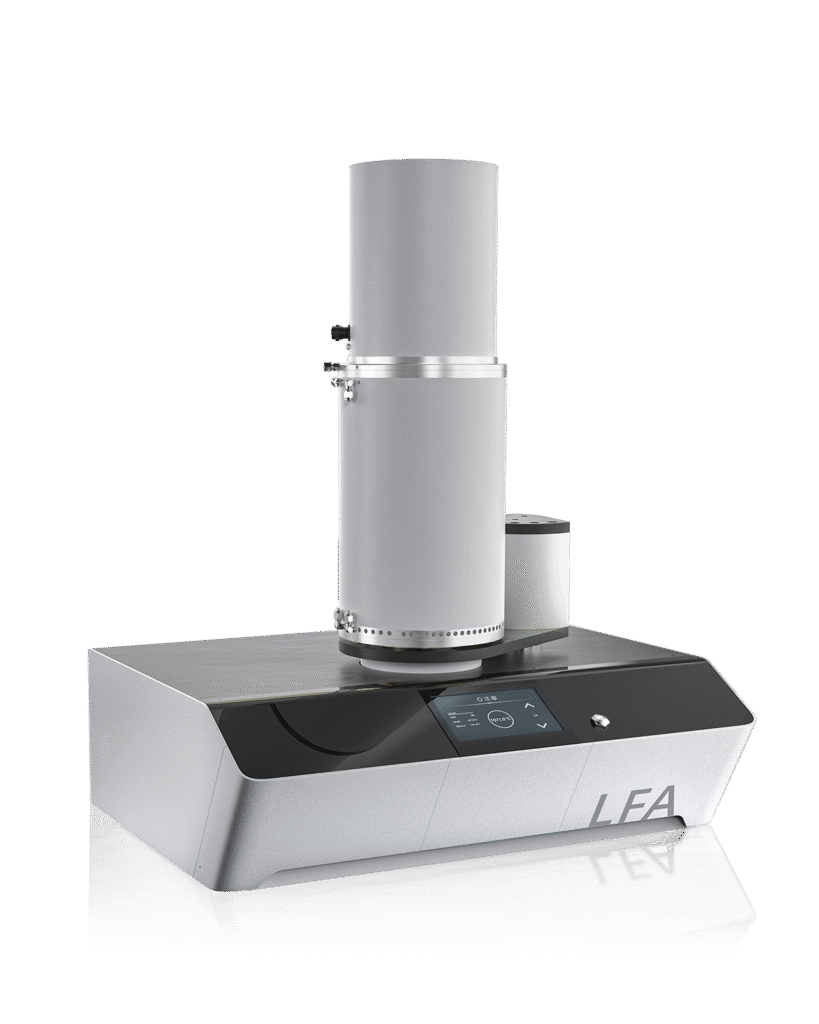
The application displays a determinationof thermal conductivity of a silicone oil over a temperature range from room temperature to 100 °C. The thermal conductivity was measured using a LFA , using a special sample holder designed for liquids, pastes, and powders. In addition, a DSC L63 was used to measure thespecificheat capacity (Cp). Thermal conductivity was then calculated using the density, thermal conductivity, and Cp values.
Specific heat capacity increases with temperature, while thermal conductivity and heat conductivity decrease as temperature rises.
Appropriate measuring device
LFA L52
High-performance LaserFlash for measuring thermophysical properties