

Nanotechnology
Precise thermal and electrical characterization of nanomaterials, nanostructures, and functional material systems


Nanotechnology enables the targeted development of materials and structures whose properties can change fundamentally due to dimensions in the nanometer range. Nanoparticles, nanostructured materials, and nanoscale functional layers are used today in, among other things, semiconductors, energy storage devices, sensors, thermoelectric materials, and modern coatings, among other applications.
As structural dimensions decrease, surfaces, interfaces, and nanoscale transport mechanisms become increasingly important. As a result, thermal and electrical properties can differ significantly from those of the corresponding bulk material. Precise experimental characterization is therefore crucial for understanding structure-property relationships and for specifically optimizing nanomaterials for technical applications.
LINSEIS analytical instruments can be used to investigate the thermal, thermophysical, and electrical properties of modern nanomaterials—from nanostructured bulk materials and nanocomposites to nanoscale layers and functional material systems.
Relevant Questions
- How do nanoscale structures affect heat transfer?
- How do nano- and bulk materials differ in their properties?
- How do interfaces affect heat conduction?
- How does the nanostructure affect electrical conductivity?
- What role do charge carrier concentration and mobility play?
- How do nanoparticles alter the properties of a composite material?
- What is the thermal stability of nanostructured materials?
- How do thermal and electrical properties change with temperature?
Relevant Material and Process Parameters
| Parameter | Meaning |
|---|---|
| Thermal Conductivity | Characterization of Heat Transport in Nanostructured Materials |
| Thermal Conductivity | Evaluation of heat propagation in the material |
| Thermal Interfaces | The Influence of Nanoscale Material Transitions on Heat Transfer |
| Thermal Anisotropy | Directional Dependence of Heat Transport in Structured Materials |
| Electrical Resistance | Evaluation of Electrical Transport Properties |
| Charge Carrier Concentration | Characterization of electronic and semiconducting nanomaterials |
| Load Carrier Mobility | Evaluation of charge transport in the material |
| Thermal Stability | Resistance of Nanostructured Materials to Thermal Stress |
Measurement Methods for Nanotechnology

Frequency-Domain Thermoreflectance (FDTR)
Optical characterization of heat transport in nanoscale layers, nanostructures, and complex material systems.
Analysis of
- Thermal conductivity
- Thermal Conductivity
- In-plane heat transfer
- Cross-Plane Heat Transfer
- Thermal Interfaces
Typical Applications
- Nanostructured Layers
- Semiconductor Materials
- Multilayer Systems
- Functional Nanomaterials
- Micro- and Nanoelectronics

Thin Film Analysis (TFA)
Thermal characterization of thin and nanoscale material systems using electrical heating and measurement structures.
Analysis of
- Thermal conductivity
- Heat Transfer
- Temperature-Dependent Properties
- Shift Systems
- Thermal Properties of Materials
Typical Applications
- Nanostructured Materials
- Thin films
- Semiconductor layers
- Dielectric Layers
- Functional Materials

Hall Effect Analysis (HCS)
Determination of fundamental electrical transport properties of semiconductors and functional nanomaterials.
Analysis of
- Hall coefficient
- Charge carrier concentration
- Charge carrier mobility
- Electrical Resistance
- Temperature-Dependent Charge Transport
Typical Applications
- Semiconductors
- Nanostructured Materials
- Functional Layers
- Electronic Materials
- Thermoelectric Materials

Seebeck & Resistance Measurement (LSR)
Characterization of the electrical and thermoelectric transport properties of nanostructured functional materials.
Analysis of
- Seebeck coefficient
- Electrical Resistance
- Temperature-Dependent Transport
- Thermoelectric Properties
- Material Optimization
Typical Applications
- Thermoelectric Nanomaterials
- Semiconductors
- Nanocomposites
- Functional Materials
- Energy Materials
Recommended Measurement Instruments for Nanotechnology

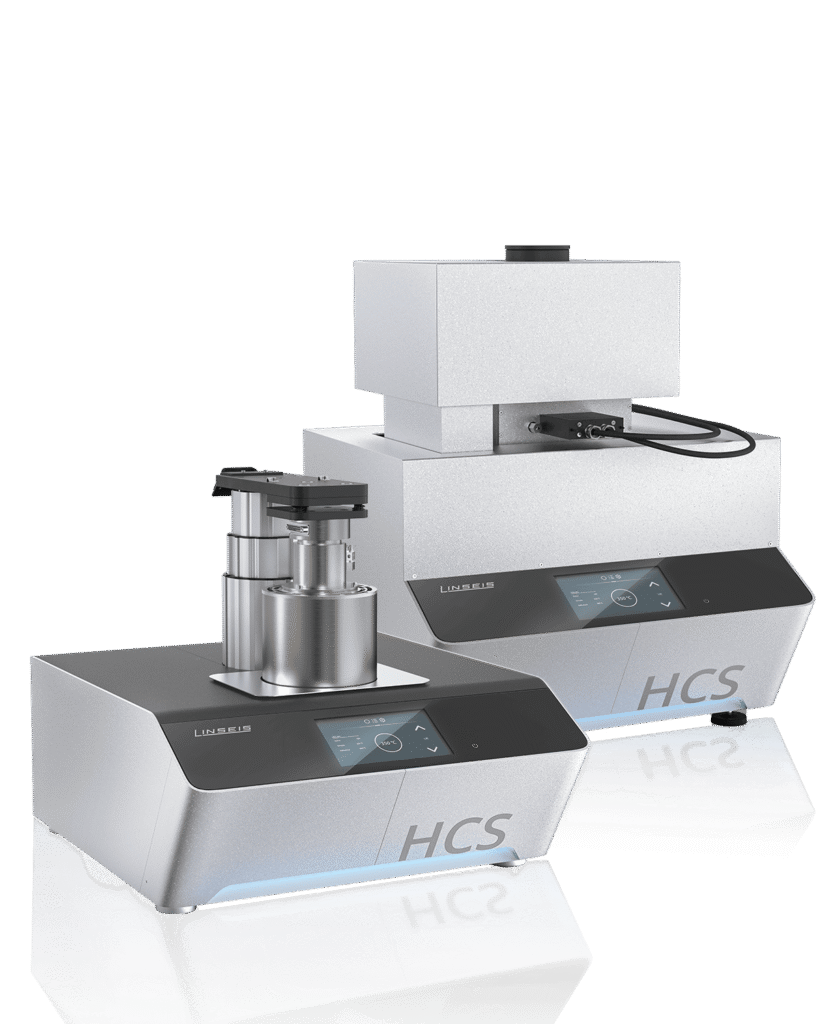
HCS L36

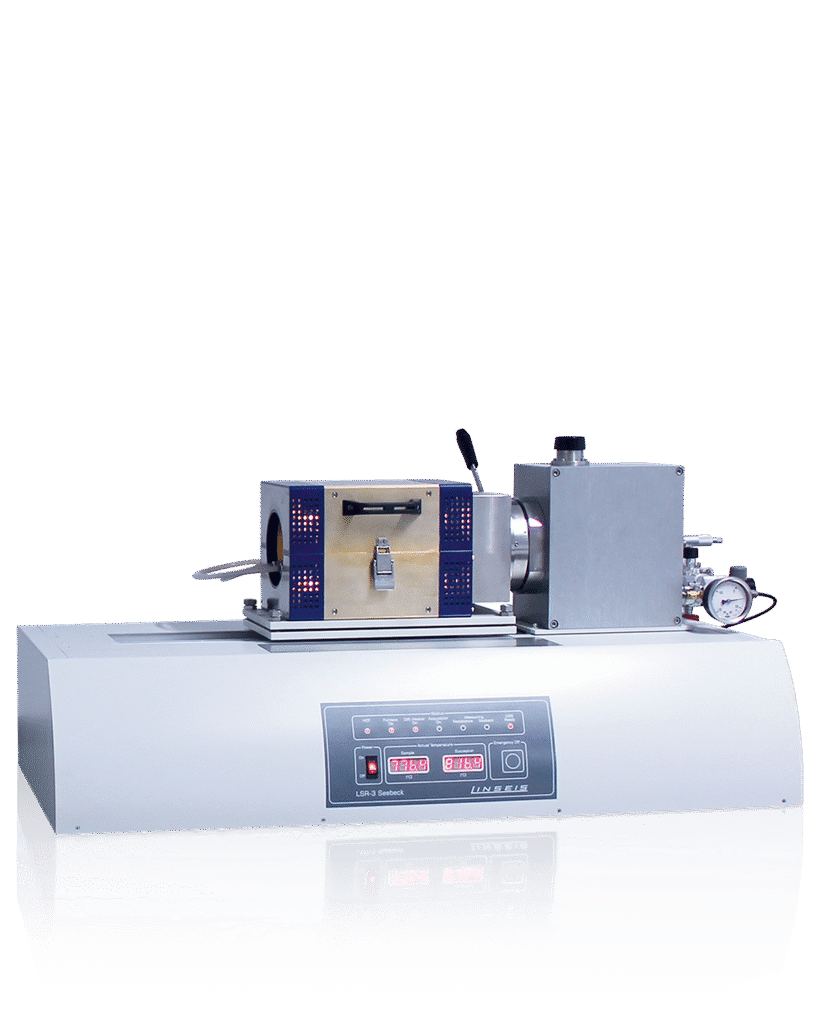
LSR-3 (LSR L33)



Case Study: Thermal Transport in Nanostructured Materials
Thermal Stability of an Encapsulated Urea-Kaolinite Nanocomposite
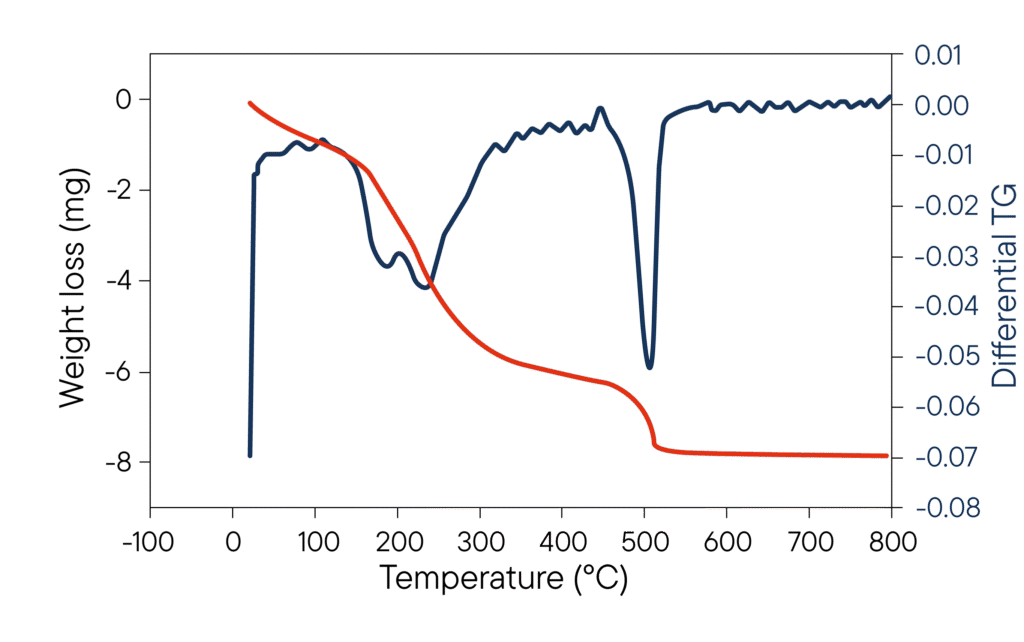
TG-DTG measurements using the LINSEIS STA L82 show the characteristic decomposition stages of a urea-kaolinite nanocomposite encapsulated with gum arabic for controlled-release fertilizers. The measurement distinguishes between moisture and water loss, the degradation of the encapsulation, and the dehydroxylation of the kaolinite, thereby providing important information on the thermal stability of the formulation. Download the white paper to learn more about the measurement setup, decomposition processes, and the interpretation of the measurement results.
Why the Characterization of Nanomaterials Is Crucial
At the nanometer scale, material properties can differ significantly from those of macroscopic materials. The high surface-to-volume ratio, numerous interfaces, and altered transport mechanisms mean that conventional bulk parameters are often insufficient to describe the actual material behavior.
Targeted thermal and electrical characterization provides the necessary data to understand these effects and apply them to the development of new materials.
The combination of modern analytical methods makes it possible to:
- Characterization of Heat Transport in Nanomaterials
- Determination of Thermal Conductivity and Temperature Conductivity
- Investigation of Nanoscale Interfacial Effects
- Analysis of Anisotropic Thermal Properties
- Determination of Electrical Transport Properties
- Characterization of Charge Carrier Concentration and Mobility
- Investigation of Thermoelectric Properties
- Assessment of Thermal Stability
- Comparison of Nano- and Bulk Materials
- Investigation of the Influence of Nanostructures and Nanoparticles
- Development and Optimization of Functional Nanomaterials
Applications – New Technologies
FAQ – Nanotechnology
Why do nanomaterials have different properties than bulk materials?
As the size of the structure decreases, the surface-to-volume ratio increases significantly. At the same time, interfacial effects and size-dependent transport mechanisms become more important. As a result, the thermal and electrical properties can differ significantly from those of the corresponding bulk material.
Which nanomaterials can be analyzed using LINSEIS systems?
Depending on the measurement method, it is possible to characterize, among other things, nanoparticles and nanopowders, nanostructured bulk materials, nanocomposites, semiconductor materials, as well as nanoscale functional layers and multilayer systems.
Why is thermal conductivity particularly interesting in the case of nanomaterials?
Nanoscale structures can selectively influence heat transport. This is of interest, for example, in thermoelectric materials, where low thermal conductivity can be advantageous, or in electronic applications where heat must be dissipated as efficiently as possible.
What role do interfaces play in nanomaterials?
Due to their small structural dimensions, nanomaterials can have a very high density of interfaces. These interfaces influence the transport of heat and electric charge and can thus significantly determine the macroscopic properties of the entire material.
What electrical properties of nanomaterials can be studied?
Using appropriate measurement techniques, it is possible to determine, for example, electrical resistance, the Hall coefficient, charge carrier concentration, mobility, and the Seebeck coefficient. These parameters are particularly relevant for semiconductors, thermoelectric materials, and other functional nanomaterials.
What measurement methods are suitable for the thermal characterization of nanomaterials?
The appropriate method depends heavily on the form of the material. Specialized thin-film techniques such as FDTR and 3-Omega are suitable for nanoscale layers and interfaces. Consolidated nanostructured bulk materials can be examined using LFA, for example, while STA provides information on thermal stability and reaction processes.
How does nanotechnology differ from thin-film analysis?
Nanotechnology primarily describes the structural scale of a material, while thin-film analysis focuses on materials with thin layers. A thin film can be nanoscale, but it does not have to be. Conversely, nanomaterials can exist, for example, as nanoparticles, nanopowders, or nanostructured bulk materials and do not have to be thin films.