

Material Development
Precise Material Characterization for the Development, Optimization, and Validation of Innovative Materials


The development of new materials is an iterative process in which composition, manufacturing conditions, and material structure are specifically tailored to achieve the desired properties. Whether high-performance ceramics, innovative alloys, polymers, semiconductors, energy materials or functional materials—reliable measurement data forms the foundation for efficient materials development.
Thermal and thermophysical analysis methods make it possible to compare different material variants and identify relationships between composition, processing, and material properties. Parameters such as phase transitions, thermal conductivity, heat capacity, thermal expansion, and thermal stability provide important information for the targeted optimization of new materials.
LINSEIS’s flexible analytical instruments enable the characterization of materials throughout the entire development process—from initial material screening through process optimization to the validation of final material properties.
Relevant Questions
- How does the material composition affect the thermal properties?
- Which material option offers the best performance?
- At what temperatures do phase transitions or structural changes occur?
- How do additives, dopants, or fillers affect material behavior?
- How can thermal conductivity and thermal expansion be specifically adjusted?
- What are the thermal stress limits of a new material?
- How does the manufacturing process affect the final material properties?
- How can experimental measurement data be used to validate simulations?
Relevant Material and Process Parameters
| Parameter | Meaning |
|---|---|
| Phase Transitions | Evaluation of Temperature-Dependent Structural and Material Changes |
| Thermal Conductivity | Optimization of heat transfer for the specific application |
| Thermal Conductivity | Characterization of the rate of heat propagation |
| Heat Capacity (Cp) | Evaluation of the Thermal Storage Capacity of New Materials |
| Coefficient of Thermal Expansion (CTE) | Dimensional Stability and Thermal Compatibility of Materials |
| Thermal Stability | Determination of thermal stress limits and operating limits |
| Change in Mass | Evaluation of decomposition, oxidation, and reaction processes |
| Reaction Enthalpy | Energetic Characterization of Reactions and Material Transformations |
Measurement Methods for Material Development

Thermogravimetry (TGA)
Comprehensive characterization of thermal reactions and changes in mass during the development of new materials.
Analysis of
- Phase Transitions
- Reaction enthalpies
- Bulk Changes
- Decomposition processes
- Oxidation and reduction reactions
Typical Applications
- Ceramics
- Alloys
- Energy Materials
- Functional Materials
- Material Screening
Differential Scanning Calorimetry (DSC)
Precise analysis of thermal transitions for the evaluation and optimization of different material formulations.
Analysis of
- Melting processes
- Crystallization
- Glass transitions
- Phase Transitions
- Heat Capacity
Typical Applications
- Polymers
- Alloys
- Functional Materials
- Formulation Development
- Material Comparison

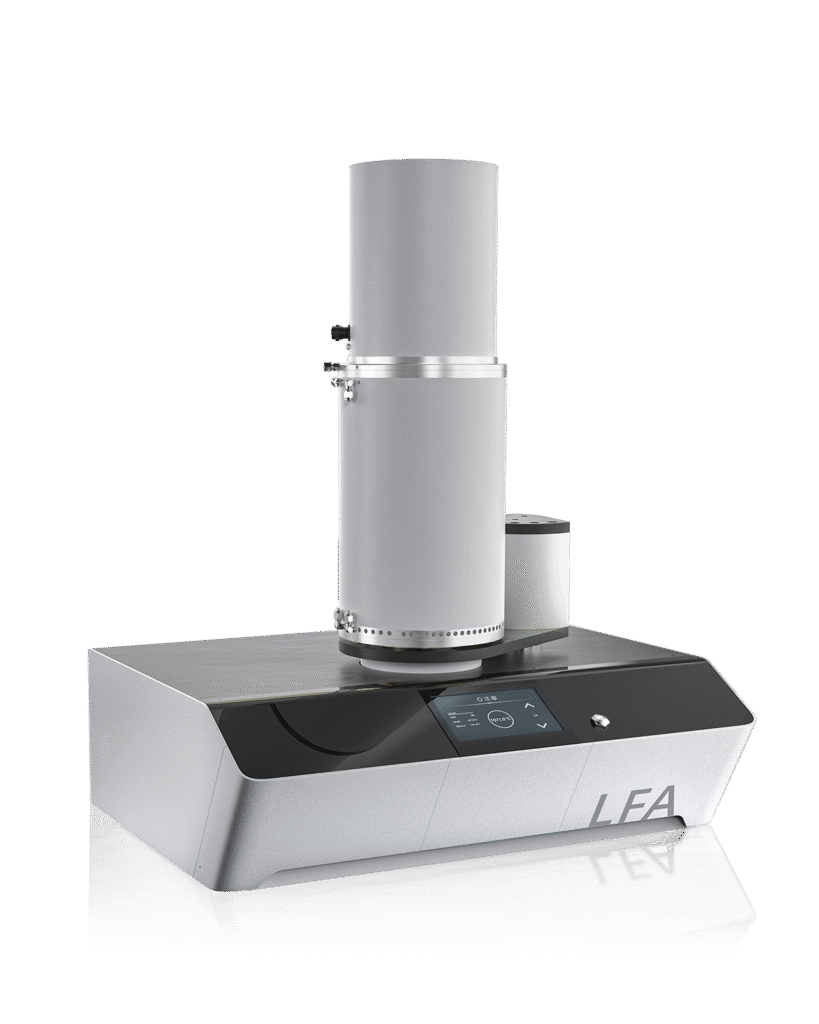
Laser Flash Analysis (LFA)
Determination of thermophysical properties for the targeted development of heat transfer in new materials.
Analysis of
- Thermal Conductivity
- Thermal conductivity
- Heat diffusion
- Temperature Dependence
- Thermophysical Properties
Typical Applications
- Ceramics
- Metals and alloys
- Semiconductors
- Energy Materials
- Thermal Management

Dilatometry (DIL)
Analysis of thermal expansion, phase transformations, and sintering behavior to optimize materials and manufacturing processes.
Analysis of
- Thermal expansion
- Coefficient of Thermal Expansion
- Phase Transitions
- Shrinkage
- Sintering behavior
Typical Applications
- Ceramics
- Metals
- Glasses
- Powder Materials
- High-Temperature Materials
Recommended measuring instruments for material development


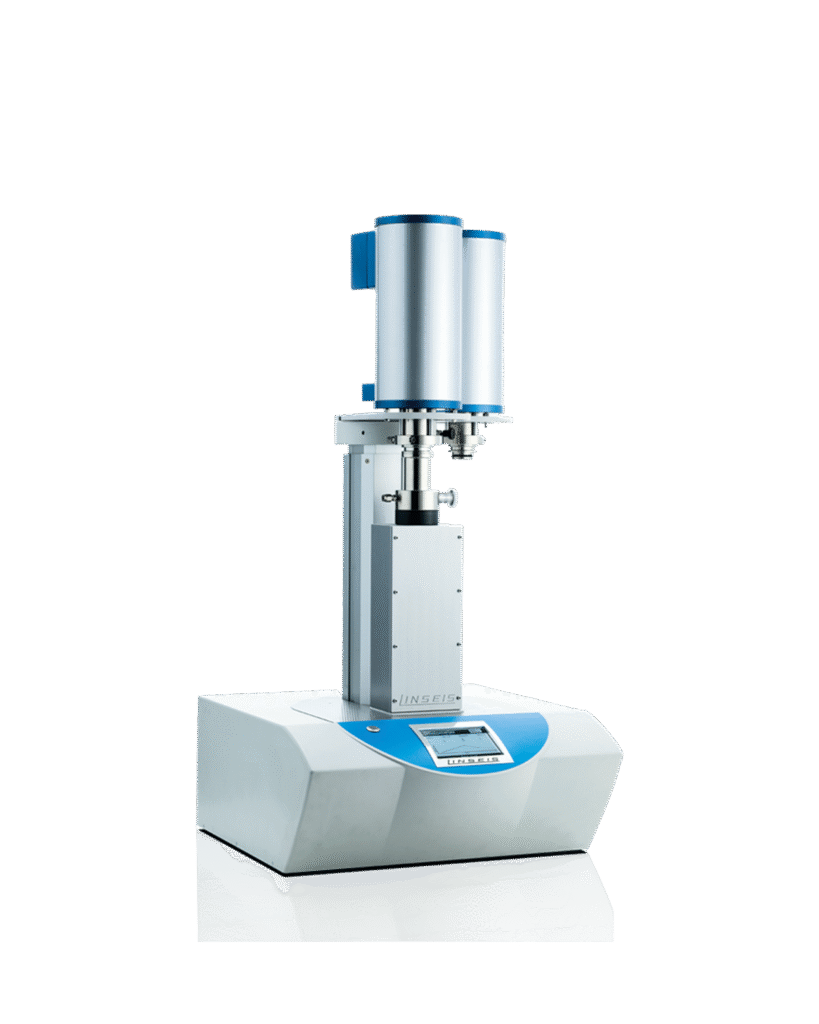
DSC L63

Case Study: Targeted Optimization of New Materials
Thermal Stability of Graphite Fabric/PAEK Composites
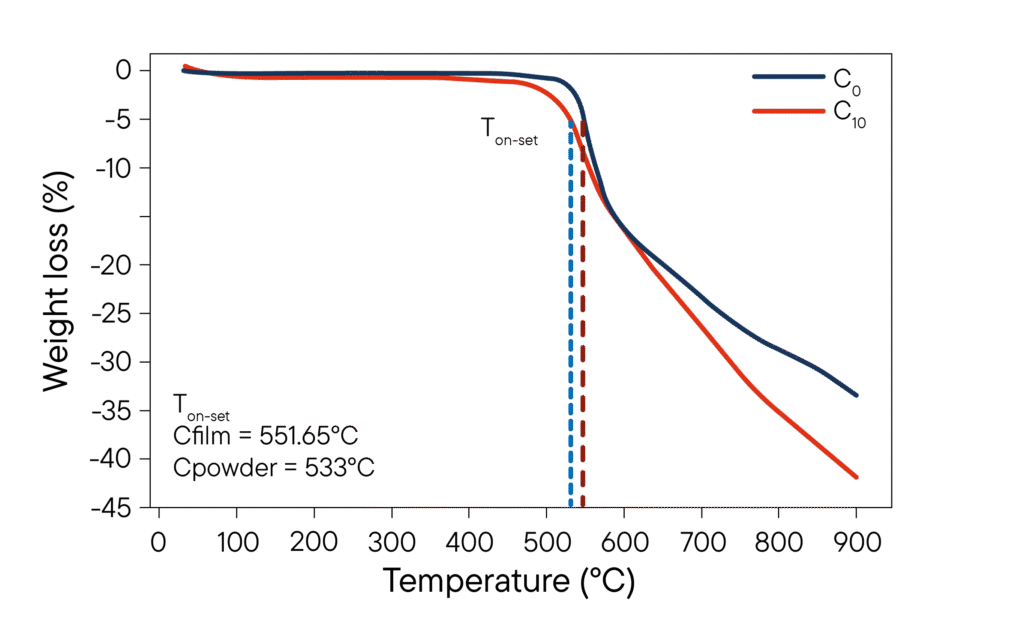
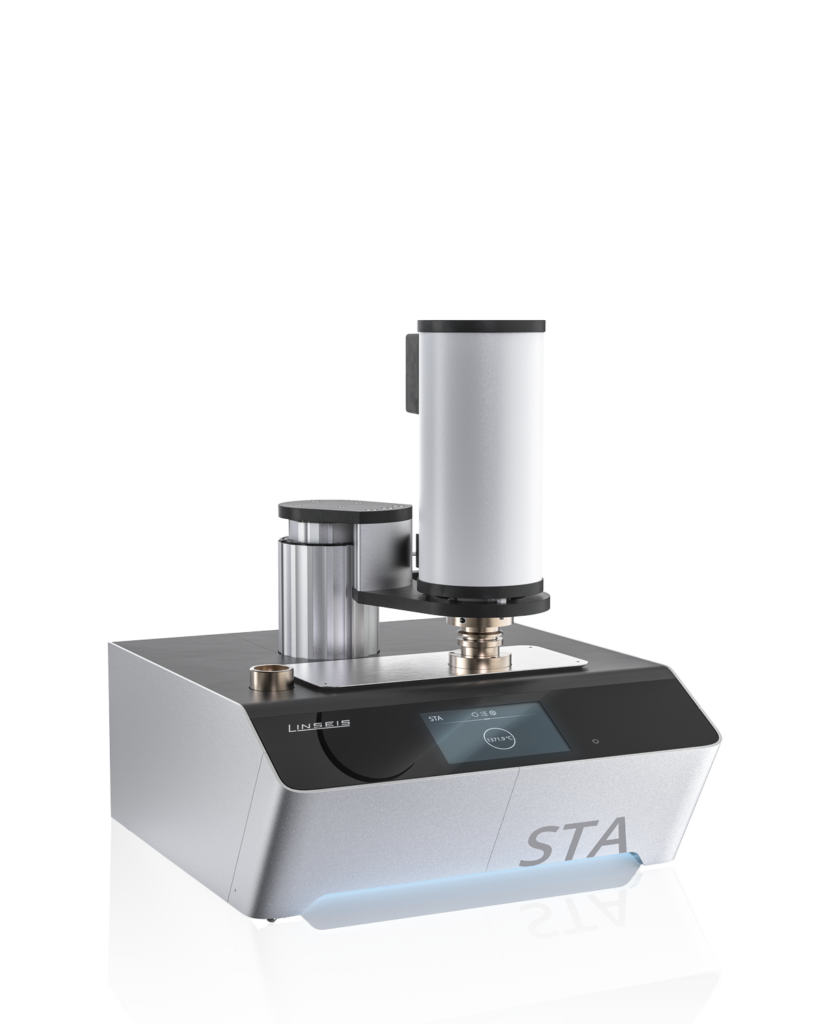
Thermogravimetric measurements using the LINSEIS STA L82 show the influence of a PEI-modified fiber-matrix interface on the thermal stability of graphite-fabric-reinforced PAEK composites. The results show a moderate decrease in the decomposition temperature and enable a targeted evaluation of the interplay between thermal stability, processability, and material performance. Download the white paper to learn more about the test setup, thermal decomposition behavior, and the characterization of high-performance composites.
Why Precise Material Characterization Is Crucial for Material Development
New materials are increasingly required to meet multiple requirements simultaneously—such as low weight, high temperature resistance, specific thermal conductivity, and long-term stability. The targeted development of such property profiles requires quantitative measurement data on how the materials behave under realistic thermal conditions.
The combination of modern analytical methods makes it possible to:
- Comparison of Different Material Formulations
- Investigation of the Influence of Additives and Doping
- Determination of Phase Transitions and Reaction Mechanisms
- Optimization of Thermal Conductivity and Heat Transfer
- Characterization of Thermal Expansion and Dimensional Stability
- Evaluation of Thermal Stability and Operating Limits
- Optimization of Manufacturing and Heat Treatment Processes
- Validation of Simulations and Material Models
- Selection of promising materials for further development
Applications – Research & Higher Education
FAQ – Material Development
What role does thermal analysis play in the development of new materials?
Thermal analysis provides quantitative information about how a material behaves in response to temperature changes. Phase transitions, decomposition, thermal expansion, and other properties can be investigated as early as the initial stages of development. This makes it possible to identify suitable material options more quickly.
What materials can be examined during development?
LINSEIS systems are suitable for a wide range of materials, including metals and alloys, ceramics, polymers, glasses, semiconductors, composites, energy materials, and functional materials. Powders, pastes, liquids, and novel material systems can also be characterized, depending on the measurement method.
How can different material formulations be compared with one another?
Different material variants can be tested under identical measurement conditions and compared with one another based on defined parameters. This reveals, for example, how additives, dopants, filler content, or different manufacturing conditions affect the material properties.
Which measurement methods are particularly suitable for material development?
STA, DSC, and TGA provide information about thermal reactions, phase transitions, and stability. LFA and THB characterize heat transfer, while DIL and TMA examine dimensional and thermomechanical properties. The appropriate combination depends on the material and the development goal.
How does material characterization support process optimization?
Manufacturing parameters such as temperature, heating rate, atmosphere, or heat treatment can significantly influence the final material properties. Thermal analyses reveal these relationships and make it possible to tailor process conditions specifically to the desired property profile.
Can measurement data be used to validate simulations?
Yes. Experimentally determined temperature-dependent material parameters, such as thermal conductivity, heat capacity, and thermal expansion, form an important data foundation for thermal and thermomechanical simulations. This allows material models to be parameterized and validated more realistically.
How does materials development differ from basic research?
Basic research focuses primarily on understanding fundamental material properties and mechanisms. Materials development uses these findings to specifically modify composition, structure, and manufacturing conditions in order to achieve a defined property profile for a specific application.