

Composite Materials
Precise Material Characterization for Composites, Fiber-Reinforced Composites, and Functional Multimaterial Systems


Composite materials combine different materials to achieve properties that often cannot be obtained with individual materials. Fiber-reinforced plastics, metal-matrix and ceramic-matrix composites , as well as functional composites, enable, for example, high strength combined with low weight, targeted heat transfer, or high thermal and mechanical resilience.
However, the properties of a composite are not determined solely by its individual components. The matrix, reinforcement, filler content, orientation, porosity, and the interfaces between the material phases all influence the thermal and thermophysical behavior of the entire material system.
LINSEIS analytical instruments allow these relationships to be studied with precision. Thermal conductivity, temperature conductivity, thermal expansion, heat capacity, and thermal stability can be characterized over a wide temperature range and utilized in the development of high-performance composite materials.
Relevant Questions
- How does the filler or fiber content affect the thermal properties?
- What is the thermal conductivity of the composite material?
- How do in-plane and through-plane heat transfer differ?
- What effect does the orientation of fibers or fillers have?
- How does the thermal expansion of the composite change with temperature?
- What thermal stresses arise between different material phases?
- How stable are the matrix and reinforcement at high temperatures?
- How do interfaces and porosity affect material properties?
Relevant Material and Process Parameters
| Parameter | Meaning |
|---|---|
| Thermal Conductivity | Heat transfer through the matrix, reinforcement, and the composite as a whole |
| Thermal Conductivity | Rate of heat propagation in the composite |
| Thermal Anisotropy | Directional Dependence of Heat Transport in Composite Materials |
| Coefficient of Thermal Expansion (CTE) | Dimensional stability and thermal compatibility of the material phases |
| Heat Capacity (Cp) | Thermal storage capacity of the composite material |
| Thermal Stability | Resistance of the matrix and reinforcement to temperature stress |
| Change in Mass | Decomposition, oxidation, and determination of individual material components |
| Glass Transition Temperature (Tg) | Service Limits and Thermomechanical Behavior of Polymer-Based Composites |
Measurement Methods for Composite Materials


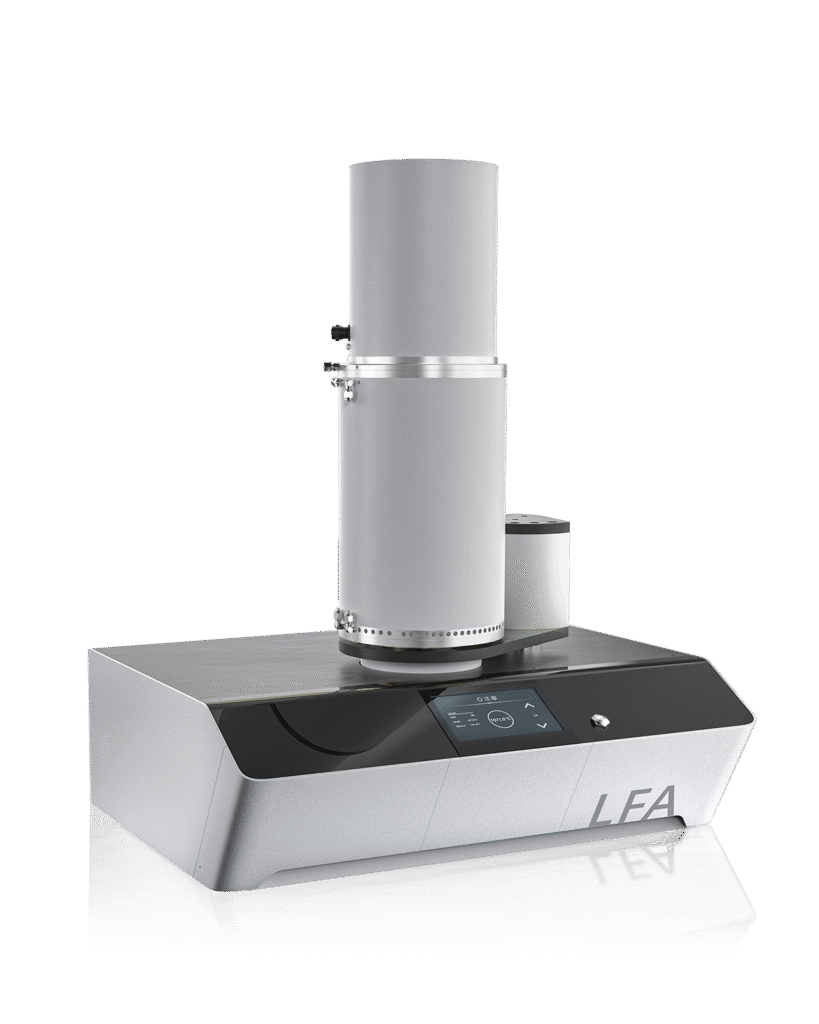
Laser Flash Analysis (LFA)
Determination of temperature-dependent heat transport in composite materials and anisotropic material systems.
Analysis of
- Thermal Conductivity
- Thermal conductivity
- Heat diffusion
- Temperature Dependence
- Anisotropic Heat Transfer
Typical Applications
- Fiber-reinforced composites
- Ceramic-matrix composites
- Metal Matrix Composites
- Carbon-based composites
- Functional Composite Materials

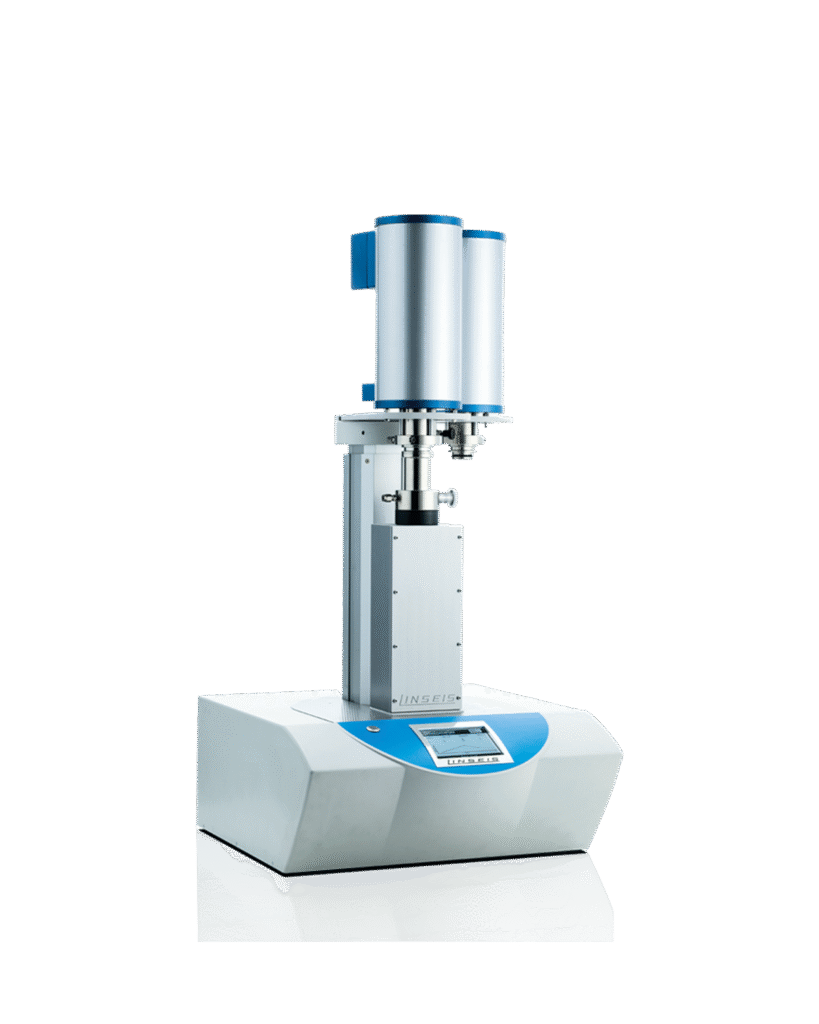
Dilatometry (DIL)
Detailed investigation of the thermal expansion and thermal dimensional stability of composite materials.
Analysis of
- Thermal expansion
- Coefficient of Thermal Expansion
- Changes in Dimensions
- Thermal Stresses
- Temperature-Dependent Material Behavior
Typical Applications
- Fiber composites
- Metal Matrix Composites
- Ceramic-matrix composites
- Multiphase Materials
- High-Temperature Composites

Differential Scanning Calorimetry (DSC)
Characterization of thermal interfaces and the matrix properties of composite materials.
Analysis of
- Glass transition
- Melting behavior
- Crystallization
- Heat Capacity
- Curing reactions
Typical Applications
- Polymer Matrix Composites
- Fiber-Reinforced Plastics
- Resin Systems
- Prepregs
- Functional Composites

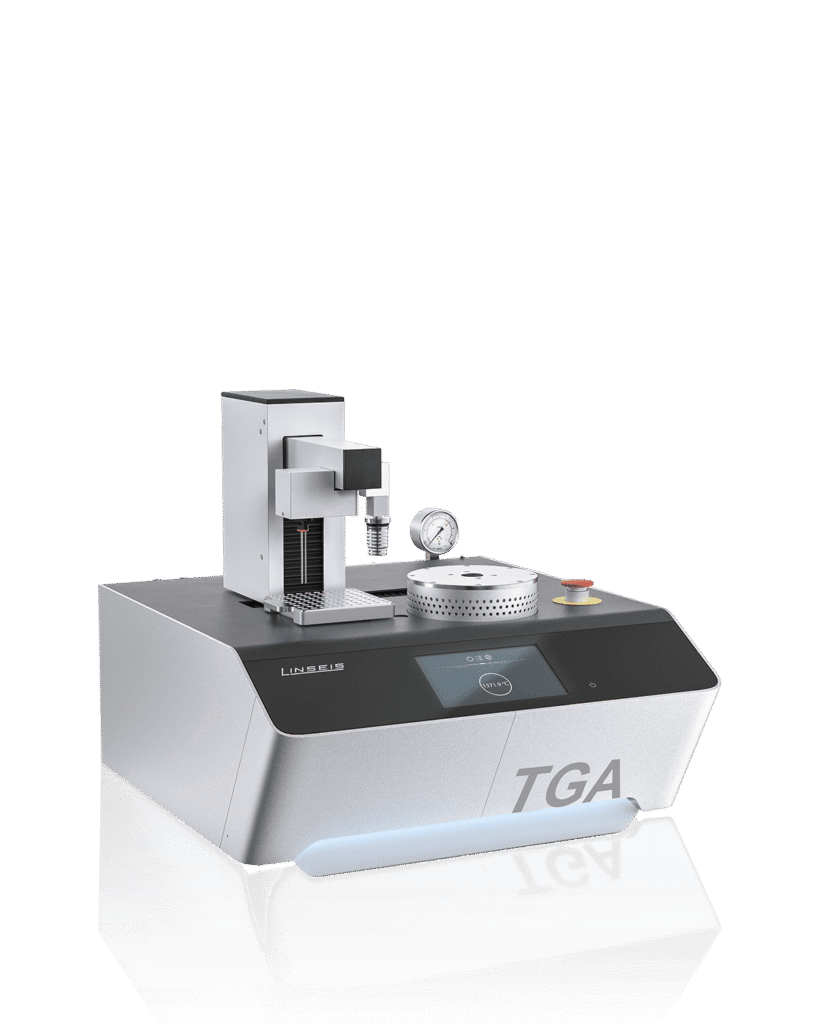
Thermogravimetry (TGA)
Analysis of the thermal stability and composition of multiphase material systems.
Analysis of
- Thermal Decomposition
- Bulk Changes
- Oxidation
- Matrix Reduction
- Filler and Fiber Content
Typical Applications
- Polymer composites
- Fiber-reinforced composites
- Filled Polymers
- Carbon composites
- Material Development
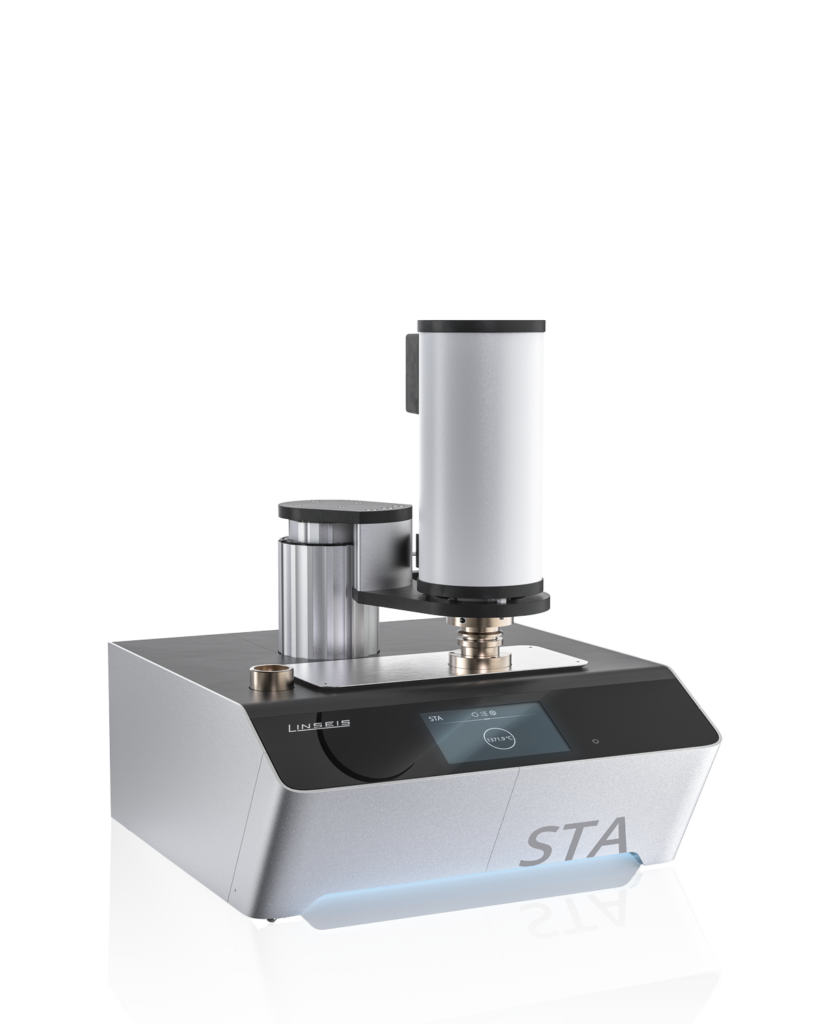
Recommended measuring instruments for composite materials

Case Study: Thermal Characterization of Composite Materials
Thermal Stability of PA610/Halloysite Nanocomposites
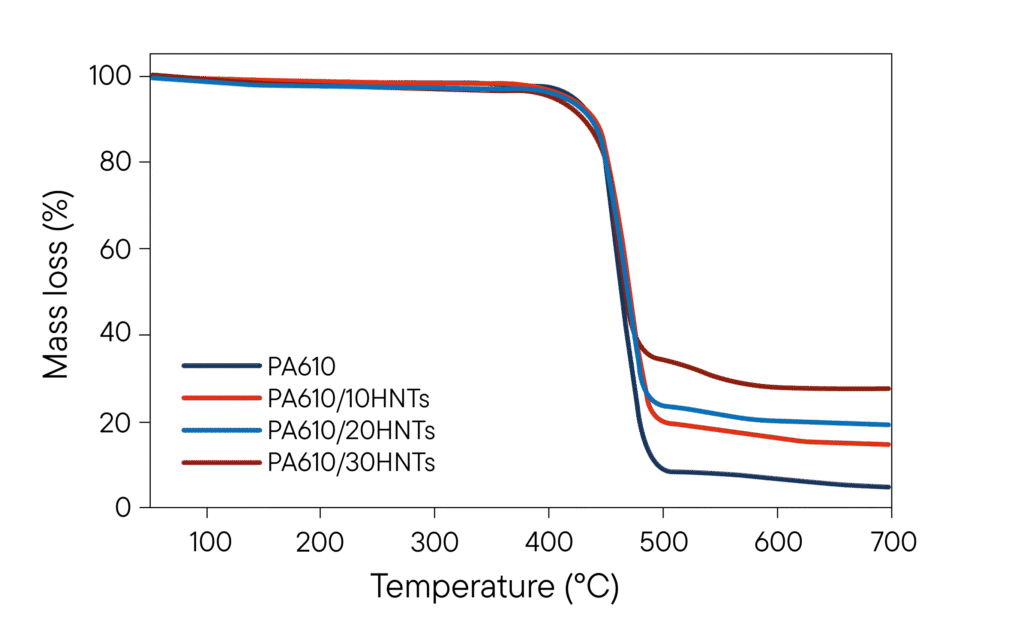
TGA measurements using the LINSEIS TGA L83 demonstrate the influence of halloysite nanotubes (HNTs) on the thermal decomposition behavior of partially bio-based PA610. The results enable both the evaluation of thermal stability and the reliable determination of the inorganic filler content. Download the white paper to learn more about the measurement setup, thermogravimetric analysis, and the characterization of sustainable polymer composites.
Why Material Characterization of Composite Materials Is Crucial
The performance of a composite cannot be determined solely from the properties of its constituent materials. It is the interaction of the matrix, the reinforcement, the interfaces, and the microstructure that determines the actual thermal behavior of the composite material.
The combination of modern analytical methods makes it possible to:
- Determination of Thermal Conductivity and Temperature Conductivity
- Investigation of Anisotropic Material Properties
- Analysis of Thermal Expansion
- Evaluation of Thermal Stresses Between Material Phases
- Characterization of the Glass Transition and Curing Behavior
- Investigation of Thermal Stability and Decomposition
- Determination of Matrix, Fiber, and Filler Content
- Comparison of Different Material Compositions
- Optimization of Multifunctional Composite Materials
Applications – Research & Higher Education
FAQ – Composite Materials
Why must composite materials be characterized as an integrated system?
The properties of a composite material do not depend solely on the matrix and reinforcement. Fiber orientation, filler content, porosity, and interfacial effects also influence its thermal behavior. Therefore, the properties of the finished composite cannot be reliably derived solely from the characteristic values of its individual components.
Which composite materials can be analyzed using LINSEIS systems?
The materials that can be tested include, among others, fiber-reinforced plastics, polymer matrix composites (PMC), metal matrix composites (MMC), ceramic-matrix composites (CMC), carbon-based composites, as well as filled polymers and functional hybrid materials.
Why is thermal conductivity important in composite materials?
Thermal conductivity affects the temperature distribution and heat dissipation within a component. By carefully selecting the matrix, fibers, and fillers, it can be increased or decreased depending on the application—for example, for thermal management or thermal insulation.
What does thermal anisotropy mean in the context of composite materials?
In fiber-reinforced, layered, or oriented materials, heat can be transported at different rates in different spatial directions. For this reason, the distinction between in-plane and through-plane properties is particularly relevant for composites.
What information does the TGA provide regarding composite materials?
Thermogravimetry reveals temperature-dependent changes in mass and can, for example, detect the degradation of a polymer matrix or the oxidation of individual components. For suitable material systems, this method can also provide information about the proportions of the matrix, fibers, or fillers.
Why is the coefficient of thermal expansion critical for composites?
Different material phases can have coefficients of thermal expansion that vary significantly. When temperatures change, this leads to internal stresses that can cause delamination, cracking, or deformation. Precise CTE characterization therefore supports reliable material design.
Which measurement methods are particularly suitable for composite materials?
LFA and THB are suitable for studying heat transfer, while DIL and TMA characterize dimensional changes. DSC provides information about the polymer matrix and curing processes, while TGA and STA examine the composition, thermal stability, and decomposition of the composite material.