The chemical formula for gypsum isCaSO₄ ∙2H₂O(calcium sulfate dihydrate). Gypsum has a wide variety of uses as a building material.
Plaster is a dry powder that is mixed with water to form a paste, which then hardens. It remains fairly soft after drying and can be easily worked with metal tools.
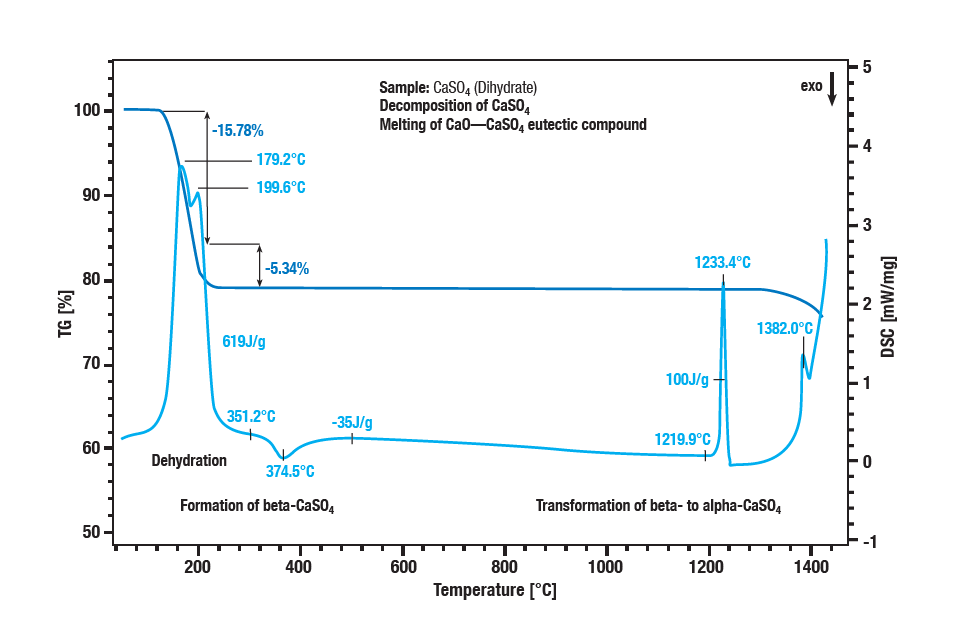
Calcium sulfate hemihydrate (CaSO₄ ∙½H₂O) reacts with water to form calcium sulfate dihydrate; conversely, calcium sulfate dihydrate releases water upon heating and is converted back to calcium sulfate hemihydrate.
The cleavability of crystallineCaSO₄ ∙2H₂Ois caused byCaSO₄ bilayers(in each layer,Ca²⁺ andSO₄²⁻ ions are arranged alternately side by side) with relatively weak hydrogen bonds.