The thermal stability of active pharmaceutical ingredients is a critical factor in the efficacy, safety, and shelf life of drugs. Even minor temperature fluctuations can cause physical or chemical changes that affect the solubility, bioavailability, or stability of an active ingredient.
Thermal analysis methods enable the precise study of melting behavior, glass transitions, crystallization, polymorphism, and thermal decomposition. They provide important information for the development of new formulations, the selection of suitable manufacturing processes, and the definition of optimal storage and transport conditions.
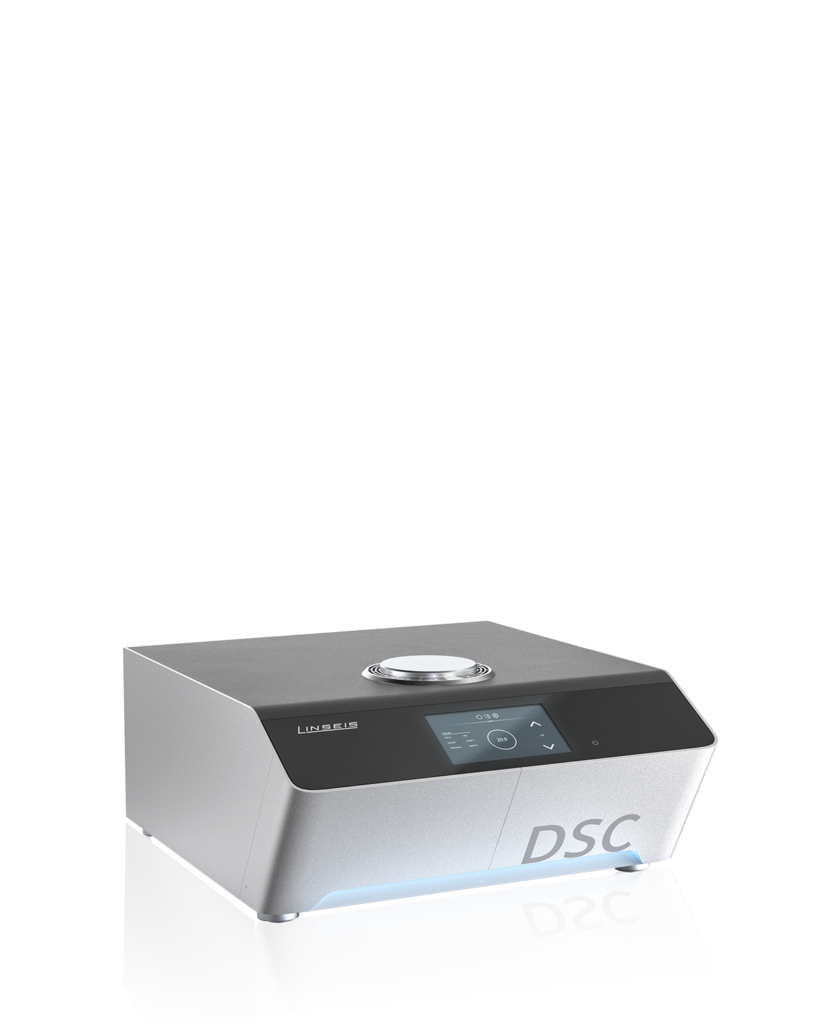
LINSEIS analytical instruments can be used to characterize active pharmaceutical ingredients and formulations throughout the entire development process—from early-stage drug development to quality control of finished pharmaceutical products.
Relevant Questions
What are the temperature limits for the active ingredient?
When does thermal decomposition begin?
What polymorphic forms are present?
How do excipients affect thermal stability?
What melting and crystallization processes occur?
How do amorphous formulations change during storage?
Which manufacturing parameters ensure maximum stability?
How can active ingredients be optimized for storage and transport?
Relevant Material and Process Parameters
Parameter
Meaning
Melting Temperature
Identification and Purity Assessment of Active Pharmaceutical Ingredients
Glass Transition Temperature (Tg)
Stability of amorphous formulations
Crystallization Behavior
Evaluation of Storage, Processing, and Product Quality
Polymorphism
Distinguishing Between Different Crystal Forms of an Active Ingredient
Thermal Stability
Resistance to Temperature Stress
Decomposition temperature
Onset of thermal degradation processes
Mass Change
Loss of moisture, solvent residues, and thermal decomposition
Heat Capacity (Cp)
Characterization of Thermal Material Properties
Measurement Methods for the Thermal Stability of Active Ingredients
Differential Scanning Calorimetry (DSC)
Determination of thermal transitions in active pharmaceutical ingredients and formulations.
Case Study: Thermal Characterization of Active Pharmaceutical Ingredients
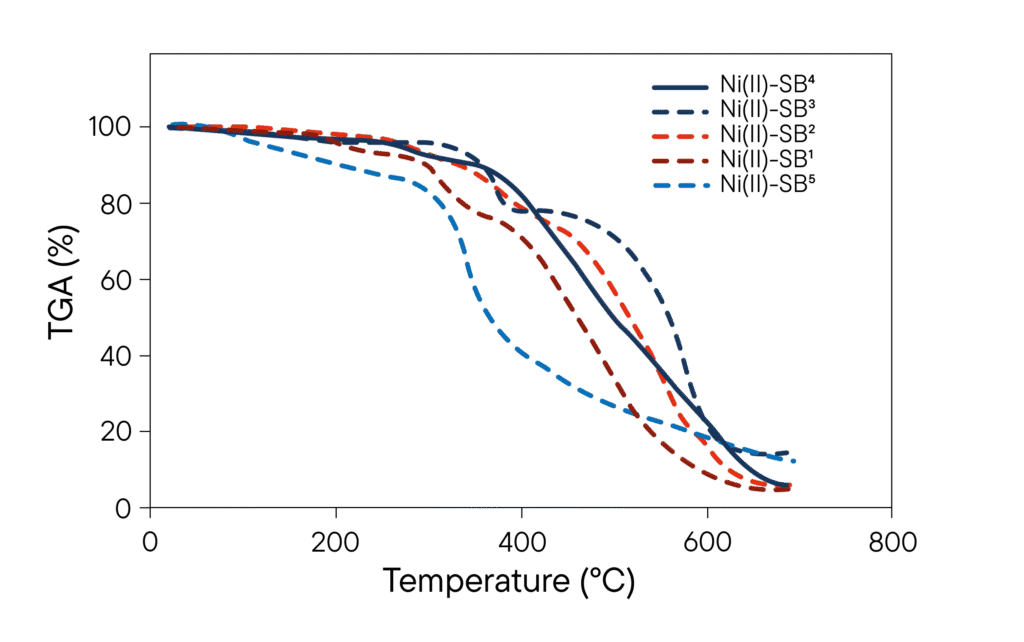
Thermal Stability of Nickel(II) Schiff Base Complexes
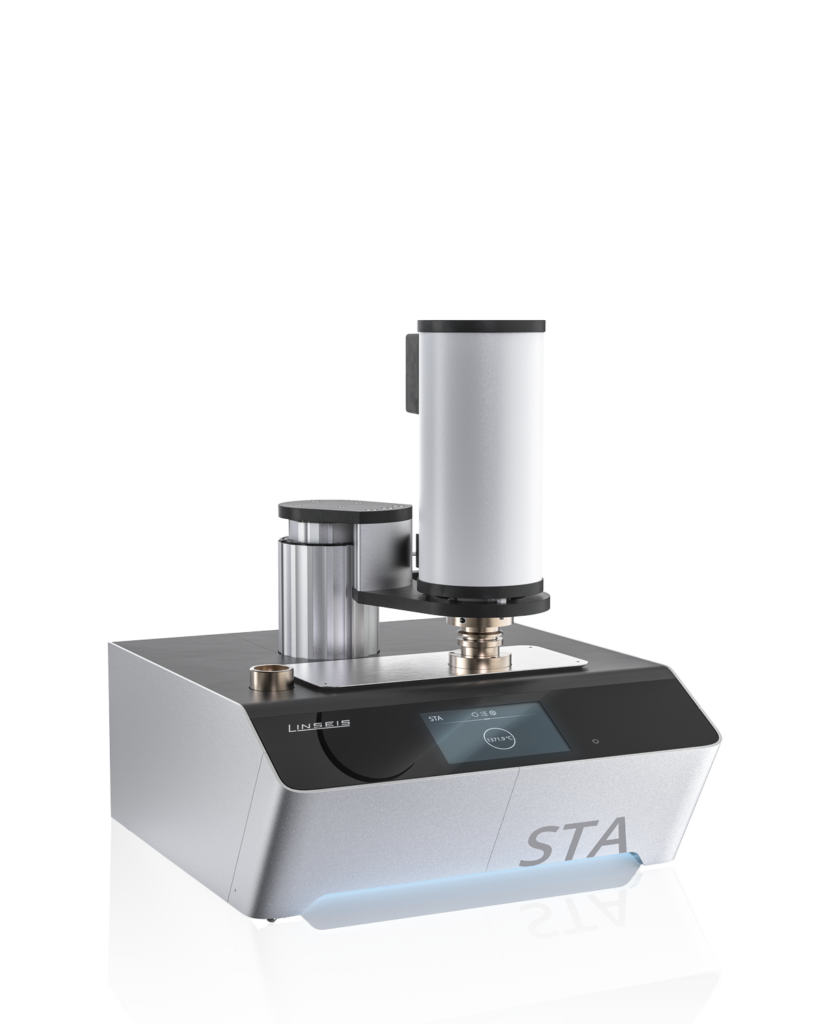
STA measurements using the LINSEIS STA L82 show the temperature-dependent decomposition and stability behavior of various nickel(II) Schiff base complexes. The measurement results identify characteristic multistage decomposition processes and provide valuable insights into thermal stability, material characterization, and the development of functional coordination compounds for pharmaceutical and catalytic applications. Download the white paper to learn more about the complete measurement setup, simultaneous thermal analysis, and the interpretation of the measurement results.
Why Analyzing the Thermal Stability of Active Ingredients Is Critical
The thermal properties of an active ingredient influence nearly every stage of pharmaceutical development—from formulation development through production to storage and transport. Early thermoanalytical characterization helps identify stability issues and determine appropriate measures for product optimization.
The combination of modern analytical methods makes it possible to:
Determination of Melting and Glass Transitions
Analysis of Polymorphic Crystal Forms
Investigation of Crystallization Processes
Assessment of Thermal Stability
Determination of Moisture and Solvent Content
Optimization of Pharmaceutical Formulations
Support for Quality Control and Stability Studies
Applications – Pharmaceuticals, Food & Life Sciences
FAQ – Thermal Stability of Active Ingredients
Why is the thermal stability of an active ingredient so important?
Thermal stability affects the efficacy, shelf life, and safety of a drug. Thermal analyses help identify critical temperatures for manufacturing, storage, and transport at an early stage.
What role does polymorphism play in the pharmaceutical industry?
Many active ingredients can exist in different crystalline forms. These forms differ in terms of solubility, bioavailability, stability, and manufacturability. DSC is one of the most important methods for identifying such polymorphic forms.
Why is the glass transition studied?
For amorphous active ingredients and formulations, the glass transition affects storage stability and the risk of subsequent crystallization. Determining it is therefore an important part of modern stability studies.
What measurement methods are suitable for analyzing active pharmaceutical ingredients?
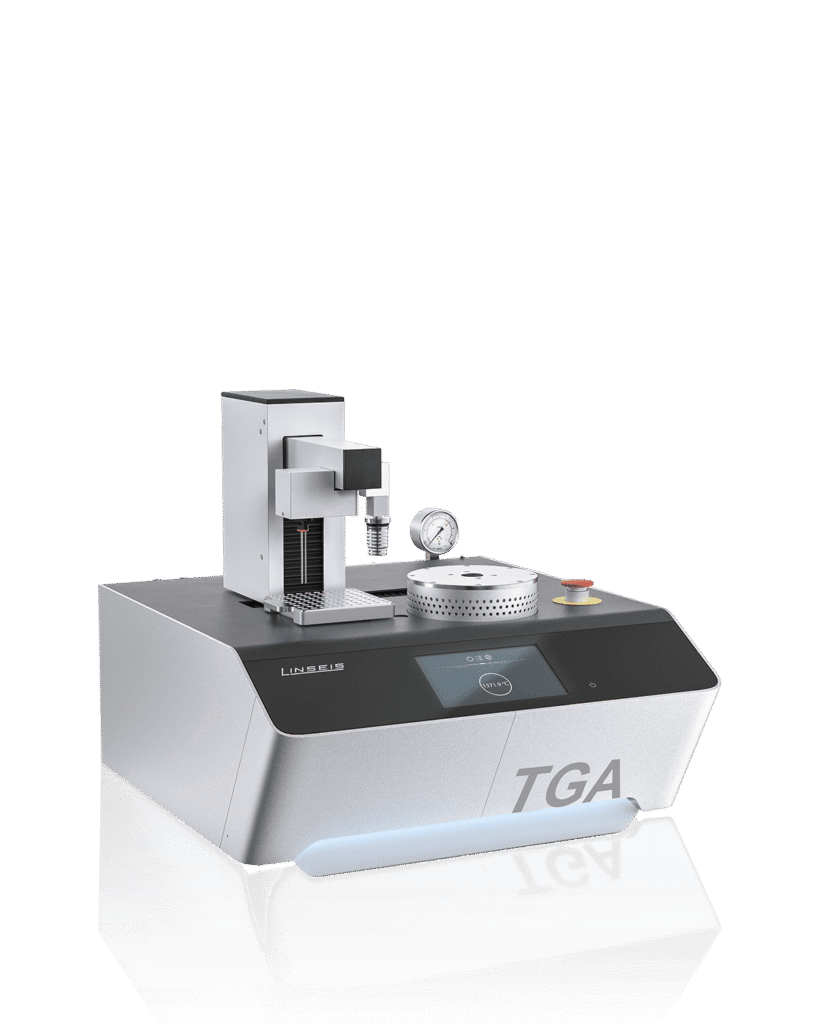
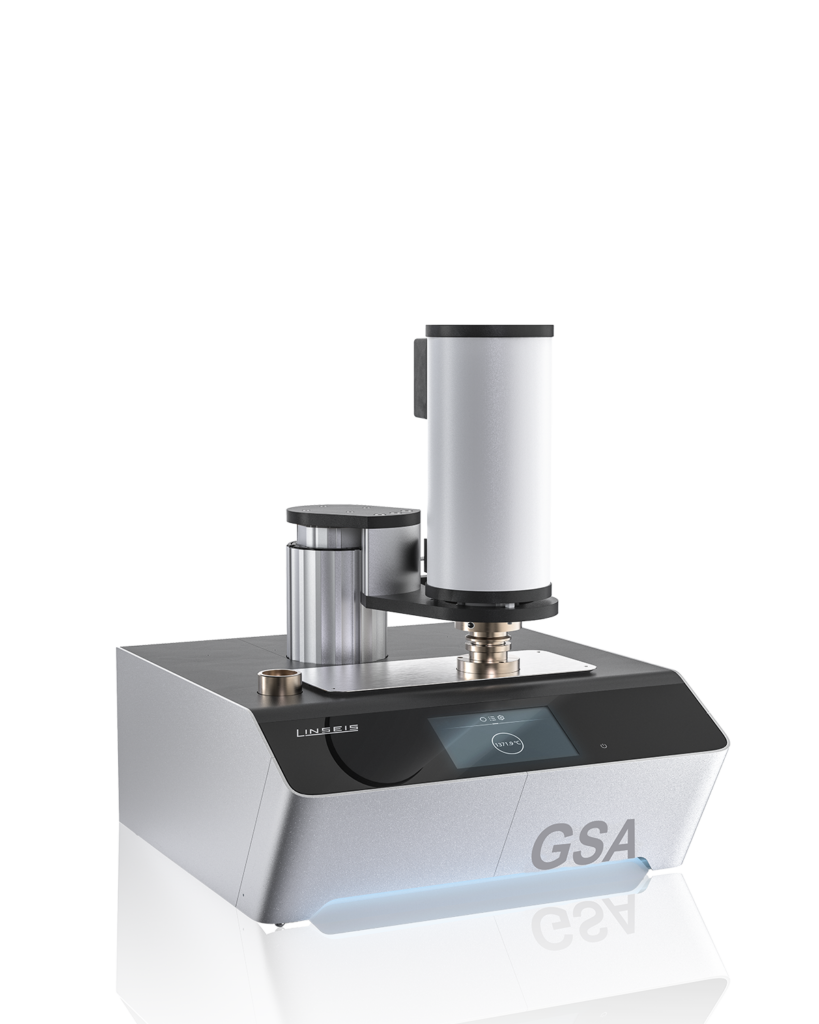
DSC, TGA, STA, and microcalorimetry complement each other perfectly. While DSC analyzes thermal transitions, TGA determines mass loss and decomposition. STA combines both types of information in a single measurement, and microcalorimetry detects minute heat effects and changes in stability.
What materials can be analyzed using LINSEIS systems?
The measurement systems are suitable for active pharmaceutical ingredients (APIs), excipients, tablets, capsules, powders, granules, amorphous formulations, and other pharmaceutical and biotechnology products.
How does thermal analysis support drug development?
It provides precise information on melting behavior, crystallization, polymorphism, and thermal stability. This enables formulations to be optimized in a targeted manner, manufacturing processes to be adjusted, and product quality to be ensured over the long term.