Fusion energy is considered one of the most promising technologies for a sustainable, low-carbon energy supply in the future. Extreme temperatures, high heat fluxes, and demanding operating conditions place the highest demands on materials and components. The development of high-performance materials is crucial for the efficiency, safety, and reliability of future fusion reactors.
The characterization of blanket materials, divertors, structural materials, and molten salt systems requires a deep understanding of their thermal, physical, and chemical properties. Modern measurement techniques provide important information about thermal conductivity, thermal diffusivity, heat capacity, thermal expansion, and material stability under extreme conditions.
With over 69 years of experience, LINSEIS offers innovative solutions for materials characterization in fusion research and supports research institutions and industry partners in the development and optimization of materials for the energy supply of the future.
Relevant Questions
Which materials are suitable for use in fusion reactors?
How does thermal conductivity change under extreme temperatures?
How do liquid salts and breeding materials behave under operating conditions?
What is the thermal expansion of blanket and divertor materials?
How do temperature cycles affect the service life of materials?
Which materials offer the highest thermal stability?
How can heat transfer and temperature management be optimized?
What phase transitions occur in high-temperature materials?
How can material degradation and aging processes be evaluated?
What materials meet the requirements of future fusion power plants?
Relevant Material and Process Parameters
Parameter
Meaning
Thermal Conductivity
Efficient heat transfer in the reactor
Thermal Diffusivity
Analysis of Heat Propagation
Thermal Expansion
Minimizing thermal stresses
Heat Capacity
Evaluation of Thermal Storage Capacity
Thermal Stability
Behavior at Extreme Temperatures
Phase Transitions
Characterization of Material Changes
Material Degradation
Evaluation of Long-Term Stability
Thermal Cycling Resistance
Reliability under thermal cycling
Liquid Salt Behavior
Optimization of Blanket Systems
High-Temperature Resistance
Safe use in reactor operations
Measurement Methods for Fusion Energy
Laser Flash Analysis (LFA)
The LFA determines the thermal diffusivity and thermal conductivity of materials for future fusion reactors.
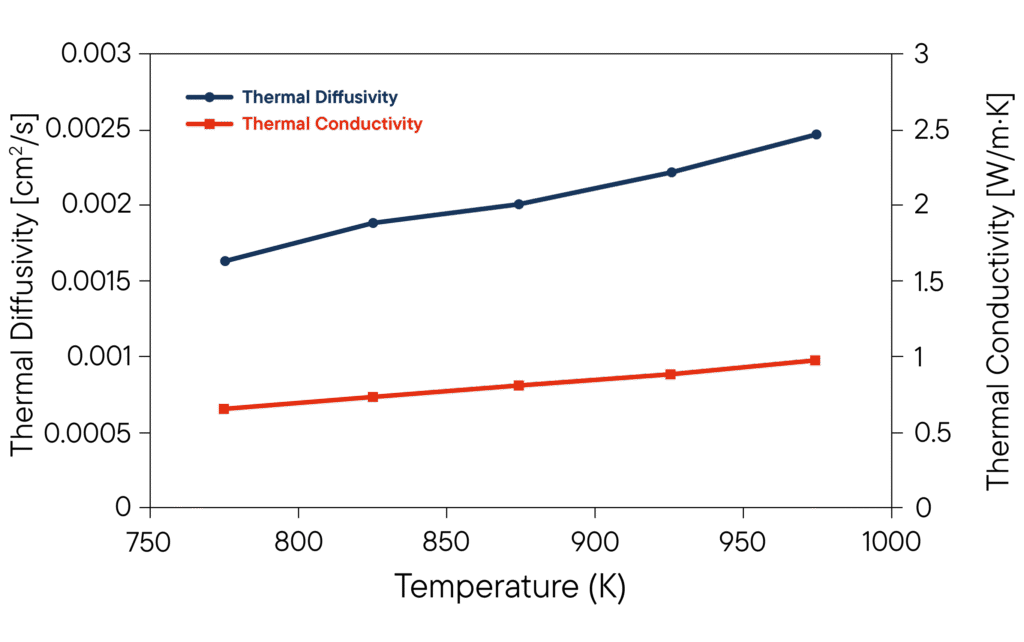
Heat Diffusion Coefficient of FLiNaK Melting Salts
Laser-Flash Measurements with the Linseis LFA L52 enable the precise determination of the thermal diffusivity of FLiNaK molten salts. The data obtained provide valuable insights for the development of modern blanket systems, heat transport concepts, and future fusion energy systems.
Why Material Characterization Is Crucial for Fusion Energy
Materials used in nuclear fusion must be able to withstand extreme thermal, mechanical, and chemical stresses over the long term. Even minor changes in material properties can significantly affect the safety, efficiency, and service life of complex reactor systems.
The combination of modern measurement methods makes it possible to:
Characterization of the Thermophysical Properties of Materials
Analysis of Thermal Conductivity and Thermal Diffusivity
Study of Thermal Expansion
Determination of Heat Capacity and Heat Transfer
Evaluation of Thermal Stability and Material Aging
Optimization of Blanket, Divertor, and Molten Salt Systems
Applications – Energy & Batteries
FAQ – Fusion Energy
Why is materials characterization so important for fusion energy?
It enables the development of safe and durable materials for extreme temperature and stress conditions in future fusion reactors.
What materials are being studied in fusion energy?
These include blanket materials, divertor materials, tungsten, ceramic components, molten salts, structural materials, and high-temperature alloys, among others.
What measurement methods are used in fusion energy?
Depending on the application, thermal conductivity measurements, dilatometry, DSC, STA, TGA, and other thermophysical analysis methods are used.
Why does thermal conductivity play a crucial role in fusion energy?
It directly affects heat transfer, cooling, and the efficiency of safety-critical components within the reactor.
What role do molten salts play in fusion energy?
Liquid salts are being investigated as coolant and blanket materials and require precise characterization of their thermophysical properties.
How does LINSEIS support the development of new materials for fusion energy?
With a broad portfolio of high-precision measurement systems, LINSEIS supports research institutions and industry in the development, optimization, and quality assurance of modern materials for future fusion power plants.