





PLH-Chauffage-
Thermal Conductivity

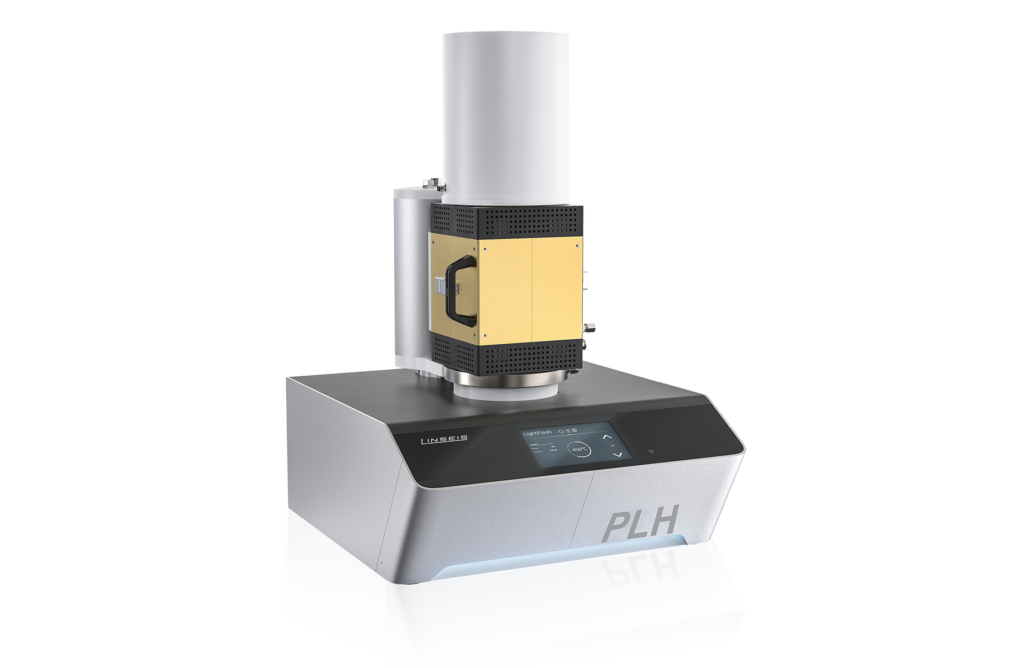
PLH L53 - Periodic Laser Heating

Precise measurement of the thermal conductivity and temperature capability of thin layers

PLH L53: Periodic Laser Heating for High-Precision Thermal Characterization of Thin Materials

The LINSEIS PLH L53 is a high-precision, laser-based measurement system for determining the thermal conductivity of thin films, foils and membranes in the micrometer range using the Periodic Laser Heating (PLH) method.
This non-contact technique enables reliable thermal characterization of delicate and free-standing samples without the need for mechanical contact or complex sample preparation.

Designed for research and advanced material development, the PLH L53 allows precise analysis of homogeneous and inhomogeneous thin materials, including metallic foils, polymer films and membrane structures.
With its optical measurement principle, high sensitivity and robust evaluation models, the PLH L53 offers accurate, reproducible and application-relevant thermal conductivity data for modern thin-material technologies.

Unique Features

Icon für zertifizierte Qualität und Normkonformität

Electronics upgrade

The measuring electronics of the PLH L53 have been specifically developed for optical, frequency-based Periodic Laser Heating measurements and provide significant performance improvements in signal stability and data acquisition.

The advantages of the optimized electronic architecture include:

  • High signal stability
    Ensures reliable phase and amplitude detection during periodic laser excitation, even over extended measurement times.

  • Low noise electronics
    Minimizes electronic interference and improves signal-to-noise ratio for precise thermal conductivity determination of thin materials.

  • Accurate frequency control
    Enables stable and reproducible laser modulation, which is essential for frequency-domain evaluation.

  • Excellent reproducibility
    Guarantees consistent measurement results for repeated analyses of films, foils and membranes.

New hardware features

  • Contactless laser-based measurement concept
    The PLH L53 uses a fully non-contact optical Periodic Laser Heating setup, eliminating any mechanical interaction with the sample.
    This enables reliable thermal conductivity measurements of delicate, thin and flexible materials such as foils and membranes without influencing their intrinsic properties.

  • Optimized optical system for µm-scale samples
    Precisely aligned laser heating and detection optics ensure homogeneous excitation and accurate temperature response measurement.
    The system is specifically designed for thin films, foils and membranes in the micrometer range, providing high sensitivity and stable signal acquisition.

  • Flexible sample handling and stable alignment
    The hardware design supports the investigation of free-standing samples as well as substrate-based structures without complex preparation steps.
    A robust optical layout ensures long-term alignment stability and excellent reproducibility, even during repeated measurements and extended operation.

Application-focused data evaluation

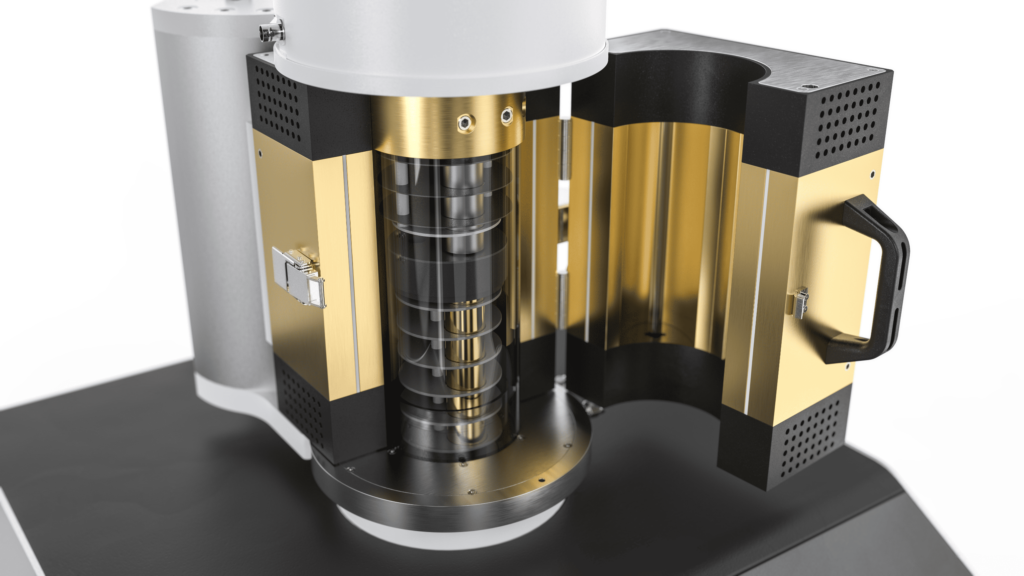
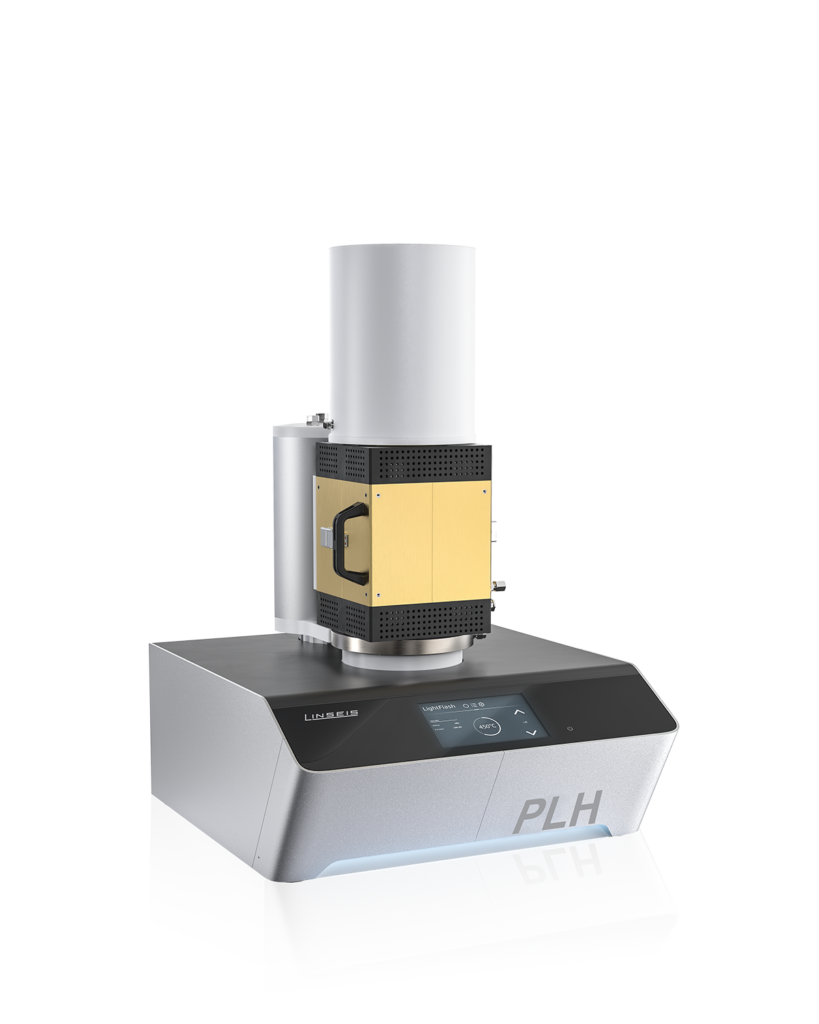
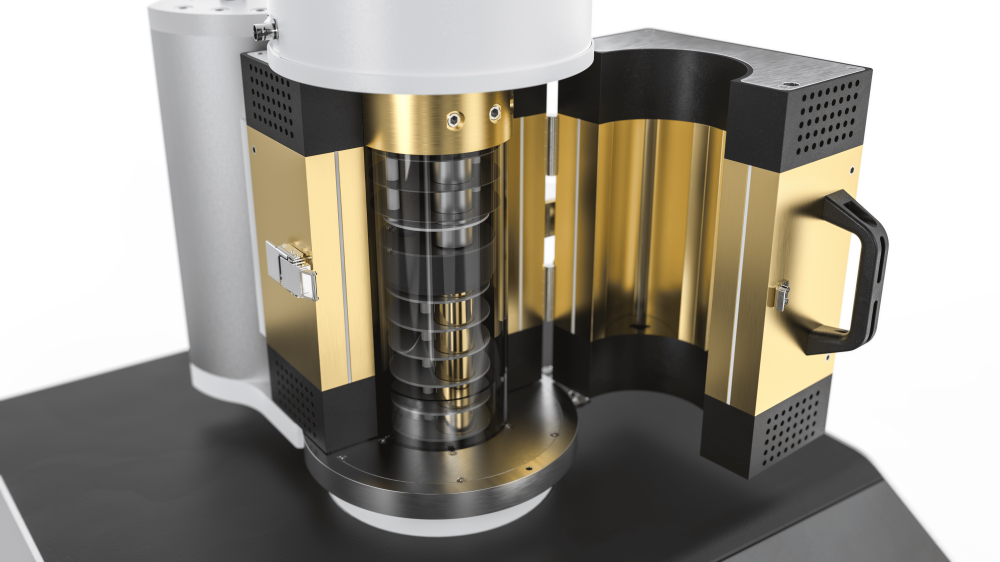
The new device design is characterized by an elegant aluminium housing that is both robust and visually appealing. An LED status bar provides a user-friendly visualization of important information. A touch panel enables intuitive operation and ensures a modern user experience that combines convenience and functionality. The focus of the new design is on ergonomic handling.

With Linseis Lab Link, we offer an integrated solution for eliminating uncertainties in measurement results. With direct access to our application experts via the software, you receive advice on the correct measurement procedure and how to evaluate the results. This direct communication ensures optimal results and maximizes the efficiency of your measurements for accurate analysis and research and a smooth process flow.

The combination of synchronized electronics, stable laser modulation and robust optical alignment ensures consistent and reproducible results.
This is particularly important for comparative studies, parameter variation and long-term investigations.

  • The PLH L53 is designed for efficient operation in laboratory environments, combining intuitive handling, minimal sample preparation and reliable measurement routines.
    This allows seamless integration into existing R&D workflows and supports fast, application-oriented material characterization.

Highlights

Appareil PLH - mesure de la conductivité thermique

Temperature range
up to 300°C
from 10 µm
up to 500 µm

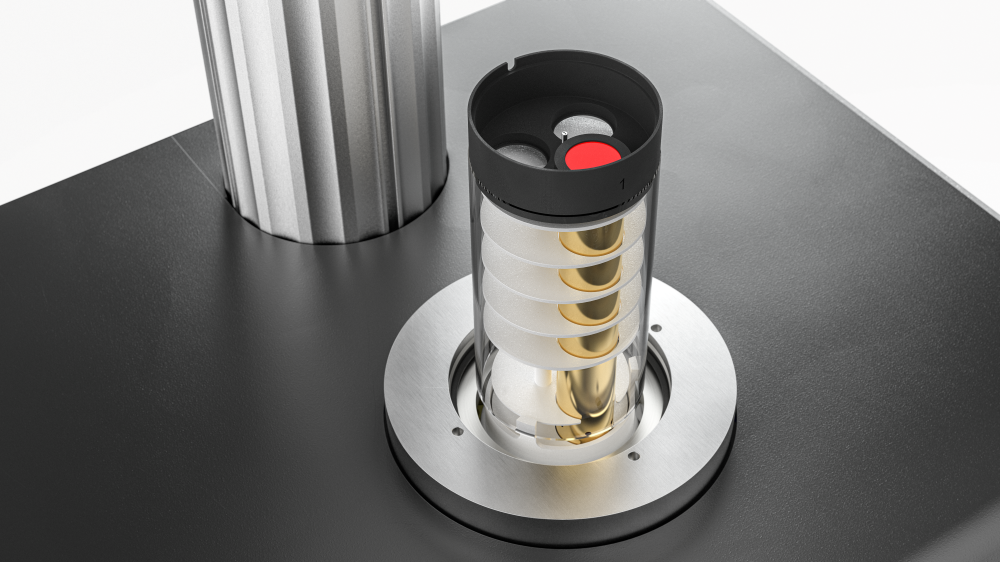
Multi-Sample robot

Fully automatic
operation


Key Features

Contactless laser-based measurement

Non-contact Periodic Laser Heating eliminates mechanical influence on the sample and enables reliable thermal conductivity measurements of delicate thin materials.

Optimized for µm-scale films, foils and membranes

Specifically designed for thin materials in the micrometer range, including free-standing foils and membranes as well as substrate-based structures.

Icon für gezielte Messlösungen

High sensitivity for low-mass samples

The optical measurement principle allows accurate thermal characterization even for samples with very low mass and thickness.

Integrated LINSEIS platform

The integrated LINSEIS software offers a comprehensive solution that combines hardware and software for maximum process reliability and precision. The standardized platform enables seamless integration of components and devices from external partners – for a particularly robust and reliable overall system.

Questions? We're just a call away!

+1 (609) 223 2070


+49 (0) 9287/880 0

Our service is available Monday to
Thursday from 8-16 o’clock
and Friday from 8-12 o’clock.

We are here for you!

Specifications

Periodic Laser Heating (PLH), optical & non-contact

Thin films, foils and membranes in the µm range

Thermal conductivity of thin materials
Discover our high-performance PLH – developed for precise optical thermal characterization of thin films, foils and membranes:

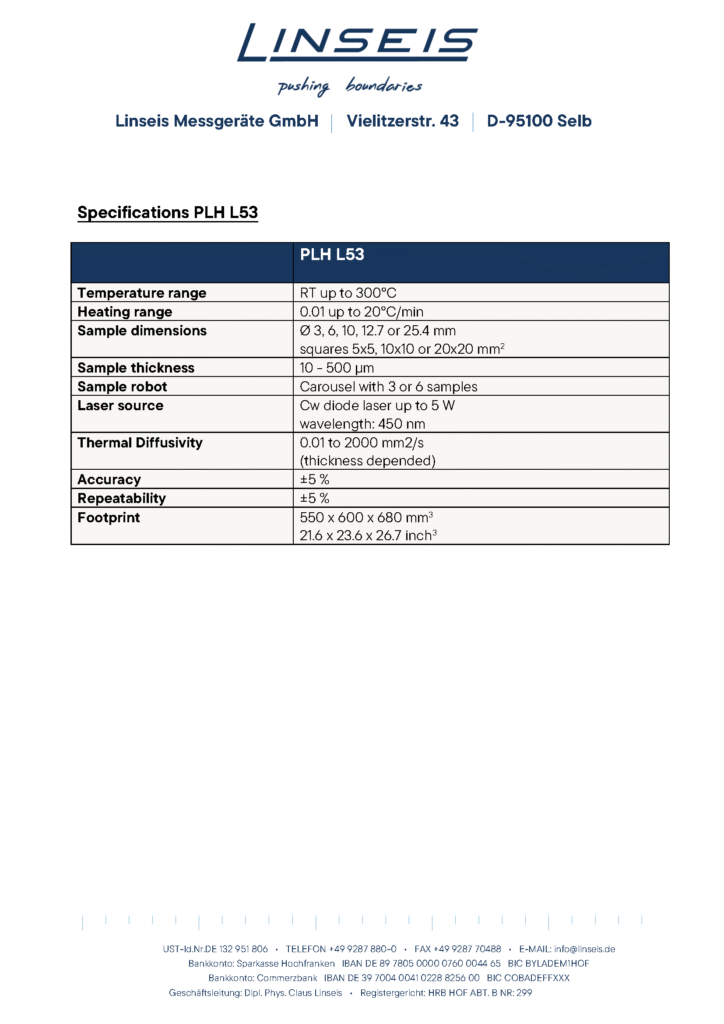
  • Temperature range: Room temperature up to 300 °C

  • Heating rates: 0.01 to 20 °C/min

  • Sample thickness: 10 to 500 µm

  • Laser source: CW diode laser up to 5 W, wavelength 450 nm

  • Thermal diffusivity range: 0.01 to 2000 mm²/s (thickness dependent)

Method

Periodic Laser Heating

The Periodic Laser Heating (PLH) method is an optical, non-contact technique for determining the thermal conductivity of thin films, foils and membranes in the micrometer range.
It is particularly suited for delicate, low-mass and free-standing materials where conventional contact-based methods reach their limits.

During the measurement, the sample surface is periodically heated by a modulated laser source.
This controlled, harmonic heating induces a periodic temperature response within the material.
The resulting temperature oscillation is detected optically and evaluated in the frequency domain.

By analyzing the phase shift and amplitude of the temperature response relative to the applied laser modulation, the thermal conductivity of the sample is calculated.
Because the method is fully optical, no sensors, electrical contacts or mechanical loading are required, ensuring that the intrinsic thermal properties of the material remain unaffected.

The PLH method enables reliable and reproducible thermal characterization of homogeneous and inhomogeneous thin materials, making it ideal for research, material development and quality control applications.

Measurement Principle

In the Periodic Laser Heating (PLH) method, the sample surface is subjected to a periodically modulated laser heating.
This harmonic thermal excitation generates a temperature wave that propagates through the thin material depending on its thermal transport behavior.

The resulting temperature response is detected optically and evaluated in the frequency domain.
The relationship between excitation frequency, phase shift and amplitude of the temperature signal forms the basis for the quantitative analysis.

Cross-Plane Periodic Laser Heating

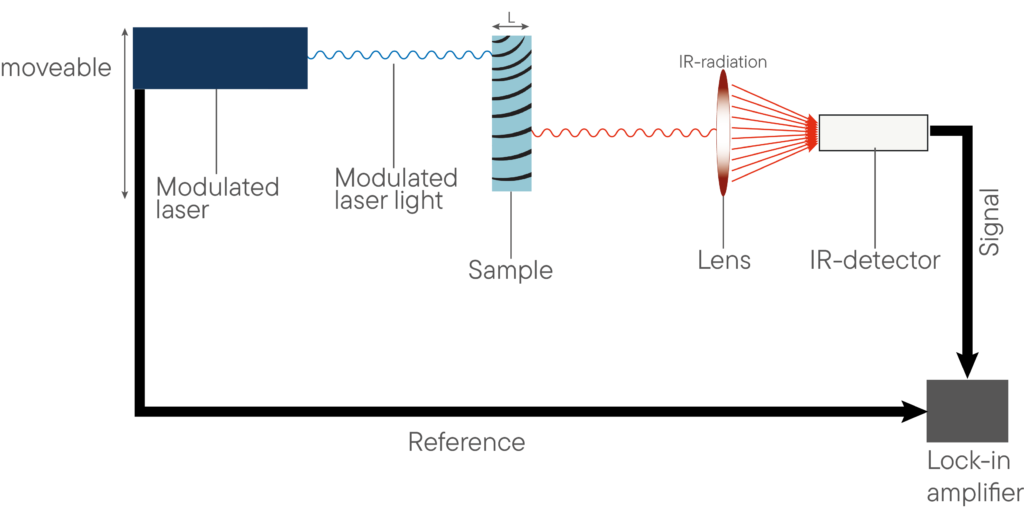
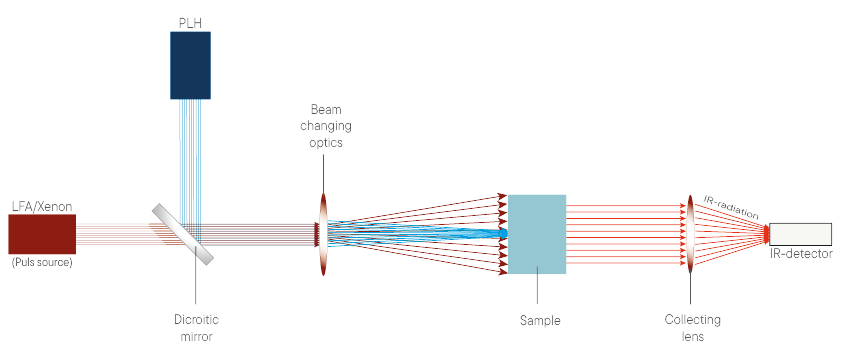
The system uses a diode laser to periodically heat the backside of the sample with amplitude-modulated light.
The absorbed energy generates a thermal wave that propagates through the sample to the front side, where it is emitted as infrared radiation.
The resulting temperature oscillation is recorded by an IR detector.
From the phase shift and amplitude of the signal, the thermal conductivity, thermal diffusivity and volumetric heat capacity are determined using the LINSEIS evaluation software.
The only required input parameter is the sample thickness. $$ \alpha_{\Phi,\mathrm{amp}} = \frac{L^2}{2\,m_{\Phi,\mathrm{amp}}} $$ Description:
  • αΦ,amp – thermal diffusivity determined from phase and amplitude analysis [𝑚2/𝑠]
  • L – sample thickness [𝑚]
  • mΦ,amp – slope of the linear range obtained from phase or amplitude evaluation [𝑠]
$$ \alpha = \sqrt{\alpha_{\Phi} \cdot \alpha_{\mathrm{amp}}} $$

In-Plane Periodic Laser Heating

The system can also measure in-plane thermal diffusivity using a horizontal offset stage with continuous amplitude-modulated laser excitation.
The lateral offset between laser and detector produces characteristic changes in phase shift and amplitude, depending on the in-plane thermal transport properties of the sample.
This enables the identification of thermal bottlenecks in anisotropic materials.
In-plane thermal diffusivity is evaluated using the LINSEIS software without additional input parameters. $$ \alpha_{\Phi,\mathrm{amp}} = \frac{\omega}{2\,m_{\Phi,\mathrm{amp}}^{2}} $$ Description:
  • αΦ,amp – thermal diffusivity derived from phase and amplitude analysis [𝑚2/𝑠]
  • ω – angular frequency [1/𝑠], with 𝜔=2𝜋𝑓
  • f – modulation frequency [𝐻𝑧]
  • mΦ,amp – slope of the linear fit obtained from phase and amplitude evaluation [1/𝑚]
$$ \alpha = \sqrt{\alpha_{\Phi} \cdot \alpha_{\mathrm{amp}}} $$ Description:
  • α – resulting thermal diffusivity [𝑚2/𝑠]
  • αΦ – thermal diffusivity determined from phase analysis
  • αamp – thermal diffusivity determined from amplitude analysis

Questions? We're just a call away!

+1 (609) 223 2070


+49 (0) 9287/880 0

Our service is available Monday to
Thursday from 8-16 o’clock
and Friday from 8-12 o’clock.

We are here for you!

PLH L53 uncovered – how it works, where it fits, what it offers

Anisotropy & Inhomogenity Analysis
Anisotropy

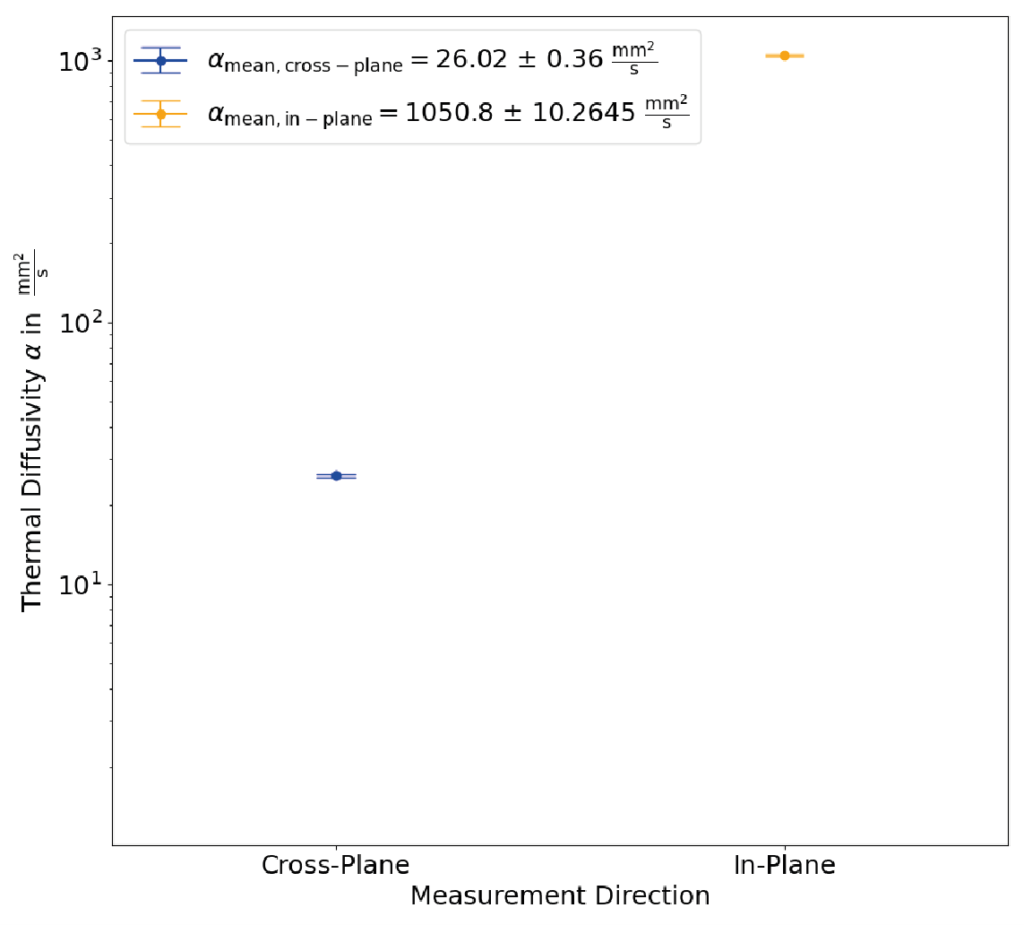
The thermal conductivity of the material, graphite sheets, can be direction-dependent. In-plane and cross-plane are terms used to describe two specific transport directions within a material. While in-plane actually means within the sample perpendicular to the direction of excitation, the term cross-plane refers to the thermal conductivity of the sample in the excitation direction. The cross-plane and in-plane thermal conductivities of graphite sheets can significantly differ from each other and can easily exceed several orders of magnitude. Use cases are versatile, and its knowledge can be crucial in various applications
such as electronic devices, where thermal management is an omnipresent challenge.

Inhomogenity

Depending on the sample, the composition may vary slightly across the sample. This is normally the case for gels, pastes and polymers
and so this change will also be seen in the thermal conductivity. Typically, standard LFA instruments ignore this fact and consider
the whole sample at once as it is heated up by the light pulse. When interested in this differences our PLH techniques comes in handy.
In contrast to the laser flash technique the sample is locally heated and you are able to check the sample for inhomogeneities. Fluctuations in thermal conductivity can lead to hot spots that affect the performance and service life of electronic devices. Ensuring homogeneous thermal conductivity distribution is crucial for effective thermal managementand preventing overheating.

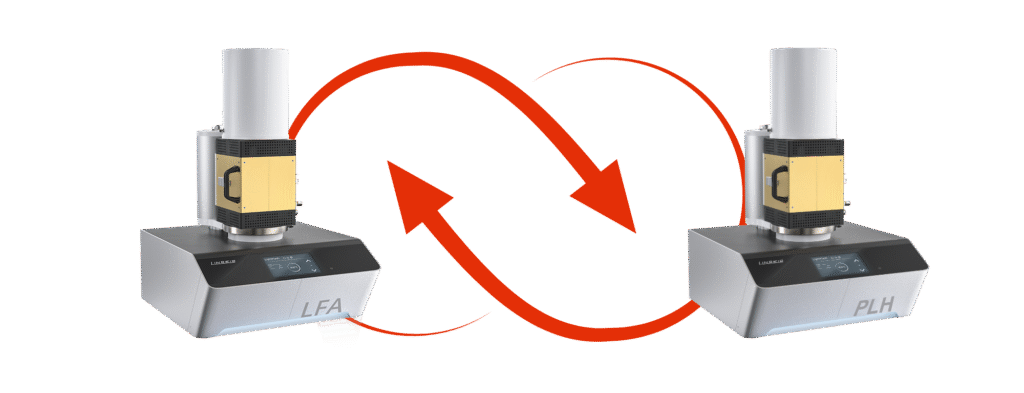
Combining the Laser Flash Method and the Periodic Laser Heating Method offers a range of powerful benefits that can significantly enhance your material characterization endeavors:

Experience the Power of Synergy
Combine the precision of the well-established Laser Flash Method with the dynamic prowess of the Periodic Laser Heating Method. Witness a thermal analysis revolution like never before!

Comprehensive Thermal Profiling
Dive deeper into your materials‘ thermal behavior. Gain a holistic understanding of thermal conductivity and diffusivity, providing a 360 °C – view of performance.

Accelerate Innovation
Turbocharge your material development game! Seamlessly optimize thermal management systems, revolutionize energy storage technologies, and engineer cutting-edge electronic components with unrivaled accuracy of the Periodic Laser Heating Method. Witness a thermalanalysis revolution like never before!

Faster Results, Quicker Decisions
Maximize efficiency with streamlined research processes. Rapid data acquisition and analysis mean you‘ll be making informed decisions faster than ever, saving you time and resources.

Versatile Applications
From academia to industrial R&D, this combo is your key to success. Conquer challenges in advanced materials, energy systems, and beyond, all while redefining the boundaries of what‘s possible.

See the Unseen
Don‘t settle for half the picture. Unleash the true potential of your materials
with a combined approach that uncovers the intricate dance between thermal properties.


Temperature range:RT up to 300 °C, 500 °C, 1000 °C, 1250 °C, 1600 °C
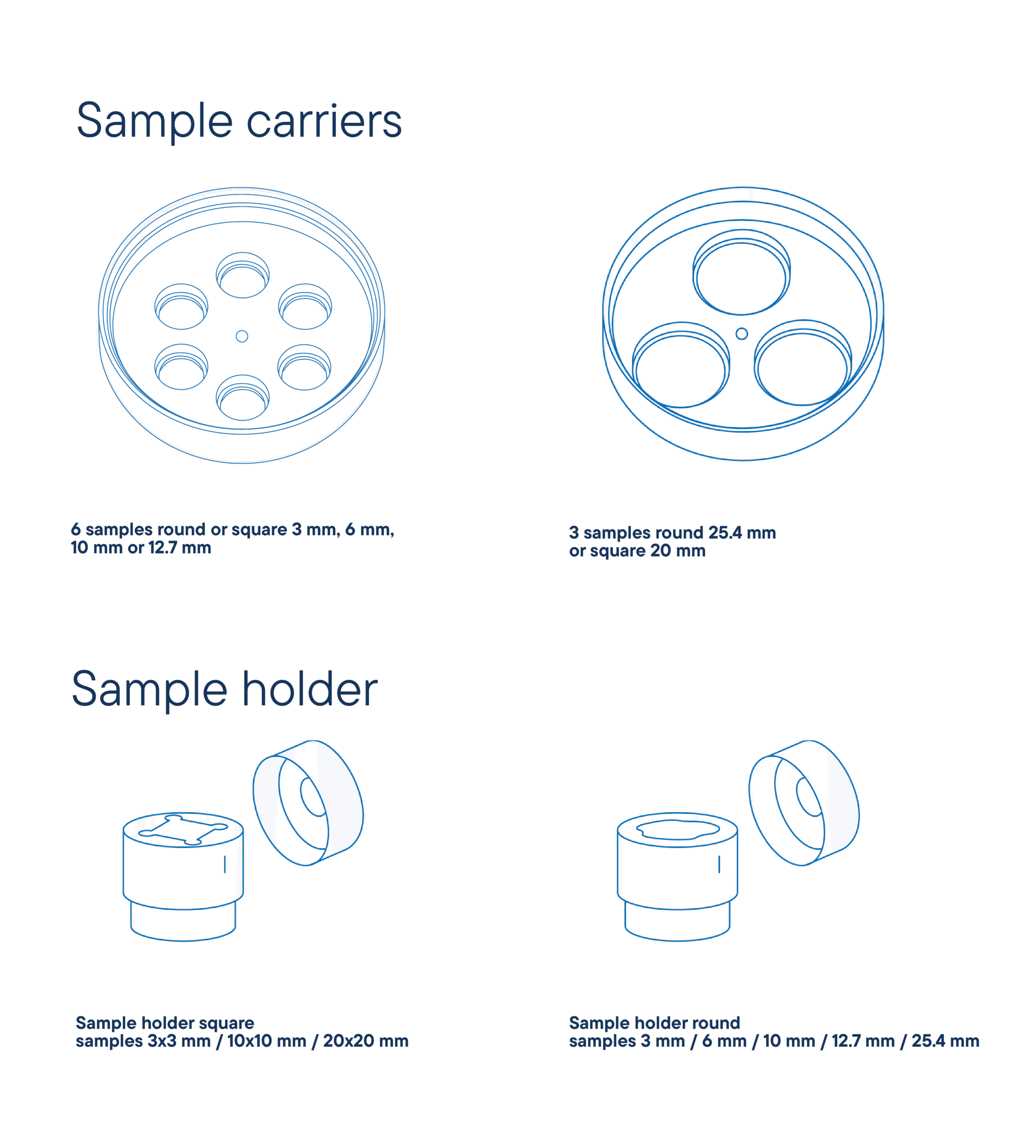
Sample dimensions:Ø 3, 6, 10, 12.7 or 25.4 mm
Square 5×5, 10×10 or 20×20 mm
Sample robot:Carousel with 3 or 6 samples
Sample thickness:10 to 6000 μm
Thermal transmittance:from 0.01 to 2000 mm2/s (depending on thickness)
Accuracy:±5%
Reproducibility:±5%
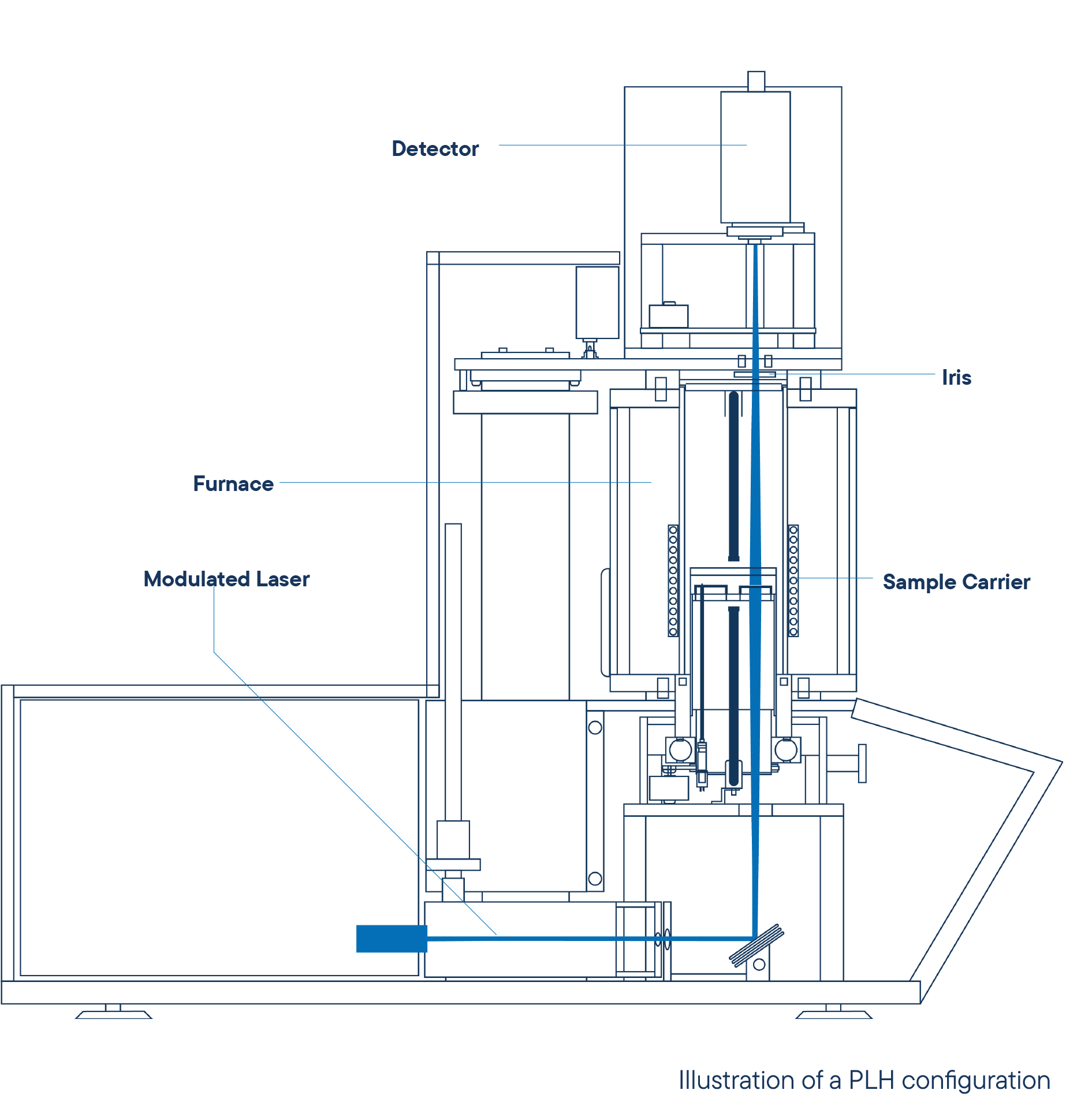
Schema of the instrument design

The price of an PLH L53 system depends on the selected configuration and additional options, such as the temperature range, detector type, automation features, or specialized sample holders. Since each system can be tailored to your specific application requirements, the cost can vary significantly.

For an exact quotation, please use our contact form to send us your requirements – we will be happy to prepare a customized offer for you.

The delivery time for an PLH L53 largely depends on the chosen options and configuration. Additional features such as extended temperature ranges, specialized detectors, automation, or custom adaptations may increase production and preparation time and therefore extend the delivery period.

Please contact us via our contact form to receive an accurate delivery time estimate based on your individual requirements.

Software

Making values visible and comparable

ALL NEW LiEAP Software

The newly developed LiEAP software includes AI-based assistance that minimizes operator errors and reduces measurement uncertainties. Additionally, the software supports various unique models, including the Dusza model, which can handle transparent, porous, liquid, powder samples and multilayer systems.

Main Features

  • Fully compatible MS®Windows™ software
  • Data security in case of power failure
  • Safety Features (Thermocouple break protection, power failure, etc.)
  • Online and offline Evaluation of current measurement
  • Curve comparison
  • Storage and export of evaluations
  • Export and import of data in ASCII format
  • Data export to MS Excel
  • Multi – method analysis (DIL, STA, DSC, HCS, LSR, LZT, LFA)
    Programmable gas control
  • NEW workflow
  • Measurement data is automatically stored in a database.


Cp (Specific Heat) determination by comparative method

To calculate the specific heat capacity, the maximum of the temperature rise in the sample is compared to the maximum of the temperature rise of a reference sample. Both, the unknown and the reference sample are measured under the same conditions in a single run, using the sample robot. So, the energy of the laser pulse and the sensitivity of the infrared detector can be assumed to be the same for both measurements. 

Pulse detection

In order to enhance the precision of the Cp meaurement, it is essential to measure the energy of the pulse and the sensivity of the detector, rather than assuming these to be constant.
Therefore, the updated LFA L51 offers the possibilitiey to record the plus shape and detects the pulse shape and perform an energy correction in the fully automated measurement cycle. This results in a highly accurate determination of the specific heat capacity in the comparative measurement mode with a known reference material.

Evaluation Software

  • Automatic or manual input of related measure- ment data: such as density and specific heat
  • Universal combined evaluation model for data evaluation
  • Special models for translucent or porous samples


Evaluation Models

  • Dusza combined model
  • NEW McMasters model (for porous samples)
  • 2-/3-layer models
  • Parker
  • Cowan 5 and 10
  • Azumi
  • Clark-Taylor
  • Degiovanni
  • Finite pulse correction
  • Heat loss correction
  • Baseline correction
  • Multilayer model
  • Determination of contact resistance
  • Correction for translucent samples


Measurement Software

  • Easy and user-friendly data input for tempera- ture segments, gases etc.
  • Controllable sample robot
  • Software automatically displays corrected measurements after the energy pulse
  • Fully automated measurement procedure for multi sample measurements
  • Costumer support
  • Easy mode for efficent and fast measurements
  • Expert mode for maximum individualisation
  • Service model monitors the device mode and provides feedback

Applications

Thin Films

In modern thin-material systems — such as polymer films, metallic foils, membranes and functional layers — thermal transport properties can differ significantly from those of bulk materials.
Especially in micrometer-thin samples, heat transport is strongly influenced by thickness, anisotropy and material inhomogeneities, making accurate characterization essential for reliable thermal design.

The LINSEIS PLH L53 employs the Periodic Laser Heating (PLH) method, an optical and non-contact technique for precise thermal analysis of thin films, foils and membranes in the micrometer range.
By periodically heating the sample with a modulated laser and evaluating the resulting temperature response in the frequency domain, the PLH L53 enables reliable determination of thermal conductivity and thermal diffusivity without mechanical contact or sensor attachment.

With its high sensitivity for low-mass samples and robust evaluation models, the PLH L53 is ideally suited for research, material development and quality control of thin materials, supporting optimized thermal management in advanced and anisotropic material systems.

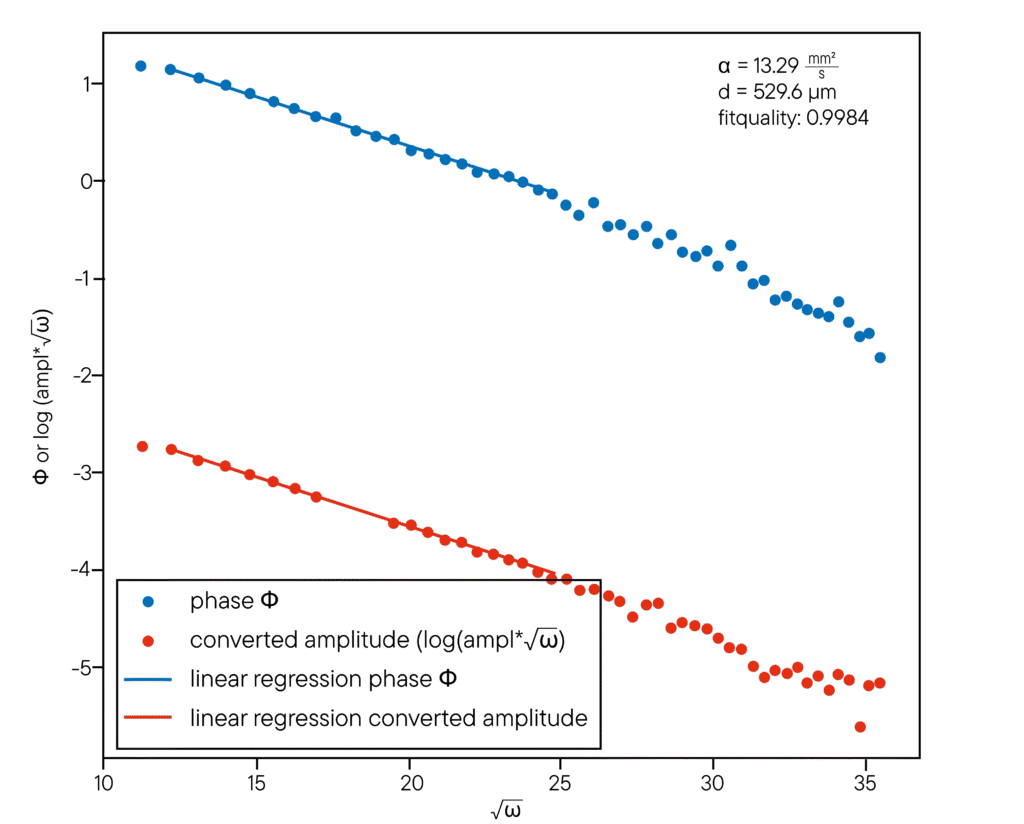
Application: Sapphire 500 μm

Sapphire belongs to the category of ceramic materials and has a reference thermal diffusivity value of 13.3 mm²/s. Our measurements confirm this thermal diffusivity value with a high degree of accuracy. As it has excellent thermal and optical properties, it is often used in microelectronics for laser technologies and LEDs.

In the measurement plot on the besides the phase shift between the excitation and the infrared radiation and a somehow amplitude of the infrared radiation vs. the square root of the angular frequency, that is used to drive the laser is pictured. Out of the slope of linear part of these two curves the thermal diffusivity is determined.

Application:  Copper 500 μm

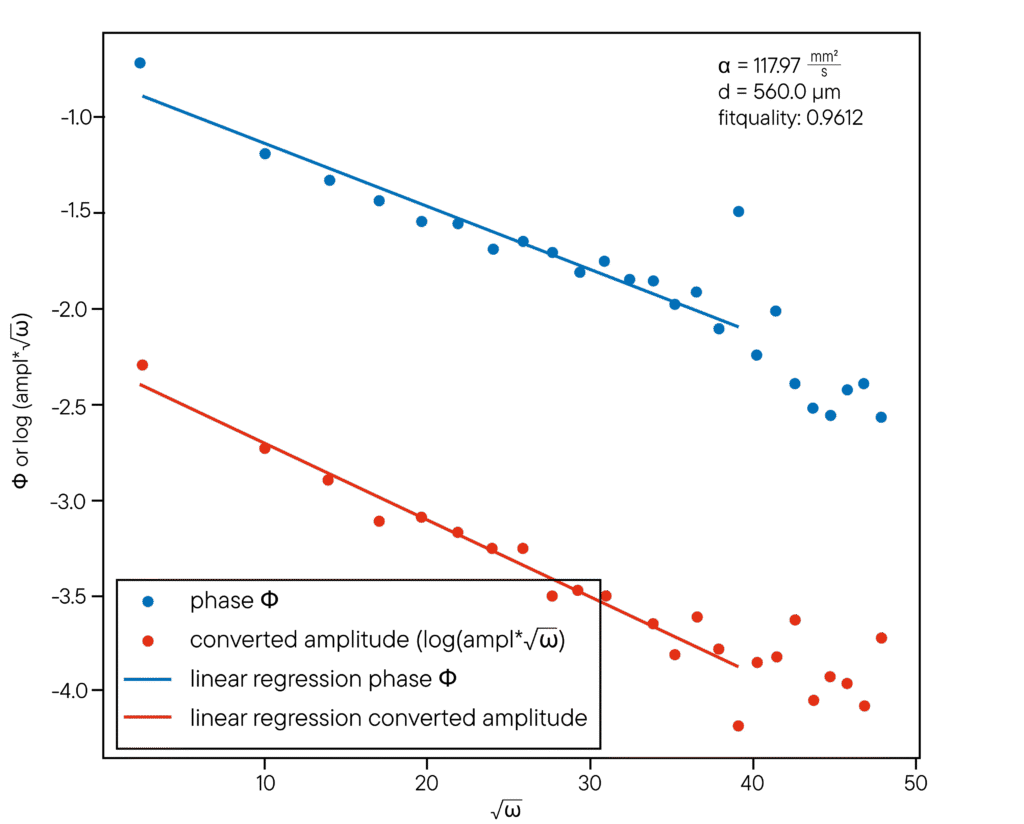
Copper foils, especially those as thin as 560 μm, are widely used as heat spreaders in the electronics industry. They play a crucial role in heat dissipation in electronic components by ensuring efficient distribution of heat, which improves the performance and longevity of devices. Their applications range from everyday devices such as smartphones and laptops to sophisticated aerospace systems. The reference value for this sample is 117 mm²/s.

In the measurement plot on the besides the phase shift between the excitation and the infrared radiation and a somehow amplitude of the infrared radiation vs. the square root of the angular frequency, that is used to drive the laser is pictured. Out of the slope of linear part of these two curves the thermal diffusivity is determined.

Polymers are widely used in modern technologies in the form of thin films, foils and membranes – for example in electronics, energy storage, coatings and functional layers.
For reliable performance, a precise understanding of their thermal conductivity and thermal diffusivity is essential, particularly with regard to heat dissipation, thermal management and long-term stability.

The LINSEIS PLH L53 enables accurate, non-contact thermal characterization of polymer-based thin materials using the Periodic Laser Heating method.
This optical technique is ideally suited for low-mass and micrometer-thin polymer layers, where conventional contact-based methods are not applicable.
PLH measurements support material development, comparison and optimization and provide reliable thermophysical data for application-oriented polymer design.

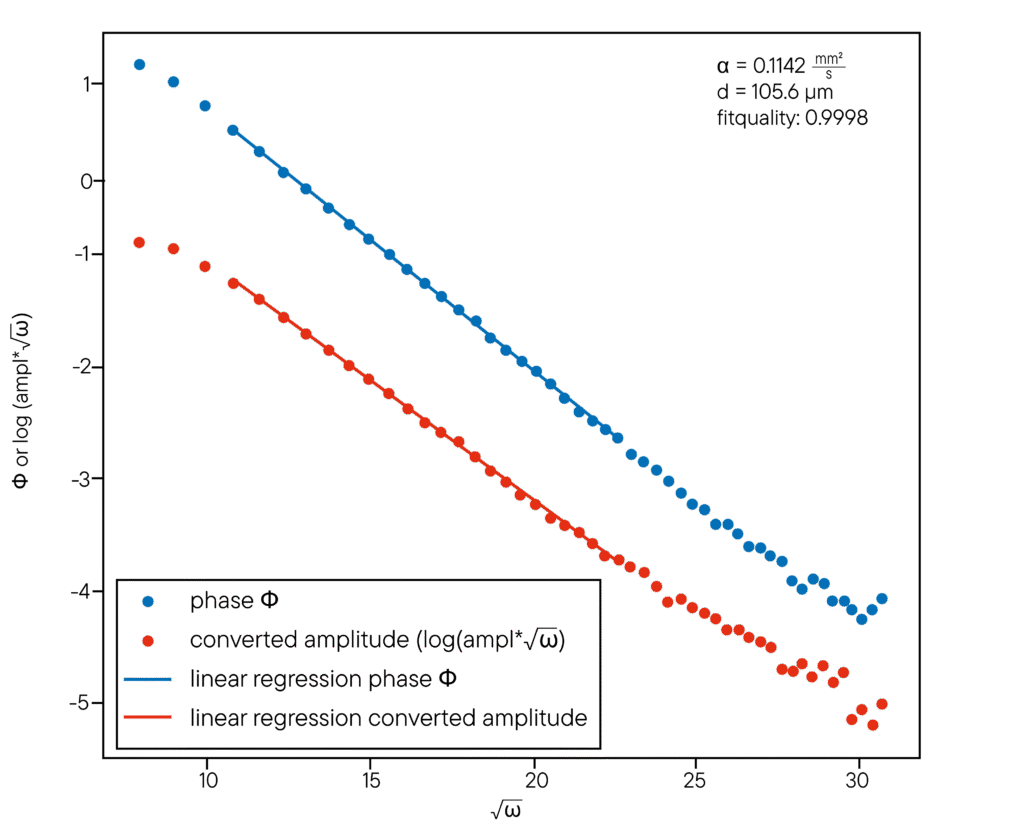
Application: Polytetrafluoroethylene (PTFE) 100 μm

For polytetrafluoroethylene (PTFE) – a thin polymer film – better known as Teflon, the reference value of thermal diffusivity for PTFE is 0.11 mm²/s. Teflon is used as a coating for pans so that food does not stick to the pan and can be easily cleaned. The thickness of these coatings varies from 30 μm to 150 μm.

In the measurement plot on the besides the phase shift between the excitation and the infrared radiation and a somehow amplitude of the infrared radiation vs. the square root of the angular frequency, that is used to drive the laser is pictured. Out of the slope of linear part of these two curves the thermal diffusivity is determined.

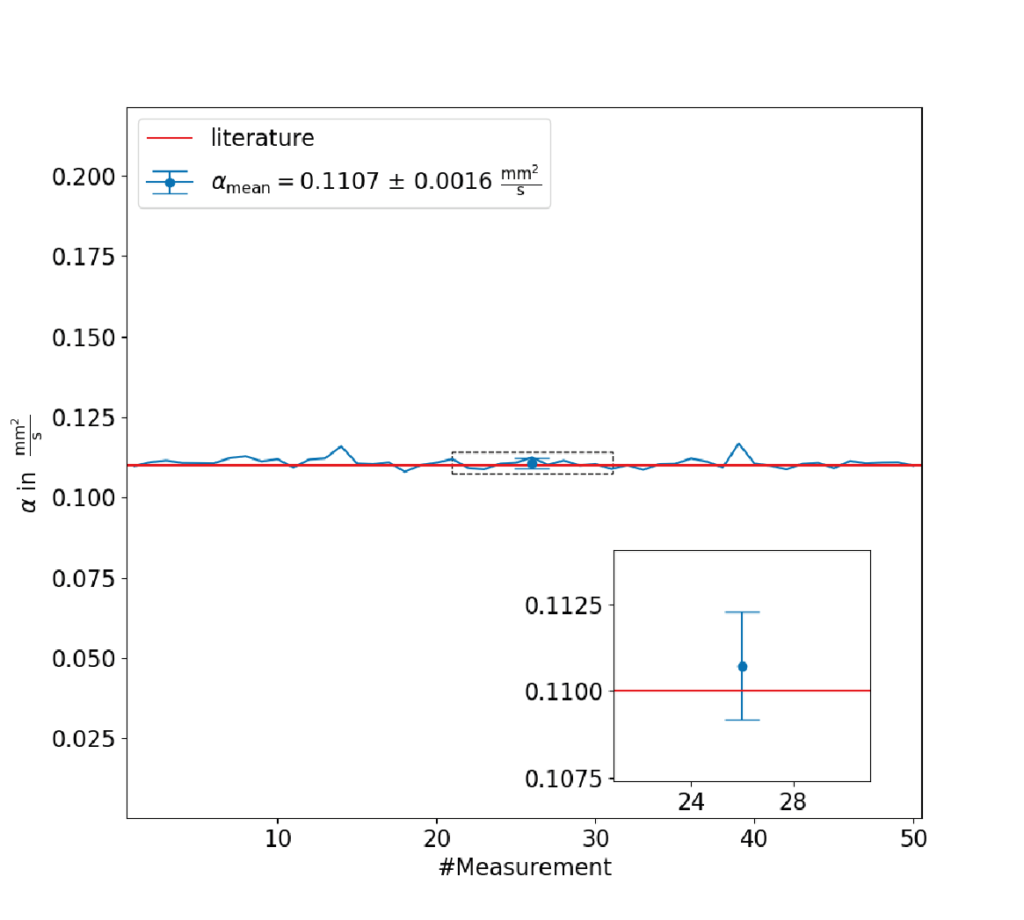
Application: Repeatability of PTFE 100 μm

The repeatability of a polytetrafluoroethylene measurement with a thickness of 105.6 μm is excellent, at just over 1%. This confirms the measurement method and its high performance.

Well informed

Downloads

Everything at a glance

PLH L53 - Periodic Laser Heating

Precise measurement of the thermal conductivity and temperature capability of thin layers