



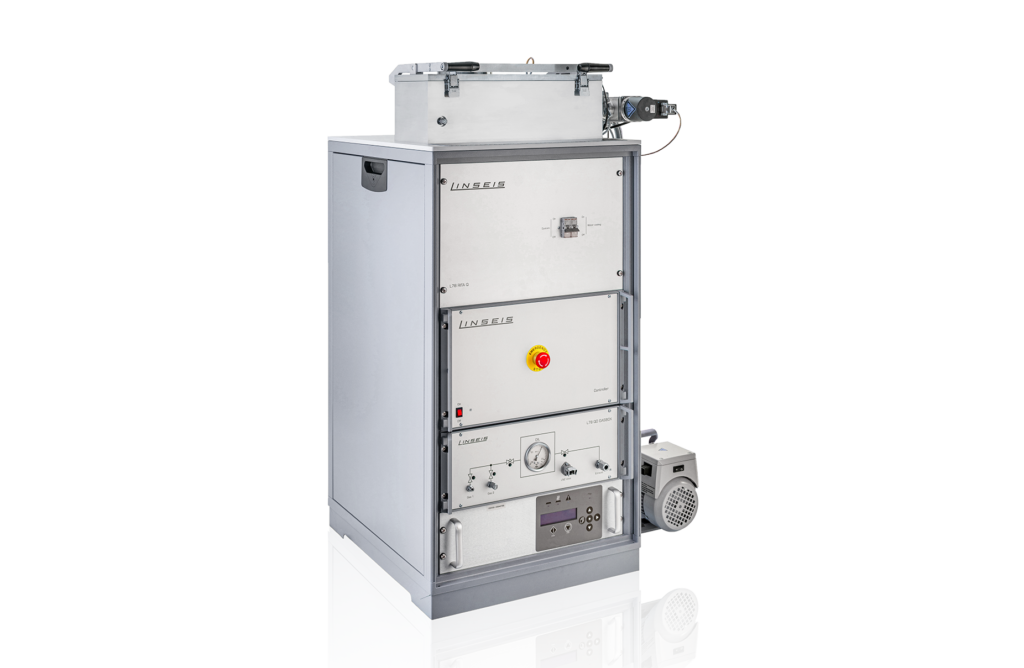





DIL L78 – Quenching, Deformation & Tensile Dilatometry
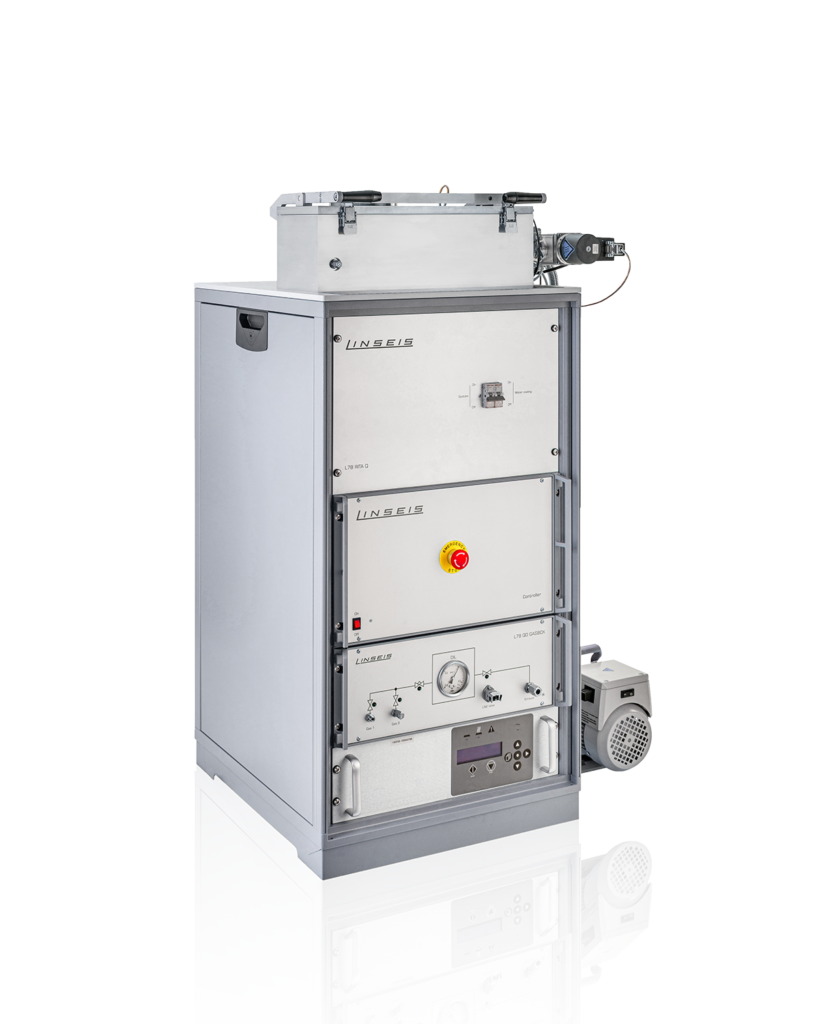
The LINSEIS DIL L78 series is a high-performance quenching and deformation dilatometer platform designed for the precise analysis of phase transformations, thermomechanical behavior and microstructural evolution under realistic process conditions. Combining ultra-fast induction heating, controlled quenching and high-resolution dilatation measurement with nanometer precision, the system enables reliable detection of density changes, transformation temperatures and dimensional variations during complex heat treatment cycles.
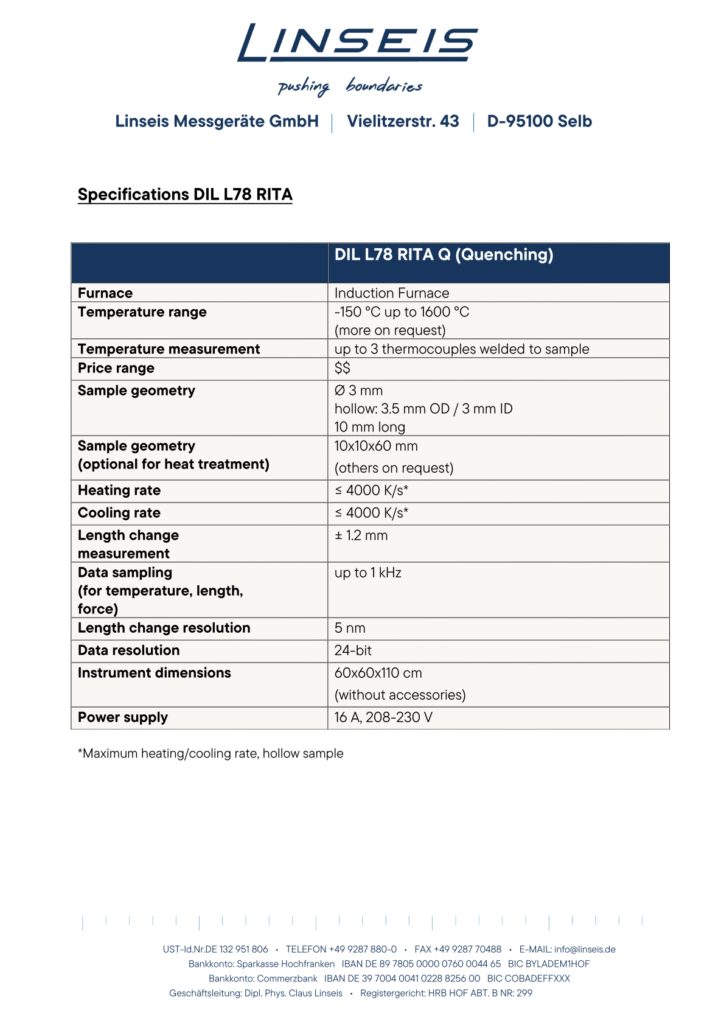
Developed for advanced metallurgy and process simulation, the DIL L78 operates in a temperature range from -150 °C up to 1600 °C (higher on request) and supports heating and cooling rates up to 4000 K/s in quenching mode. Depending on the configuration, the system allows pure quenching analysis (DIL L78 Q), additional controlled compression (DIL L78 Q/D), or full thermomechanical treatment including tensile testing (DIL L78 Q/D/T). This modular concept ensures maximum flexibility for creating CCT, CHT and TTT diagrams, generating stress–strain curves and optimizing industrial processes such as hot rolling, forging and heat treatment.
Unique features
Patented Laser Speckle Strain Measurement (2D, Non-Contact)
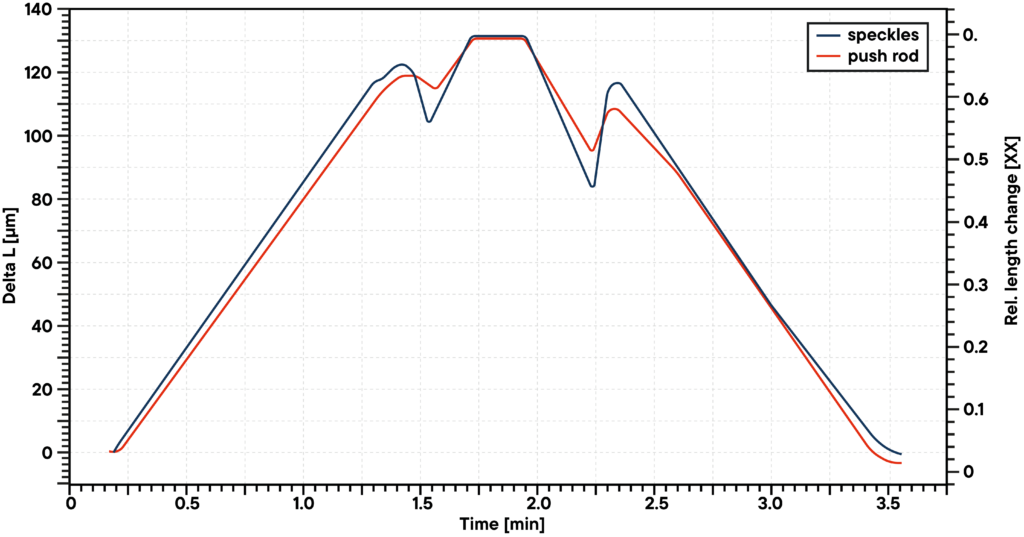
The DIL L78 integrates a patented laser speckle measurement system enabling non-contact, two-dimensional strain analysis directly on the sample surface.
Unlike conventional push-rod systems, this optical method measures real displacement fields without mechanical influence. It allows selectable measurement areas, anisotropy detection and high spatial resolution without requiring markers on the specimen.
This ensures maximum accuracy during rapid thermal cycles and under mechanical load – ideal for demanding transformation and deformation studies.
Real-Time In-Situ Laser Ultrasonic Grain Analysis (Optional)
Through optional laser ultrasonic integration, the DIL L78 enables non-destructive in-situ grain size measurement during thermal cycling.
Based on frequency-dependent ultrasonic attenuation modeling, the system provides real-time insight into:
Recrystallization processes
Grain growth
Phase transitions
Elastic constants
This replaces time-consuming micrograph analysis and delivers continuous microstructural data during heating and cooling cycles.
Direct Microstructure Insight During Thermal Cycling
Through optional laser ultrasonic integration, the DIL L78 enables real-time monitoring of grain growth and recrystallization during heating and cooling.
This allows users to observe microstructural evolution directly during the experiment, significantly reducing the need for time-consuming post-process metallography.
Integrated Thermomechanical Process Simulation Platform
The DIL L78 is not just a dilatometer – it is a complete thermomechanical simulation system.
Depending on configuration (Q / Q-D / Q-D-T), the system enables:
Controlled quenching
Compression deformation
Tensile testing
True strain rate control
Stress-controlled operation modes
This makes it possible to realistically simulate industrial processes such as hot rolling, forging, extrusion and heat treatment in a laboratory environment.
Optimized for Extreme Dynamic Conditions
The DIL L78 is specifically engineered for highly dynamic thermal cycles, enabling reliable measurements even under rapid heating and quenching conditions.
Its system stability ensures accurate detection of phase transformations and dimensional changes during fast metallurgical processes.
Highlights
Quick quenching with water, oil or air to improve hardness
Determination of TTT, CHT and CCT diagrams
in the temperature range from -150°C to 1600°C
Heating and cooling rates
to 2500°C/s
Use of induction furnaces and
high-speed dilatometers
for precise measurements
Key features

Ultra-Dynamic Induction Heating Concept
The high-performance induction furnace enables extremely fast and precisely controllable thermal cycles.
Unlike conventional resistance systems, induction heating allows highly responsive temperature control with minimal thermal inertia, making it ideal for studying diffusion-controlled and martensitic transformations under realistic quenching conditions.

Dedicated CCT / CHT / TTT Evaluation Software
The DIL L78 is supported by a specialized transformation diagram software package for the creation of CCT, CHT and TTT diagrams.
Semi-automatic evaluation tools and derivative analysis simplify phase transformation detection and significantly reduce interpretation time while improving reproducibility.

Multi-Mode Mechanical Control Strategy
The system offers flexible mechanical control strategies including stroke, force and true strain rate modes.
This enables precise adjustment of deformation behavior under thermal influence and allows targeted investigation of material response under defined process conditions.

Integrated LINSEIS platform
The integrated LINSEIS software offers a comprehensive solution that combines hardware and software for maximum process reliability and precision. The standardized platform enables the seamless integration of components and devices from external partners – for a particularly robust and reliable overall system.
Questions? We're just a call away!
+01 (609) 223 2070
+49 (0) 9287/880 0
Our service is available Monday to
Thursday from 8 am to 4 pm
and Friday from 8 am to 12 pm.
We are here for you!
Specifications

Mechanical force capability:
Up to 22 kN (compression and tensile)

Temperature range:
-150 °C to 1600 °C (higher on request, depending on configuration)

Heating and cooling rates:
Up to 4000 K/s (quenching mode, hollow samples)
Up to 125 K/s (deformation and tensile modes)
Discover our high-performance quenching and deformation dilatometer – developed for dynamic thermomechanical precision:
- Length change resolution: 5 nm (optional 1 nm)
- Length change measurement range: ± 1.2 mm (quenching mode), ± 5 mm (deformation mode)
- Data acquisition rate: up to 1 kHz (synchronized temperature, length and force)
- Temperature measurement: up to three thermocouples welded directly to the sample
- Mechanical control modes: stroke control, force control and true strain rate control
Method
Dilatometry
Dilatometry with the LINSEIS DIL L78 RITA measures dimensional changes of metallic materials as a function of temperature and time under precisely controlled thermal cycles. The method provides direct insight into phase transformations, density changes and microstructural evolution during heat treatment – critical parameters for understanding and optimizing metallurgical processes.
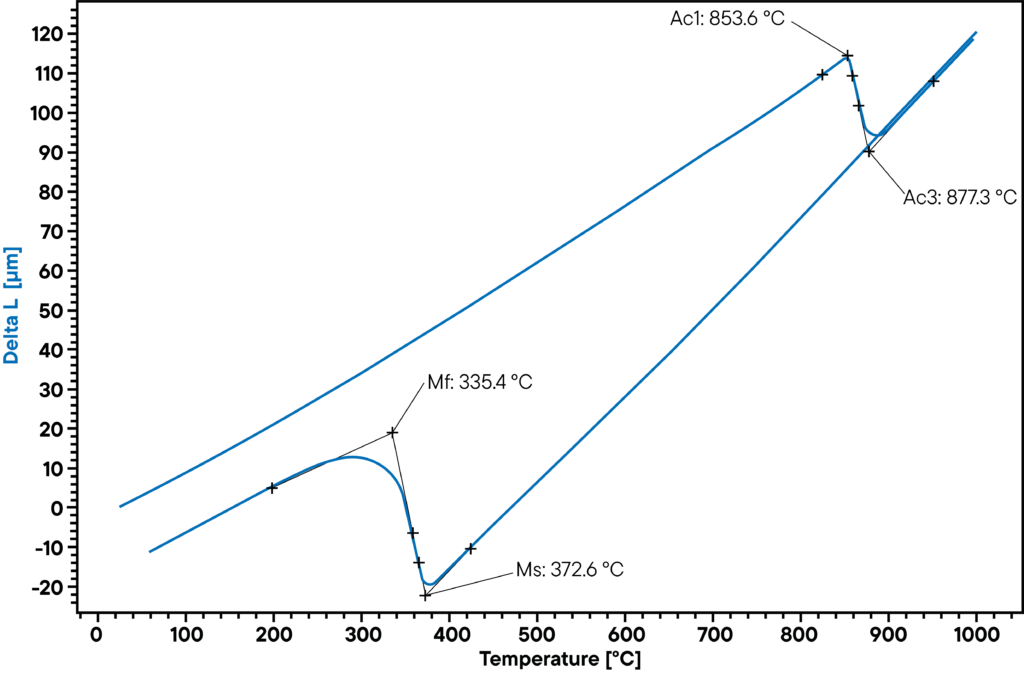
During a DIL L78 RITA measurement, the change in length (ΔL) of the sample is recorded continuously while the temperature follows a defined heating, holding or quenching program. Because many metallurgical phase transformations are accompanied by changes in density or expansion behavior, even subtle transformation start and finish temperatures can be detected with high precision. This enables the accurate creation of CCT, CHT and TTT diagrams.
Unlike conventional post-process analysis, the DIL L78 RITA allows real-time observation of transformation behavior under realistic industrial conditions such as controlled cooling or isothermal treatment. The induction heating system ensures highly dynamic temperature control, enabling simulation of rapid quenching processes and complex thermal cycles.
Dilatometry with the DIL L78 RITA is indispensable in steel development, alloy optimization and heat treatment process design. It supports the reliable characterization of transformation kinetics, dimensional stability and microstructural evolution under application-relevant thermal conditions.

Operating principle of the DIL L78 RITA
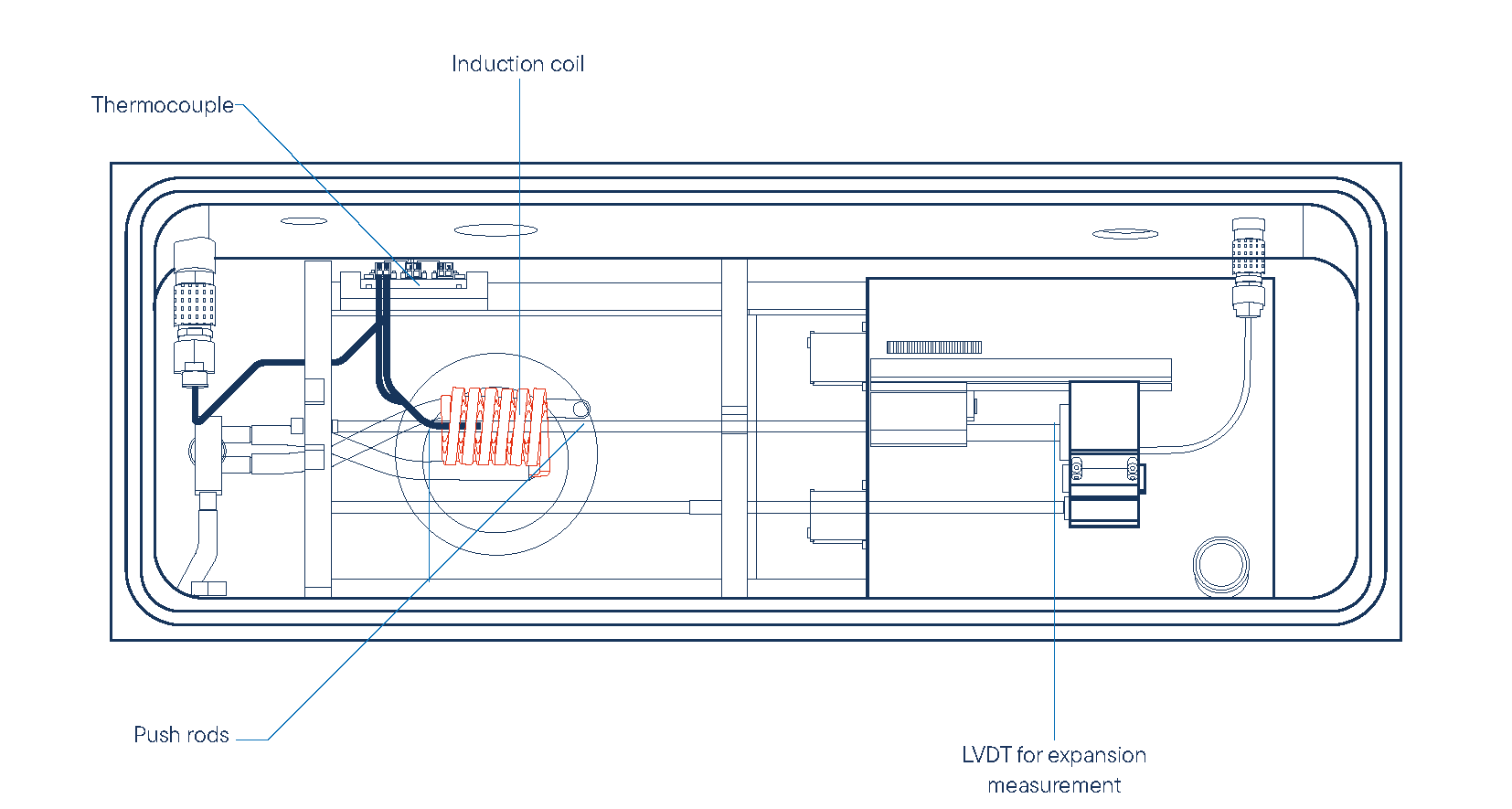
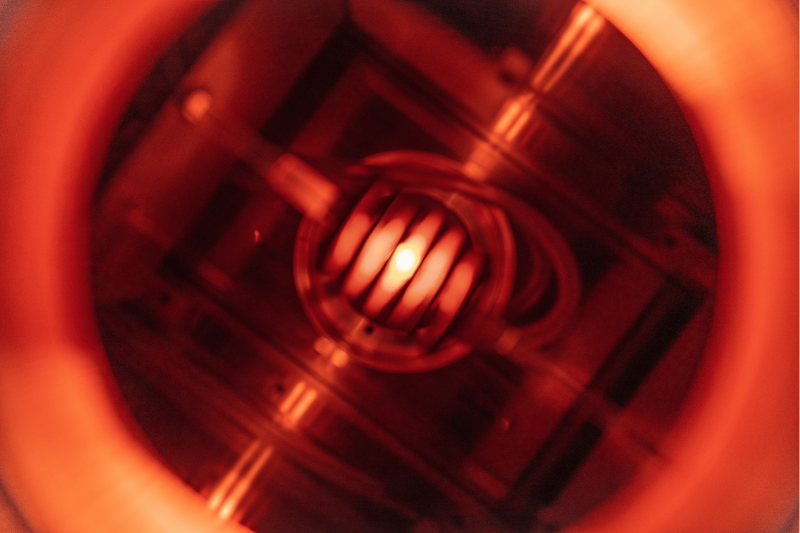
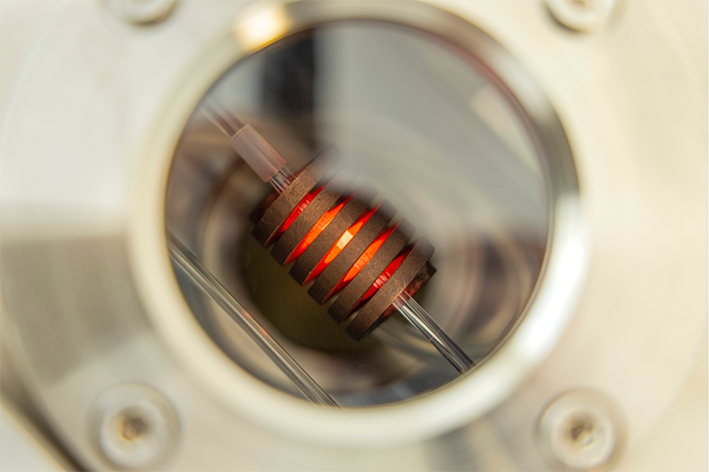
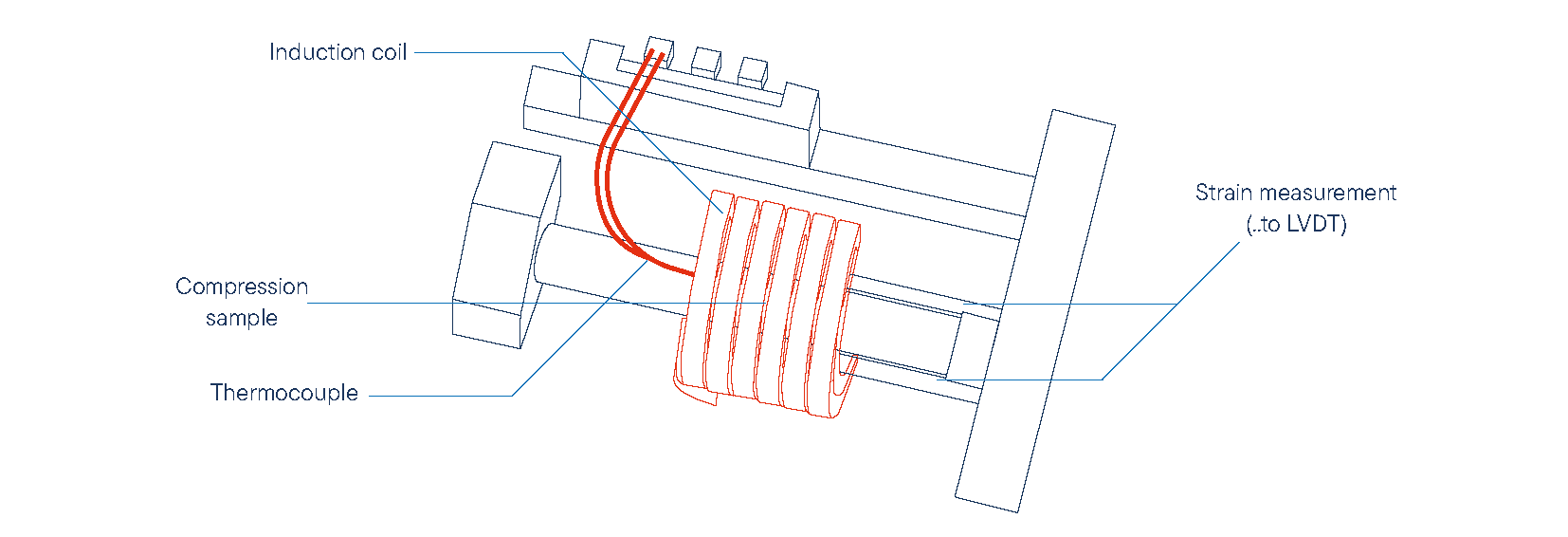
The DIL L78 RITA operates on the principle of high-speed induction heating combined with precise linear displacement measurement. The metallic sample is placed inside an induction coil, where an alternating electromagnetic field generates eddy currents directly within the specimen. This results in rapid, volumetric heating without thermal lag typically associated with resistance furnaces.
Temperature is measured directly at the sample using thermocouples welded onto the surface, ensuring minimal deviation between programmed and actual specimen temperature. The dimensional change of the sample is recorded continuously by a high-resolution displacement measurement system while the thermal cycle is executed.
In quenching mode, the heating process is followed by controlled rapid cooling, enabling the investigation of transformation behavior under defined cooling rates. The system’s high temporal resolution allows accurate tracking of dimensional responses during dynamic temperature transitions.
By correlating the real-time temperature signal with the corresponding length change, the DIL L78 RITA provides precise transformation data under highly dynamic thermal conditions. This direct coupling of induction heating, welded thermocouple sensing and high-resolution dilatation measurement ensures reliable and reproducible results even during rapid thermal cycles.

Measured variables of the dilatometer
Possibilities of thermal analysis using dilatometry:
CCT / CHT / TTT diagram generation
Transformation kinetics
Transformation-induced strain
Stress–strain curves (Q/D/T configuration)
Grain growth analysis (optional laser ultrasound)
A head start with the DIL L78 RITA – comprehensive transformation and materials characterization
Questions? We're just a call away!
+01 (609) 223 2070
+49 (0) 9287/880 0
Our service is available Monday to
Thursday from 8 am to 4 pm
and Friday from 8 am to 12 pm.
We are here for you!
DIL L78 RITA explained – function, use and capabilities
What can the DIL L78 RITA do in quenching mode?
In quenching mode, the DIL L78 RITA operates with very low mechanical force and focuses on phase transformation analysis under controlled cooling conditions. It enables:
Determination of the coefficient of thermal expansion (CTE)
Creation of TTT diagrams
Analysis of phase transformations at different cooling rates
Maximum cooling rates up to 4000 °C/s (hollow samples)
Low temperature operation down to -150 °C (optional)
Optional laser speckle measurement for non-contact strain analysis
What accessories are available for quenching mode?
The system can be expanded with several optional modules:
Various turbomolecular pumps (standard and high-flow versions)
Thermocouple welding unit (optional inert gas mode)
Cryogenic add-on (-150 °C in quenching mode)
Laser speckle system for 2D strain measurement
Low temperature capability:
-150 °C in quenching mode
-50 °C in deformation and tensile mode
What does the deformation mode enable?
The deformation mode allows simulation of manufacturing processes involving mechanical stress such as hot rolling or forging. It offers:
Maximum cooling rate: 125 °C/s
Maximum compression force: 22 kN
Compression speed: 0.005 – 100 mm/s
What capabilities are available in tensile mode?
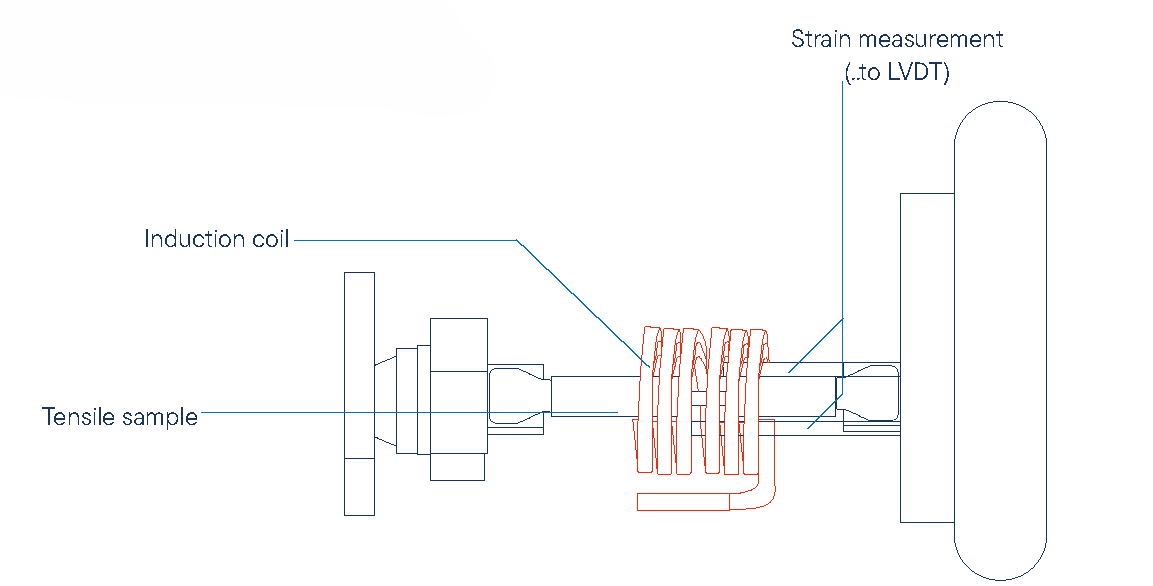
The tensile configuration extends the system to full thermomechanical characterization, including:
E-modulus determination
Fracture testing
Maximum tensile force: 22 kN
Tensile speed: 0.005 – 100 mm/s
Various specimen geometries (flat and round)
Optional optical strain measurement
How much does a DIL L78 RITA cost?
The price of a DIL L78 RITA system depends on the chosen configuration and additional options, such as temperature range, furnace type, cooling system, automation features or special measurement modes. As each system can be tailored to your specific application requirements, costs can vary considerably.
For an exact quote, please send us your requirements via our contact form – we will be happy to provide you with a customized quote.
How long is the delivery time for a DIL L78 RITA?
The delivery time for a DIL L78 RITA depends largely on the selected options and configuration. Additional features such as special ovens, extended temperature ranges, automation or customization can increase the production and preparation time and thus extend the delivery time.
Please contact us via our contact form to receive an accurate delivery time estimate based on your individual requirements.
How does the optional laser ultrasonic (LUS) technology work in the DIL L78 RITA?
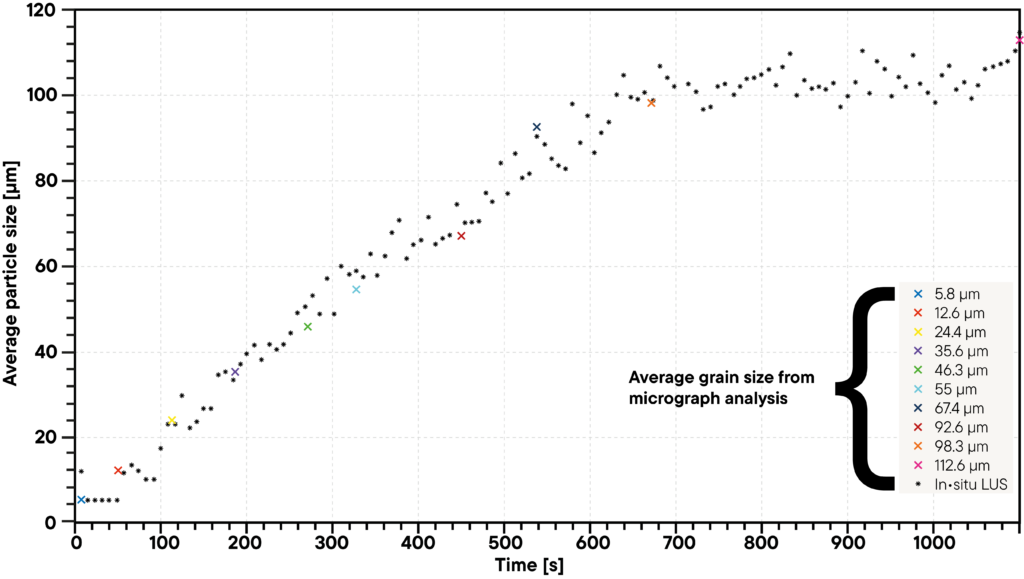
The DIL L78 RITA can be equipped with non-destructive laser ultrasonic (LUS) technology for real-time grain size analysis during thermal cycling.
The method evaluates the frequency-dependent ultrasonic attenuation caused by grain boundary scattering. The attenuation follows a power-law relationship:
Where:
- \(\alpha(f)\) – frequency-dependent attenuation
- \(a\) – absorption coefficient (internal friction losses)
- \(b\) – scattering coefficient (proportional to grain size)
- \(f\) – frequency
- \(n\) – scattering exponent
Depending on the ratio of acoustic wavelength to grain size, three scattering regimes can be distinguished:
- Rayleigh scattering (\(n = 4\))
- Stochastic scattering (\(n = 2\))
- Geometric scattering
The relationship between scattering coefficient and grain size is modeled as:
Where:
- \(D\) – current mean grain size
- \(D_0\) – initial grain size
- \(C\) – material-dependent calibration parameter
Calibration is performed using micrograph-based grain size measurements at defined temperature conditions.
What can be measured in real time using laser ultrasonics?
The LUS option enables in-situ monitoring of:
Recrystallization
Grain growth
Grain size
Phase transitions
Elastic constants
This replaces time-consuming post-process metallography and provides direct microstructural insight during heating and cooling.
How are CCT and TTT diagrams created with the RITA?
For CCT diagrams, the sample is quenched at different controlled cooling rates.
Transformation start and finish temperatures are transferred directly into the CCT diagram.
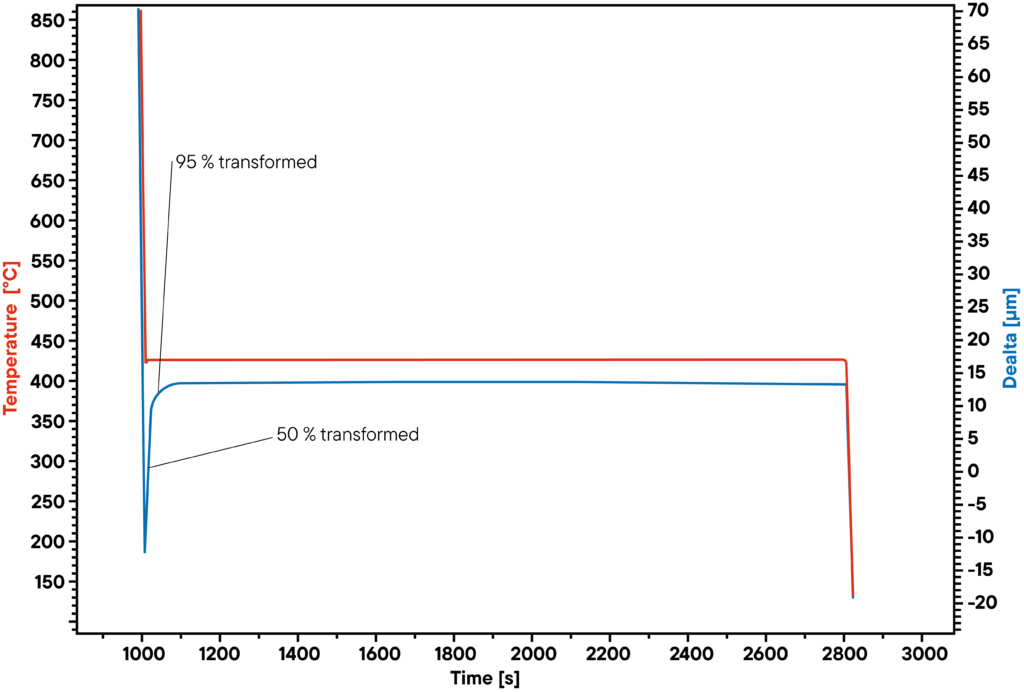
For TTT diagrams, the sample is held at constant temperature and transformation kinetics are determined from the measured length change.
The system allows precise detection of:
Ac₁ / Ac₃
Ms / Mf
Transformation percentages
What mechanical analysis is possible in tensile and deformation mode?
In tensile and compression mode, the DIL L78 RITA enables:
Flow curve generation (true stress vs. true strain)
E-modulus determination
Fracture testing
Constant displacement rate testing
Constant true strain rate testing
The resulting flow curves allow detailed analysis of material behavior under thermomechanical load.
What software capabilities does the DIL L78 RITA offer?
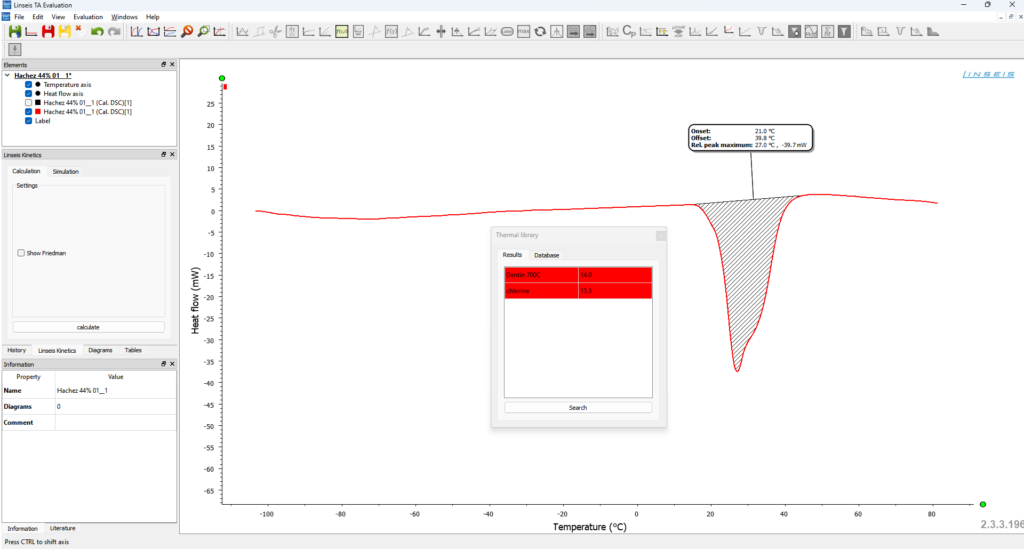
The integrated software includes:
Semi-automatic CCT / CHT / TTT diagram creation
1st and 2nd derivative analysis
Zoom and free scaling
Real-time monitoring
Data export (ASCII, MS Excel)
Multi-method evaluation (DSC, TG, TMA, DIL, etc.)
Thermocouple break protection
Secure data storage in case of power failure
Software
Making values visible and comparable
The LINSEIS DIL L78 RITA is operated via the powerful LINSEIS Evaluation and Acquisition Platform (LiEAP), a Windows®-based software solution for precise control, synchronized data acquisition and advanced transformation analysis.
The software supports the complete workflow from test preparation to real-time monitoring and automated evaluation of thermomechanical processes.
General Functions
Real-time display of temperature, length change and force
Freely configurable axis settings with zoom and cursor tools
First and second derivative analysis for transformation detection
Automatic and manual scaling
Comparison of multiple measurement curves
Data export to Excel® and ASCII formats
Secure data storage in case of power failure
Thermocouple break protection
Repetition measurements with minimal parameter input
Evaluation of ongoing measurement
Transformation & Metallurgy Functions
Semi-automatic creation of CCT, CHT and TTT diagrams
Automatic detection of transformation start and finish temperatures
Direct transfer of cooling rates into CCT diagrams
Flow curve generation (true stress vs. true strain)
E-modulus determination (tensile configuration)
Correlation of dimensional change with thermal cycle
Optional Extensions
Laser ultrasonic grain size evaluation module
Optical laser speckle strain analysis integration
Advanced microstructure modeling tools
Multi-method compatibility within LINSEIS platform (DSC, STA, LFA, DIL etc.)
Platform Concept
All functions for device control, synchronized data acquisition and evaluation are integrated into one unified interface.
The intuitive workflow allows preparation of complex quenching, deformation and tensile experiments with minimal training effort.
LINSEIS Thermal Library
The LINSEIS Thermal Library software package is an option for the well-known, user-friendly LINSEIS Platinum evaluation software, which is integrated in almost all of our devices. With the Thermal Library, you can compare the complete curves with a database containing thousands of references and standard materials in just 1-2 seconds.
Multi-instrument
All LINSEIS instruments DSC, DIL, STA, HFM, LFA etc. can be controlled via a software template.
Multilingual
Our software is available in many different user-interchangeable languages, including: English, Spanish, French, German, Chinese, Korean, Japanese, etc.
Report generator
Convenient template selection for creating individual measurement reports.
Multiple users
The administrator can set up different user levels with different rights for operating the device. A log file is also available as an option.
Kinetic software
Kinetic analysis of DSC, DTA, TGA, EGA (TG-MS, TG-FTIR) data to investigate the thermal behavior of raw materials and products.
Database
The state-of-the-art database enables simple data management with up to 1000 data records.
Applications
Metals and alloys
Metals and alloys used in industrial applications must exhibit precisely defined microstructural and mechanical properties. Parameters such as phase composition, strength, ductility and transformation behavior must be carefully controlled to ensure reliable performance under service conditions.
Since pure metals rarely provide the required performance profile, they are alloyed with additional elements to tailor transformation kinetics, hardenability and mechanical stability. The resulting microstructures determine the final material properties and must therefore be precisely characterized and optimized for applications in aerospace, automotive, energy and tool steel industries.
The DIL L78 RITA plays a central role in the investigation of such transformation processes. It enables the precise measurement of dimensional changes during heating, controlled cooling and quenching cycles. Because many metallurgical phase transformations are accompanied by density changes, dilatometry allows accurate determination of transformation start and finish temperatures and the generation of CCT, CHT and TTT diagrams.
With its high-speed induction heating and controlled quenching capabilities, the DIL L78 RITA realistically simulates industrial heat treatment processes. In extended configurations, mechanical loading can be applied to analyze stress–strain behavior under thermomechanical conditions. Optional laser ultrasonic integration further enables real-time in-situ grain size analysis during thermal cycling.
This makes the DIL L78 RITA an indispensable tool for steel development, alloy design, heat treatment optimization and advanced metallurgical research.
Application example: Phase transformation of steel
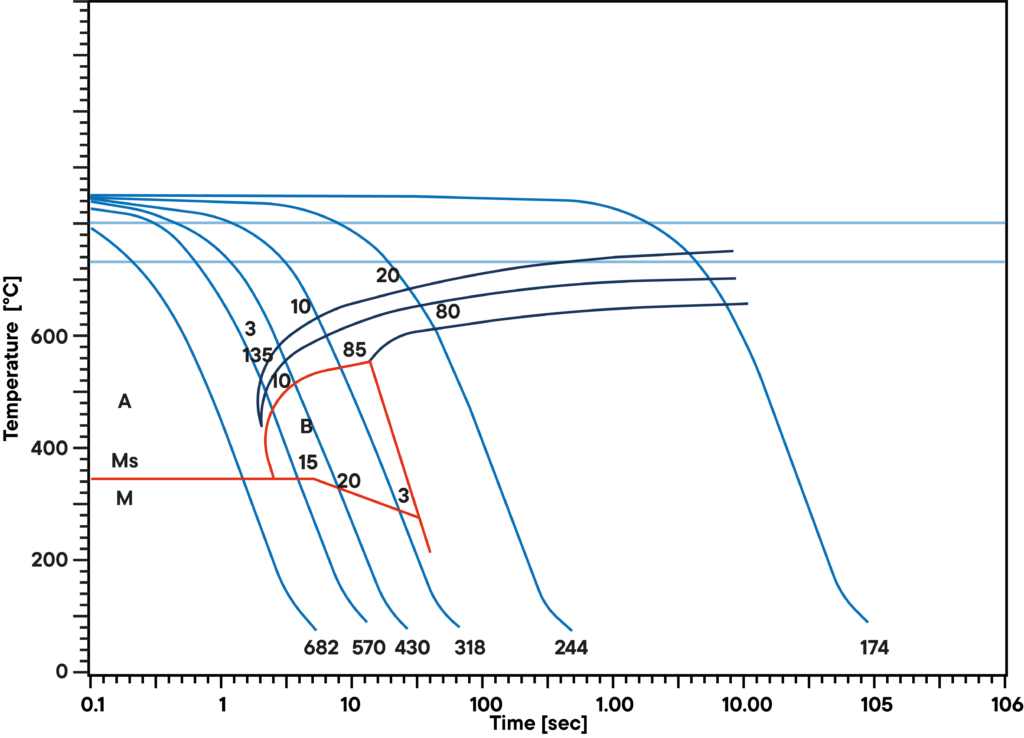
For creating a CCT diagram, the sample is quenched at different cooling rates. Depending on the cooling rate the sample may transform into different microstructures. The sample temperature and transformation start and end temperatures are transferred into the CCT diagram.
Isothermal transformation
The graphic on the left side shows length and temperature of a sample for creating a TTT diagram. While sample temperature remains constant the sample transforms into a different microstructure.
Continuous Cooling Transformation Diagram (CCT)
The CCT phase diagram represents the phase transformation of a material when it is cooled at various controlled rates. CCT diagram allow the prediction of the final microstructure of the
measured steel. This crystalline structure determines the physical properties of the material. The L78 Q and L78 Q/D is the ideal tool to observe small dimensional changes under extreme conditions of controlled cooling. With the intuitive Software it is easy to prepare CCT, CHT and TTT diagrams from the test results.
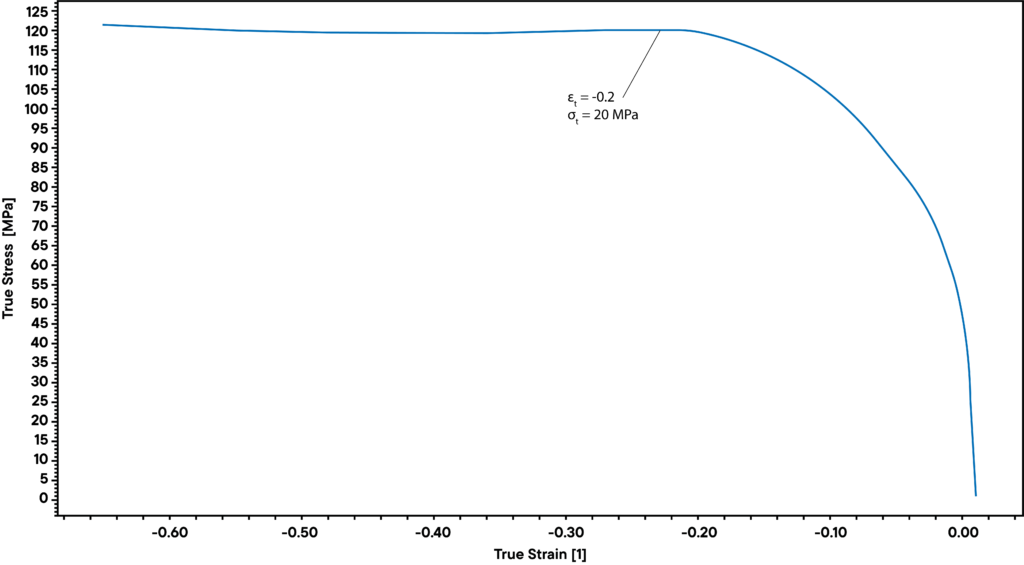
Flow curve
The diagram shows the mechanical stress that is applied to
the sample while the sample is compressed at a constant displacement rate or at a constant true strain rate. The sample shown here was compressed at 5 mm/s at 100 °C.
Videos
Well informed