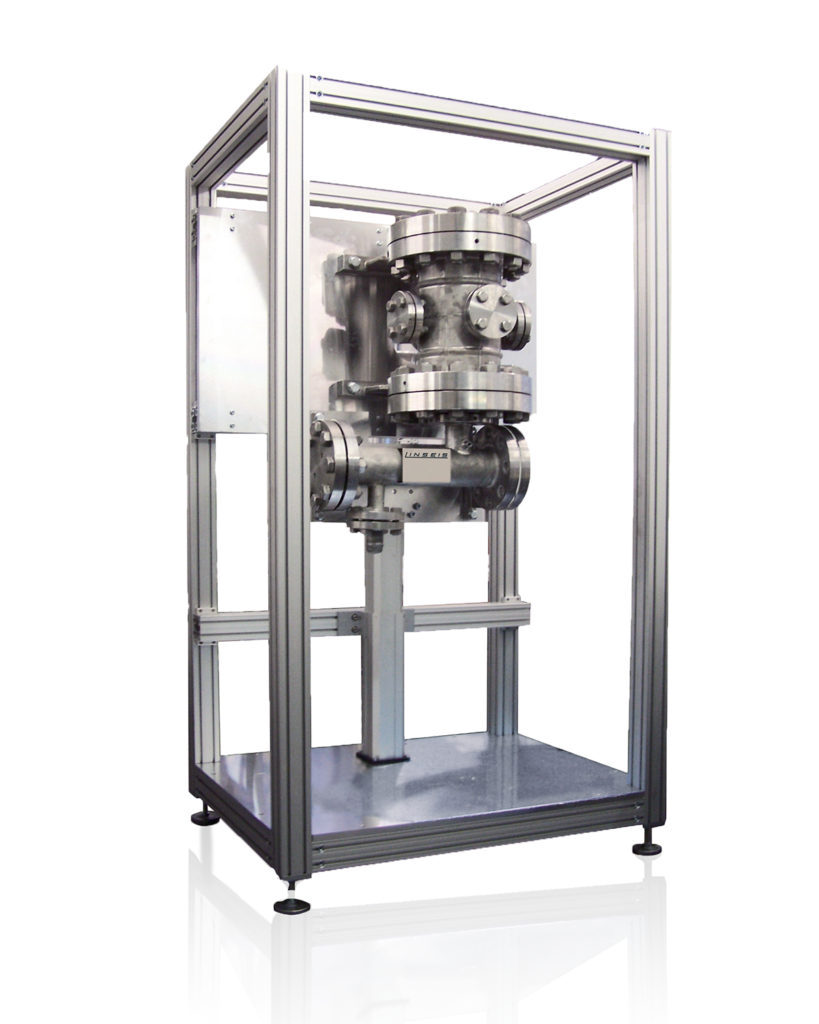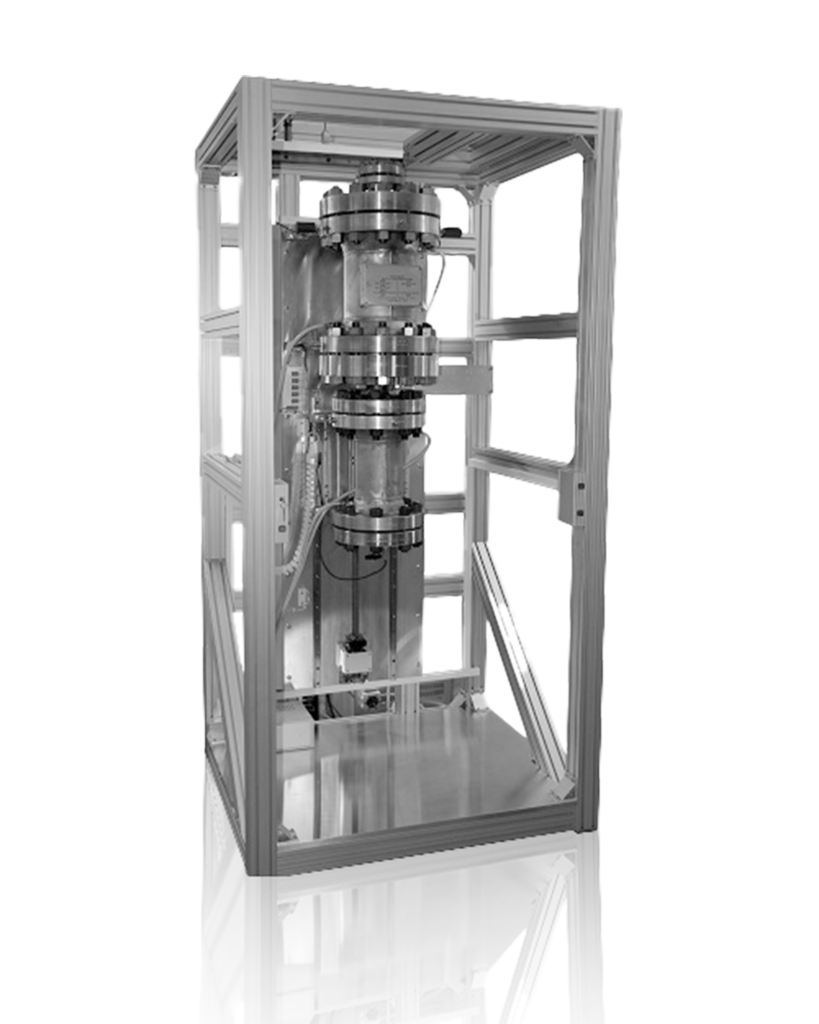

Material Analysis of Hydrogen Technologies
Analysis of Hydrogen Production, Storage, and Fuel Cells Under Realistic Operating Conditions
Hydrogen is considered one of the most important technologies for the future energy supply. From electrolysis to storage to use in fuel cells, materials and their properties play a crucial role in efficiency, safety, and cost-effectiveness.
The development of high-performance electrolysers, hydrogen storage systems, and fuel cells requires a detailed understanding of thermal, thermophysical, and chemical processes. Modern analytical methods make it possible to study catalysts, storage materials, electrode materials, and high-temperature components under conditions that closely resemble real-world conditions.
With over 69 years of experience, LINSEIS offers solutions for material characterization across the entire hydrogen value chain—from research to industrial applications.
Typical Challenges Along the Hydrogen Value Chain

Relevant Questions
- How efficiently can hydrogen be stored?
- What materials are suitable for metal hydride storage?
- How does temperature affect hydrogen uptake?
- Which catalysts improve electrolysis processes?
- How do materials behave in a hydrogen atmosphere?
- What materials are suitable for fuel cells?
- How do pressure and temperature affect sorption processes?
- How can hydrogen systems be made safer and more durable?
Relevant Material and Process Parameters
| Parameter | Meaning |
|---|---|
| Sorption Capacity | Hydrogen absorption by storage materials |
| Desorption Behavior | Hydrogen release |
| Sorption Enthalpy | Evaluation of Storage Processes |
| Thermal Stability | Behavior under operating conditions |
| Thermal Conductivity | Thermal Management of Storage Systems and Fuel Cells |
| Thermal Expansion | Material compatibility at high temperatures |
| High-Pressure Behavior | Analysis of Real-World Process Conditions |
| Cycle Stability | Long-Term Behavior of Storage Materials |
Measurement Methods for Hydrogen Materials and Fuel Cells
Simultaneous Thermal Analysis (STA)
STA combines DSC and TGA and enables the study of sorption, desorption, and decomposition processes.
Analysis of
- Hydrogen release
- Sorption processes
- Reaction enthalpies
- Material Stability
Typical Applications
- Metal hydrides
- Catalysts
- Fuel Cell Materials
- Energy Storage Materials
Recommended Measurement Instruments for Hydrogen Technology
Case Study: Analysis of a Hydrogen Storage Material
Thermal Analysis of Solid Acid Electrolytes for Fuel Cell Applications
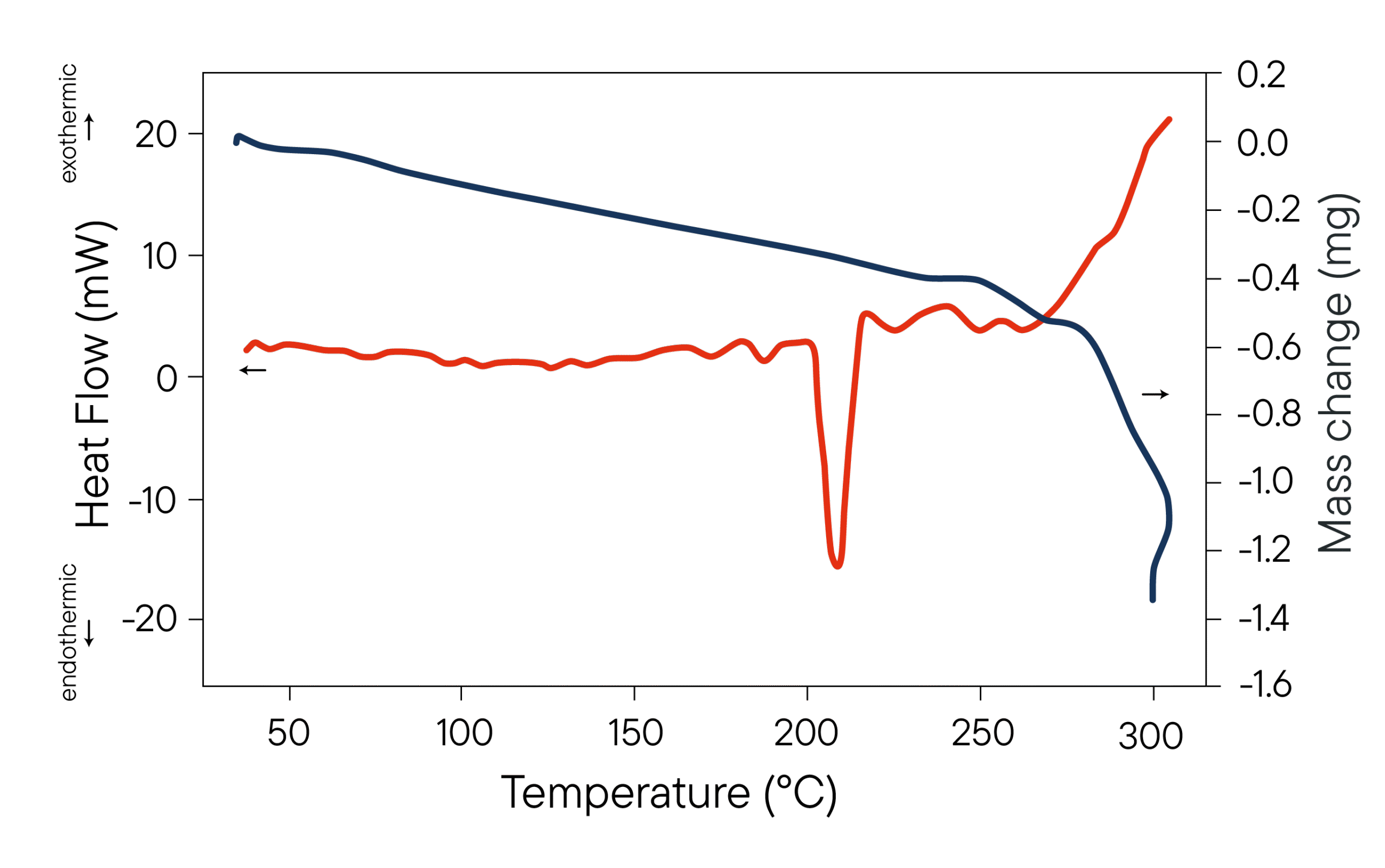
STA measurements taken with the Linseis STA L81 show the thermal conversion and dehydration processes of a solid electrolyte system for fuel cell applications. Download the white paper to learn more about the measurement setup, the thermal transitions, and their significance for proton-conducting materials.
Why Materials Analysis Is Crucial for Hydrogen Technologies
The efficiency of hydrogen technologies is largely determined by the materials used. Properties such as thermal stability, sorption behavior, thermal conductivity, and thermal expansion influence the performance of electrolysers, storage systems, and fuel cells.
The combination of modern analytical methods makes it possible to:
- Optimization of Electrolysis Materials
- Study of Hydrogen Storage Systems
- Characterization of Fuel Cell Components
- Analysis of Sorption and Desorption Processes
- Assessment of Thermal Stability
- Development of Sustainable Energy Systems
Applications – Batteries & Energy
FAQ – Hydrogen Technology
What measurement methods are suitable for characterizing hydrogen storage systems?
The following are frequently used for the study of hydrogen storage systems STA, TGA, gravimetric sorption analyses, high-pressure measurements and thermal conductivity analyses . These methods provide information on storage capacity, sorption behavior, thermal stability, and long-term behavior.
Why are high-pressure measurements important in hydrogen technology?
Many hydrogen storage and utilization processes take place under elevated pressure. High-pressure measurements allow materials to be studied under conditions that closely resemble real-world operating conditions and support the development of efficient storage systems.
What materials are being studied for hydrogen storage?
The most important storage materials include metal hydrides, MOFs (metal-organic frameworks), zeolites, activated carbons, and other porous sorption materials. Material analysis helps optimize storage capacity, kinetics, and stability.
What role does thermal analysis play in hydrogen technology?
Thermal analysis methods such as DSC, STA, and TGA enable the study of phase transitions, sorption and desorption processes, reaction enthalpies, and the thermal stability of hydrogen materials and fuel cell components.
Why is thermal conductivity important for hydrogen systems?
Thermal conductivity affects temperature distribution in fuel cells, electrolysers, and hydrogen storage systems. Optimized heat transfer improves efficiency, increases operational reliability, and extends the service life of these systems.
How are materials for fuel cells characterized?
Fuel cell materials are investigated for thermal stability, thermal expansion, reaction behavior, and material compatibility. Methods such as STA, dilatometry, DSC, and thermal conductivity analyses provide important data for the development of high-performance, long-lasting fuel cell systems.